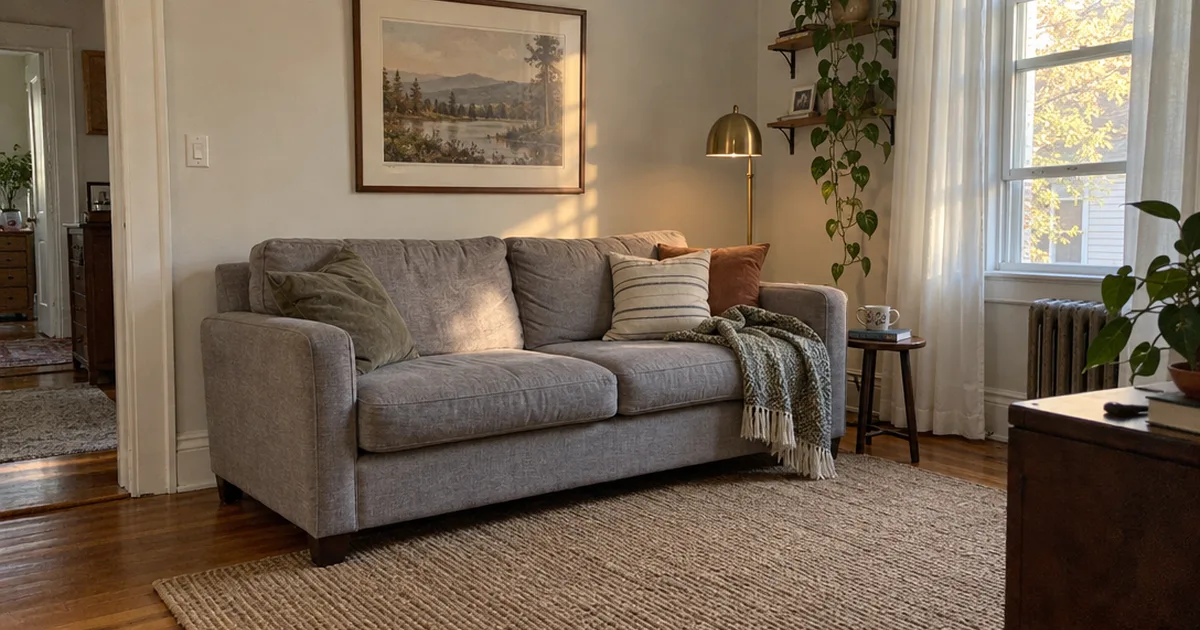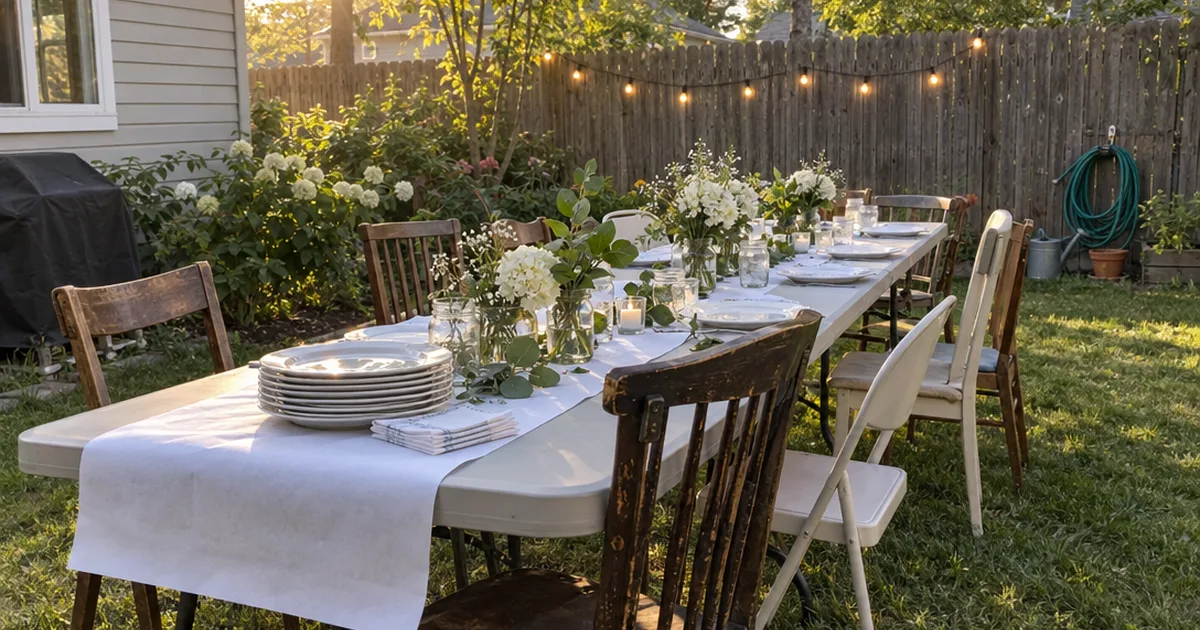

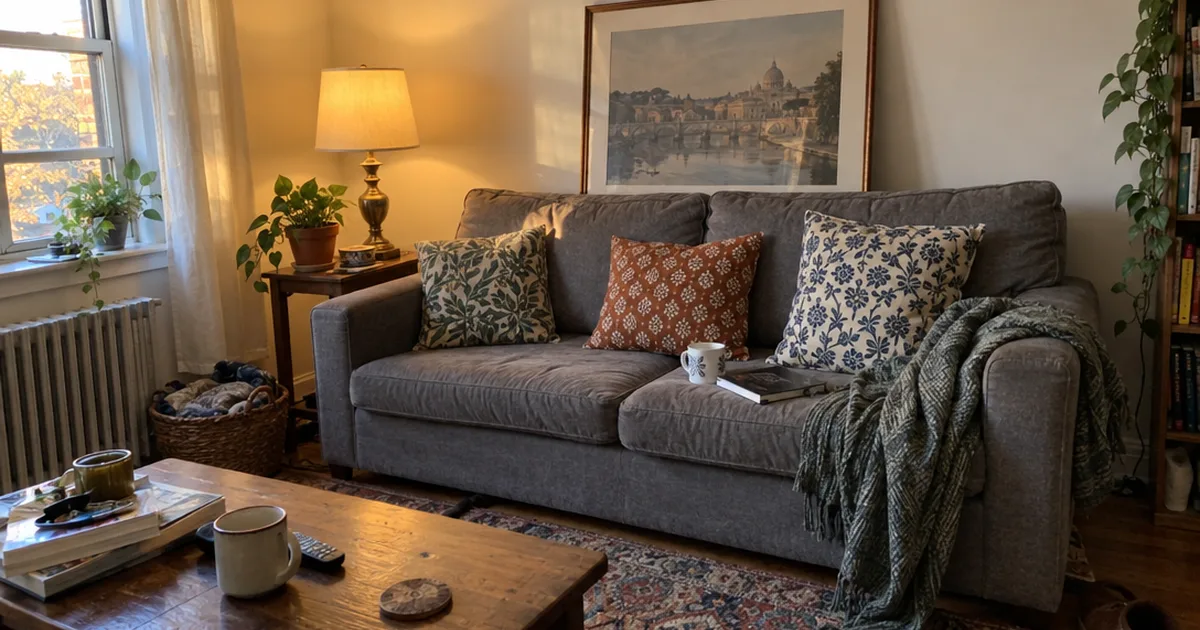
The first 2 ideas on this list cost nothing.
And they often fix a room better than a shopping trip, because they show you what it’s actually missing.
These 9 budget decorating ideas run from free to the biggest spend, each with a first step for today.
Pick your starting point:
- Zero dollars this month? #1 and #2 cost nothing.
- A sofa you’re tired of looking at is a job for #4 and #7.
- Renters who can’t paint get the most from #3 and #5.
How This List Is Ordered
These budget decorating ideas fall into 4 cost groups: free (#1-#2), small swaps (#3-#4), weekend projects (#5-#8) and bigger pieces (#9). Within a group, the idea more readers can do comes first.
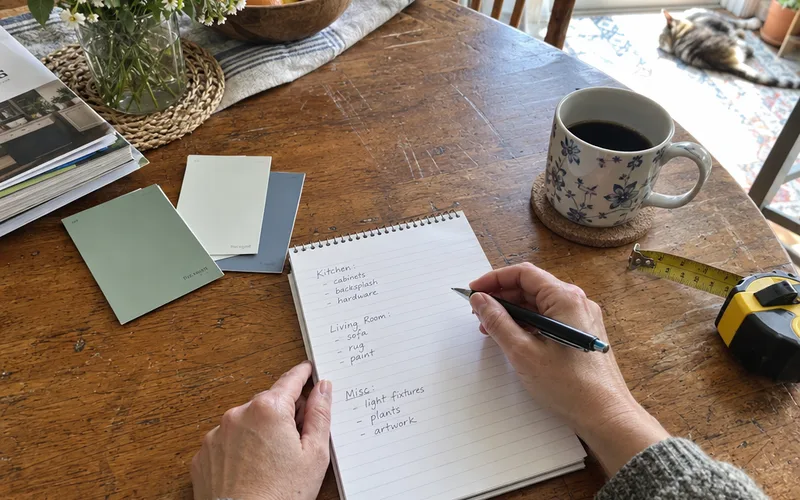
Prices vary by store and city, so check yours before you buy. As with all our frugal living tips, the goal is spending on purpose.
9 Budget Decorating Ideas, Free Ones First
The best budget decorating ideas are clearing clutter, shopping your own house, whiter bulbs, new pillow covers and curtain trim, peel-and-stick wallpaper, paint and new hardware, a slipcover, big framed art and secondhand furniture.
1. Clear Out What Drags the Room Down
Take out anything dated, worn or broken before you shop. Fewer things on display make the pieces you keep look chosen.
- Best for: every room. Skip it if the room is already bare.
- Cost: Free.
- Payoff: A cleaner room and an honest list of what’s missing.
- Time: Same day.
- First step: Clear one surface, then put back only what you love or use.
A decluttering checklist keeps you moving room by room, so you don’t stall on the first drawer.
2. Shop Your House First
Move lamps, baskets, pillows, art and trays between rooms before you buy anything. A piece you stopped noticing in one room can look new in another.
- Best for: anyone with a few furnished rooms. Skip it if you just moved in.
- Cost: Free.
- Payoff: A fresh look with nothing bought.
- Time: Same day.
- First step: Pull 3 items from other rooms into the room you’re fixing.
Group what you pull in threes, like a lamp, books and a plant. If the surface still looks busy, take one away.
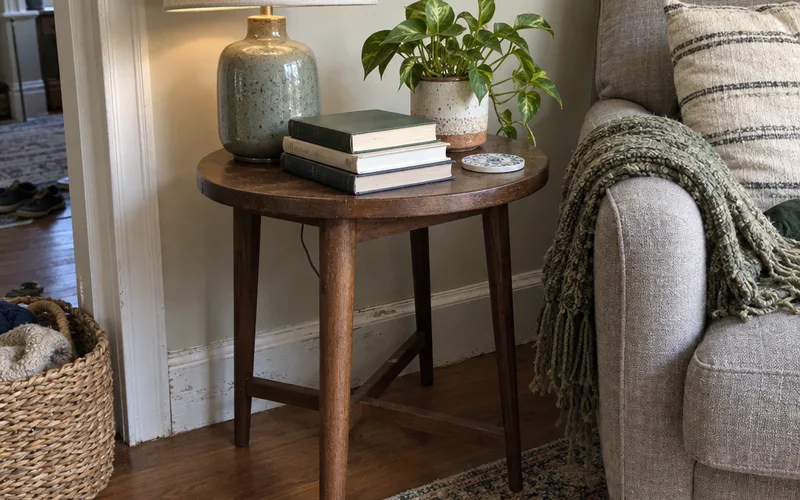
Rearranging furniture counts too. If the room still needs a piece, try to get it for free before you pay.
3. Swap Yellow Bulbs for Whiter Ones
Replace old yellow-toned bulbs with cool white or daylight bulbs to make a room look brighter and more current. A bulb’s color temperature is printed on the box in kelvins (K), and a higher number means whiter light.
- Best for: rooms that feel dim at night. Skip it if you love warm light.
- Cost: A few bulbs.
- Payoff: A brighter room without new furniture.
- Time: Same day.
- First step: Buy one higher-kelvin bulb and test it in your main lamp.
Whiter light suits kitchens and work spots.
But a bedroom can feel harsh under it.
4. Re-Cover Your Pillows and Trim Your Curtains
Buy new covers for the throw pillows you own, and fuse a decorative trim onto plain curtain panels. Both change the fabric you see without replacing what’s underneath.
- Best for: pillows with good inserts and plain curtains. Skip it if the inserts are flat.
- Cost: Covers, a few yards of trim and iron-on hem tape.
- Payoff: A new color scheme for less than new pillows or curtains.
- Time: This week.
- First step: Measure one pillow insert and the edge of one curtain panel.
Here’s how to add the trim:
- Iron the panel flat.
- Fuse the trim along the edge with hem tape.
- Hang it and check that the trim runs straight.
5. Try Peel-and-Stick Wallpaper in Small Spots
Use peel-and-stick wallpaper behind open shelves, inside a bookcase or on one small wall. It’s made to peel off later, which suits renters.
- Best for: renters and anyone nervous about paint. Skip it for a whole room.
- Cost: A roll or two for one small area.
- Payoff: A bold pattern you can take with you.
- Time: Same day.
- First step: Measure the back of one bookcase and buy enough for that spot.
A bookcase back shows whether you like a pattern before you commit to a wall.
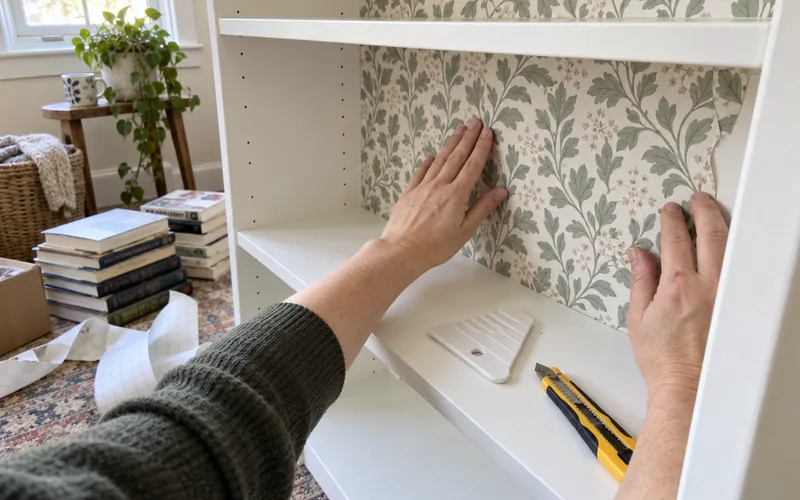
Test a scrap in a hidden corner first.
6. Paint a Tired Piece and Swap Its Hardware
Paint one dated dresser, end table or accent wall instead of a whole room, then add new knobs or pulls. Turning an old piece into one you want to keep is called upcycling.
- Best for: owners, and renters painting their own furniture. Skip it without an airy place to paint.
- Cost: A quart of paint, sandpaper, a brush and new hardware.
- Payoff: A whole new look for one piece or wall.
- Time: This week.
- First step: Pick the piece you look at most and count its knobs.
Sand glossy finishes lightly so paint grips, then brush on 2 thin coats.
New knobs work on kitchen cabinets too, updating the room without new doors.
7. Hide a Dated Sofa Under a Slipcover
Put a fitted slipcover over a worn sofa instead of replacing it. One cover costs far less than a new couch.
- Best for: a comfortable sofa with tired fabric. Skip it if the frame is broken.
- Cost: One slipcover.
- Payoff: A sofa that matches the room again.
- Time: This week.
- First step: Measure the sofa’s width, depth and arm style.
The catch? A baggy cover looks cheap, so pick a stretch or fitted style.
8. Make a Big Frame for Cheap Art
Hang one large framed print instead of several small ones, and build the frame yourself to save money. Large art makes a room look finished.
- Best for: big empty walls over a sofa or bed. Skip it if your lease bans heavy hanging.
- Cost: Wood molding, a print and hanging hardware.
- Payoff: Art that looks custom for the price of supplies.
- Time: This week.
- First step: Tape the frame’s outline on the wall and live with it for a day.
For the art, print a digital download at a print shop or frame a thrifted canvas.
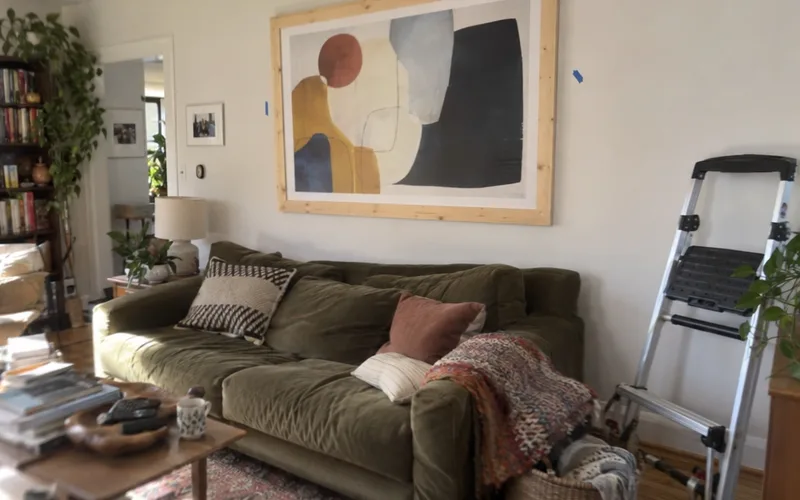
Either way, the size does most of the work.
9. Hunt Secondhand Furniture Before You Buy New
Look for lamps, mirrors and solid wood furniture at thrift stores, garage sales and resale apps. A dated finish is fine, because #6 fixes it.
- Best for: patient shoppers. Skip it if you need the piece this weekend.
- Cost: You set the top price.
- Payoff: Better-made pieces for less than the same thing new.
- Time: 2-4 weeks.
- First step: List 3 pieces you want and the most you’ll pay for each.
On Facebook Marketplace, set a price range and save the search, so you get an alert when a match is listed. Adding “lot” to a search finds sellers offering a matching set.
Before you pay, open every drawer and test the legs. These thrifting tips help you spot a fixable finish.
Where to Spend a Small Decorating Budget First
A small decorating budget goes furthest on what you see every day: the lighting, the sofa or bed, and the biggest empty wall. Do the free ideas first, because they show which of those three the room is missing.
Then spend in this order: light (#3), fabric (#4 or #7), one focal wall (#5, #6 or #8) and furniture last (#9).
Budget Decorating Ideas Room by Room
Budget decorating ideas shift from room to room, so each room has its own guide:
- Living room: cheap living room ideas, or small living room ideas for a tight space.
- Walls: cheap wall decor ideas.
- Bedroom: cheap bedroom decorating ideas.
- Apartments: apartment decorating on a budget.
- Small houses: low budget small house design.
- Outside: curb appeal on a budget.
Frequently Asked Questions
Where can you buy cheap home decor?
Cheap home decor is easiest to find secondhand, at thrift stores, garage and estate sales, and on Facebook Marketplace, Craigslist and OfferUp.
List the 3 pieces you need before you go.
How do you make your house look expensive on a budget?
A house looks expensive on a budget when it shows fewer, larger pieces and nothing worn, such as one big framed print and clear surfaces.
Clear one room this week before you buy anything.
How much should it cost to decorate a house?
Decorating a house has no standard cost, because it depends on how much you already own and how much you buy secondhand.
Set a monthly cap you can pay in cash.
How do people afford a well decorated, cozy home?
Most people afford a well decorated, cozy home by building it slowly, reusing what they own and buying one secondhand piece at a time.
Keep a wish list with a top price for each piece.
Final Thoughts
The best budget decorating starts with what you already own, because the free ideas show you what a room is really missing.
This week, clear one surface and pull 3 pieces from another room onto it.