


Most people don’t avoid budgeting because they’re bad with money. They avoid it because a budget sounds like a spreadsheet full of rules that will be broken by the second week.
A good budget works the other way around. It’s a short plan you write before the month starts, so you decide where your money goes instead of finding out afterward.
Below, you’ll learn how to make a budget in seven steps, starting from a blank page. You’ll also see how the most popular budgeting methods compare and what to do when the numbers don’t add up.
None of it needs special software, and your first version can be rough.
What a budget actually does for you
A personal budget is a plan that matches the money coming in with the money going out over a set period, usually one month. That’s the whole idea, and everything else is a method for doing it.
The useful part is timing. When you plan before you spend, you can choose to cover rent, groceries and savings first, and only then decide how much is left for takeout or a new jacket.
So a budget doesn’t have to be about cutting. For many people, the first surprise is how much money was already going to things they don’t care about, and that money can now go somewhere they do.
What to gather before you start
You’ll make faster progress if you collect your numbers before you sit down. Plan on about an hour for the first pass.
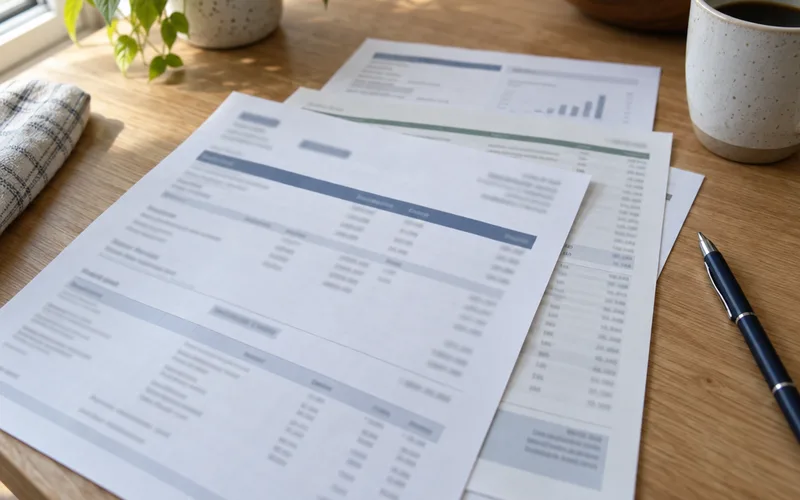
Pull together:
- Your last two or three pay stubs, or deposit records if you’re self-employed
- One to three months of bank and credit card statements
- Your regular bills, such as rent or mortgage, utilities, phone, insurance and loan payments
- Any yearly or quarterly bills you remember, like car registration or a membership renewal
Your statements matter most, because they show what you actually spent rather than what you think you spent. Small card purchases are easy to forget, and they’re often where the money quietly goes.
How to make a budget in 7 steps
These steps work for any method you choose later. Do them in order the first time, then repeat steps 6 and 7 every month.
Step 1: Work out your monthly take-home pay
Start with net income, which is the money that actually lands in your account after taxes and any deductions like health insurance or retirement contributions. Budget from that number, not your salary, because you can’t spend money that never reaches you.
If you’re paid every two weeks, multiply one paycheck by 26 and divide by 12 to get a monthly figure. For example, a hypothetical $1,800 biweekly paycheck works out to $46,800 a year, or $3,900 a month.
That conversion matters because two months a year will have three paydays. If you budget each month from just two paychecks, those extra checks become a bonus you can send straight to savings or debt.
What if your pay changes from month to month? Look back over the past several months and budget from the lowest one, so a slow month doesn’t break the plan.
Step 2: List your fixed expenses
Fixed expenses are the bills that cost about the same every month. Think rent or mortgage, car payment, insurance, phone plan, internet, loan minimums, child care and subscriptions.
Write each one down with its amount and due date. Due dates help more than people expect, because they show whether most of your bills land right before or right after payday.
Include minimum payments on any debt as fixed costs. You can plan extra payments later, but the minimums have to be covered first.

Credit cards need one extra decision. Your monthly card payment is a debt payment, so list it under debt or variable costs, and make sure the purchases on the card aren’t counted twice.
Step 3: Turn yearly bills into monthly amounts
This is the step most budgets skip, and it’s why so many fall apart. Car registration, holiday gifts, school fees and insurance paid twice a year aren’t emergencies, but they still arrive.
The fix is simple arithmetic. Divide each yearly cost by 12 and set aside that amount every month, so a hypothetical $600 yearly insurance bill becomes $50 a month.
Those set-aside amounts are often called sinking funds. If you want separate pots for each one, setting up sinking funds walks through how to organize them.
Step 4: Estimate your variable spending
Variable expenses change from month to month, such as groceries, gas, dining out, clothing, entertainment and household supplies. Use your statements to find what you actually spent on each over the last one to three months, then average them.
Be honest here, even if the numbers sting. A grocery line set far below what you really spend will fail in the first week, and a failed budget teaches you nothing.
If you have no history to work from, a benchmark can give you a starting point. A monthly food budget for one, typical spending on clothes and the average entertainment cost are good reference figures to compare against.
Treat any average as a rough guide, not a target. Where you live and what matters to you will move your numbers more than any national figure.
Step 5: Set your goals and give savings its own line
Now decide what you want this budget to do. Maybe that’s paying off a credit card by summer, saving for a car or building a cushion so a repair bill doesn’t land on a card.
Turn each goal into a monthly amount and write it in the budget like a bill. If you want $1,200 for a trip in a year, that’s $100 a month.
If you share money with a spouse or partner, set these goals together. A plan you’ve both agreed on is easier to stick to than one that only covers half of the household’s spending.

For most people, the first goal is an emergency fund, which is money kept aside for surprises like a job loss or a medical bill. Start with a small target, such as $1,000, then keep adding to it once your budget is running smoothly.
Bigger goals, even an early retirement plan like the FIRE movement, work the same way, just with larger monthly amounts. If you’re aiming for something like saving $10,000 in a year, that comes to about $834 a month, which shows quickly whether the goal fits your income.
Step 6: Subtract your costs and balance the plan
Add up your fixed expenses, monthly sinking fund amounts, variable spending and savings goals. Then subtract that total from your monthly take-home pay.
You’ll land on one of three results:
- Money left over. Assign it to a goal, extra debt payments or a fun category, so it doesn’t drift away unplanned.
- Exactly zero. That’s a balanced plan, as long as your estimates are realistic.
- Less than zero. Your plan spends more than you earn, so something has to change before the month starts.
A negative number is common on the first try. It doesn’t mean you failed, just that the plan has done its job by showing you the gap early.
Step 7: Track your spending and adjust
A budget only works if you compare it with what actually happens. Set a short weekly check-in, about 10 or 15 minutes, to log or review your spending against each category.
Expect your first month to be messy. Some categories will be too high and others too low, and that’s useful information, not a reason to quit.
At the end of each month, adjust the categories that missed and build next month’s plan. After two or three rounds, most budgets settle into numbers you can live with, and the key components of budgeting start to feel like habits.
Choose a budgeting method that fits you
The seven steps give you the numbers. A budgeting method is the rule you use to divide them, and the right one is the one you’ll actually keep using.
Here are five common methods, with who each one tends to suit.
The 50/30/20 rule
The 50/30/20 rule splits your take-home pay into three buckets. About 50% goes to needs, 30% to wants and 20% to savings and extra debt payments.

Needs are the costs you’d struggle to live without, such as housing, utilities, groceries, insurance, transportation and minimum debt payments. Wants are everything else, including dining out, streaming, hobbies and travel.
With a hypothetical $3,900 monthly take-home pay, that’s $1,950 for needs, $1,170 for wants and $780 for savings and debt. The appeal is that you only track three numbers.
The catch is that 50% may not cover needs in a high-cost area. If yours run higher, adjust the split, and some people prefer the 70/20/10 rule, which gives a larger share to living costs.
Zero-based budgeting
A zero-based budget gives every dollar a job. You assign all of your income to categories until income minus planned spending and saving equals zero.
That doesn’t mean your bank account hits zero. It means every dollar has a planned purpose, including savings, so nothing is left unassigned.
Here’s a hypothetical example for a $3,000 monthly income:
- Rent: $1,050
- Utilities, phone and internet: $250
- Groceries: $400
- Transportation: $300
- Debt payments: $250
- Sinking funds: $150
- Emergency savings: $300
- Personal spending and fun: $300
This method suits people who tend to overspend or want close control of every category. It takes more time each month, so a ready-made zero-based budget template can make the setup quicker.
The envelope method
The envelope method puts spending limits in physical form. You withdraw cash for categories like groceries, gas and dining out, then place each amount in its own labeled envelope.
When an envelope is empty, spending in that category stops until next month. That hard stop is why people who overspend on cards often find it useful.

Carrying cash isn’t practical for everyone, though, and it doesn’t work for online bills. A cashless envelope system keeps the same limits using separate accounts or an app instead of paper envelopes.
Pay yourself first
Paying yourself first flips the usual order. As soon as your paycheck arrives, you move a set amount into savings, then spend the rest on bills and everything else.
It’s the lowest-effort method, because you don’t track many categories. Automating the transfer for payday makes it even easier, since the money moves before you see it.
The weakness is that it doesn’t guard against overspending. If you often run short before payday, pair this method with a simple list of your fixed bills.
Spend-first budgeting
Spend-first budgeting is the loosest approach. You pay your bills and spend through the month, then move whatever is left into savings at the end.
It takes almost no effort, which is its whole appeal. The drawback is that your savings become whatever happens to be left, so the amount can swing from month to month and goals may take longer.
That makes it a fit only if you’re confident you earn well above what you spend. If you’re not sure, paying yourself first is the safer version of the same idea.
How to pick the right method
If you’re still unsure, match the method to your main problem:
- New to budgeting: Start with 50/30/20, because three buckets are easy to follow.
- Money disappears and you don’t know where: Try zero-based budgeting for a few months.
- Card spending gets out of hand: Use envelopes, either cash or cashless.
- You overspend rarely but never save: Pay yourself first.
- You reliably earn more than you spend: Spend-first can work, as long as savings still grow.
You can switch at any point. Plenty of people start with 50/30/20 and move to zero-based once tracking becomes routine.
Pick a tool: paper, spreadsheet or app
The best budgeting tool is the one you’ll open every week. Each option trades effort against convenience.
A notebook or printed budget planner is free and makes you write every number by hand, which helps some people notice their spending. It’s harder to update, though, and you’ll do all the math yourself.

A spreadsheet adds the math for you, since Google Sheets, which is free, or Microsoft Excel can total each category automatically. You can build a simple monthly budget template once, then copy it each month.
Apps go a step further by pulling in transactions from your bank so you don’t type each one. The budgeting apps guides compare popular options, including whether they’re free or paid and which methods they’re built around.
Some apps are built around a specific method. YNAB, short for You Need A Budget, is based on the envelope idea.
If you’re weighing it against another popular app, comparing Goodbudget and YNAB side by side shows where they differ.
Check an app’s current features and price before you commit, since both can change. If an app has a free trial, use it for a full month so you see how it handles a whole budget cycle.
What to do when your expenses are bigger than your income
A shortfall is the hardest result to see, but working through it in order makes it manageable. Start with what keeps you housed, fed and able to work, then cut from there.
First, make sure the essentials are covered: housing, utilities, food, transportation to work and any required insurance. Everything else can be reduced or paused while you rebuild the plan.
Next, look at variable spending, since it’s the fastest to change. Dining out, delivery, shopping and entertainment often have room, even if you only trim them for a few months.

Then go after recurring bills, because a cheaper phone plan, a canceled subscription or a lower insurance quote keeps saving money every month. The Bills guides walk through the most common ones.
If the gap is still there, the answer may be on the income side. Extra shifts, a side job or selling things you don’t use can close a short-term gap while you work on a longer fix.
And if you can’t make a minimum payment, contact the lender before you miss it. Some lenders offer payment plans or hardship options, and asking early gives you more choices than a missed payment does.
Budgeting on a low or irregular income
A budget matters even more when money is tight, because there’s less room for surprises. The steps stay the same, but the order of priorities gets stricter.
On a low income, cover your essentials first and build a small cushion, even $5 or $10 a week. There are ways of saving on a low income that start with very small amounts and build a habit before the dollar figure grows.
If your income is irregular, budget from your lowest recent month. In a better month, use the extra to fill your emergency fund first, then your sinking funds, so the good months pay for the slow ones.

Households that drop to living on one income can use the same approach, starting with the biggest fixed bills. Students face a similar challenge with loans and part-time work, and budgeting as a student covers how to stretch a semester’s money.
Common mistakes that make budgets fail
Most budgets don’t fail because the math is wrong. They fail because the plan doesn’t match real life.
Watch for these:
- Setting categories too tight. A plan that leaves no room for normal spending gets abandoned quickly.
- Forgetting irregular costs. Yearly bills that aren’t in the plan turn into surprise debt.
- Leaving out fun money. A small personal spending line makes the rest of the budget easier to stick to.
- Skipping check-ins. Without a weekly look, small overspending grows into a big gap by month’s end.
- Quitting after one bad month. Adjust the numbers instead, since the first few months are practice.
If you only fix one of these, make it the weekly check-in. It’s the habit that turns a budget from a document into a plan you actually follow.
Frequently Asked Questions
How do I create a budget?
Add up your monthly take-home pay, list your fixed bills and average your variable spending. Then subtract your costs and savings goals from your income, adjust until the plan balances, and track your spending each week.
What is a zero-based budget?
A zero-based budget assigns every dollar of your income to a category, including savings, until income minus planned spending equals zero. It gives you close control, but it takes more time than simpler methods.
How can I save $10,000 in one year?
You’d need to save about $834 a month, or roughly $385 per biweekly paycheck. Put that amount in your budget as a fixed line, automate the transfer and fund it by cutting variable spending or adding income.
What is the 50/30/20 rule?
The 50/30/20 rule splits take-home pay into 50% for needs, 30% for wants and 20% for savings and extra debt payments. It’s a simple starting point, and you can adjust the percentages if your needs cost more.
How do I budget on a low income?
Cover housing, food, utilities and transportation first, then set aside even a small amount each week for emergencies. Track every dollar, trim variable costs before essentials and check for local assistance programs.