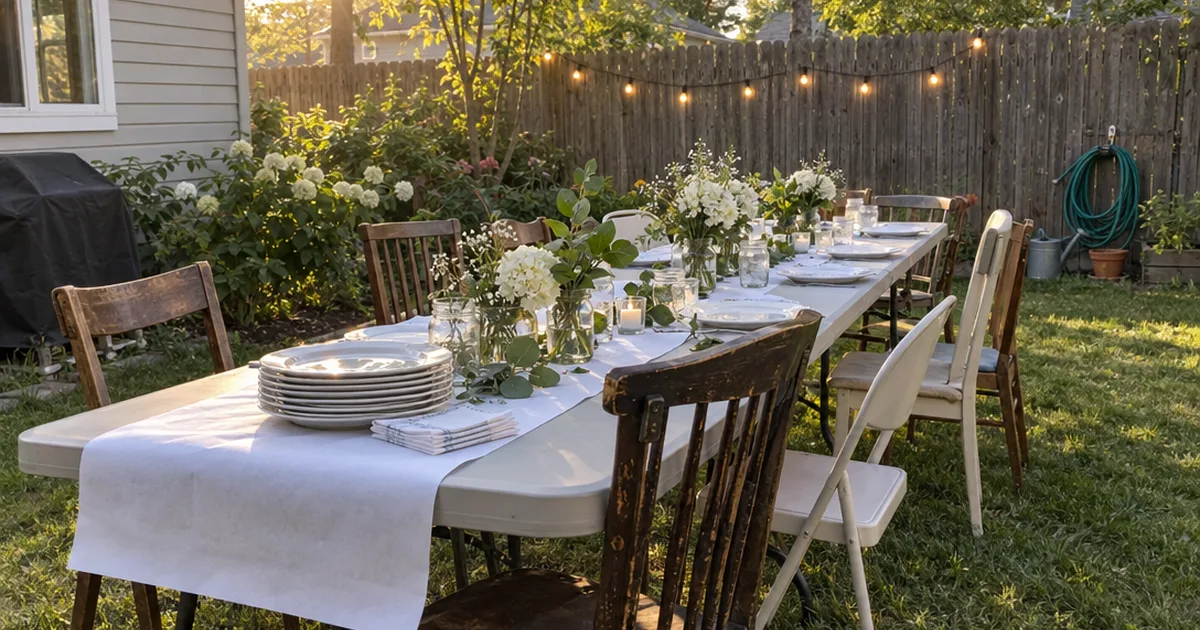

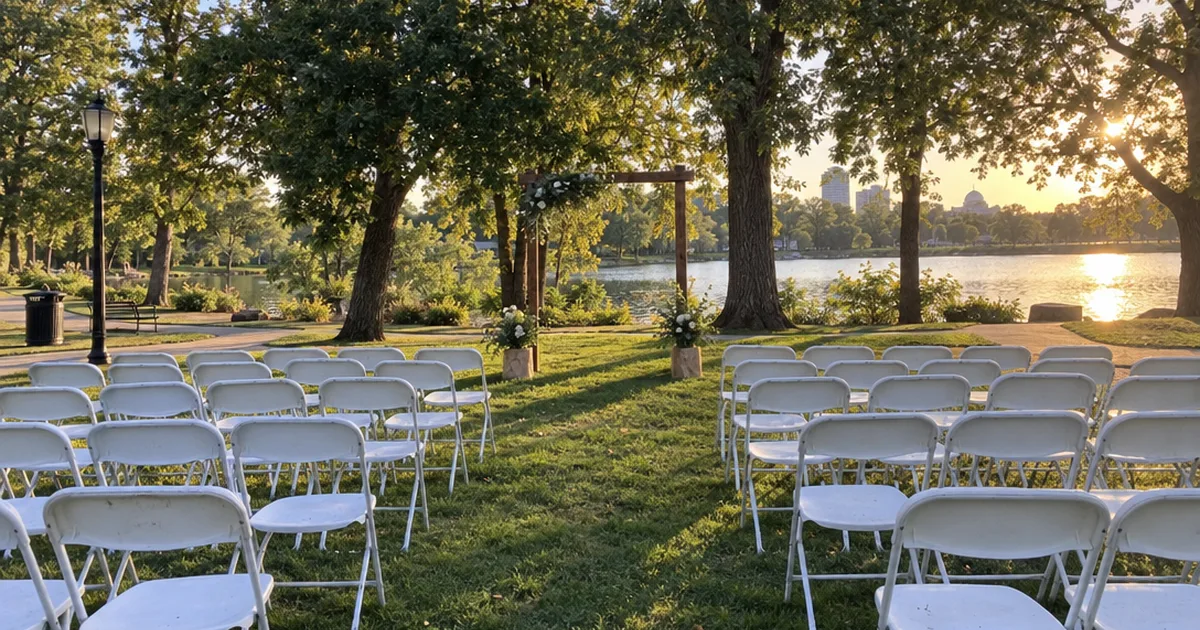
The same barn costs $2,000 less on a Sunday than on a Saturday.
That’s straight from one Michigan venue’s own 2026 price list, and it’s just one of the ways to pay less for a place to say “I do.”
Below are 13 wedding venue ideas on a budget, ordered from free sites to full rentals, each with who it suits, what you pay for, the catch and a first step.
Here’s how to pick fast:
- Just the two of you and a few witnesses: #2 is the simplest legal ceremony.
- A relative with a big, flat yard makes #1 the cheapest site on this list.
- Over 100 guests and no yard? Price out #7 and #10, which already have tables and chairs.
- Set on a classic barn? #13 shows how the day you pick changes the price.
How This List Is Ordered
This list of wedding venue ideas is ordered by cost to start, from sites with no fee at all to venues you rent in full.
When 2 ideas cost about the same, the one more couples can book with what they already have comes first.
Across the U.S., most of these fees are set locally by a city, a county or the venue itself. So the Cost lines below say what you pay for, and each idea’s first step tells you who to call for your own number.
13 Wedding Venue Ideas on a Budget, From Free to Full Rental
These 13 cheap wedding venue ideas start with places that charge nothing for the site and end with traditional venues you rent on an off-peak day.
1. Host It in Your Own Backyard (or a Relative’s)
Hold the ceremony and the reception on land you or your family already own.
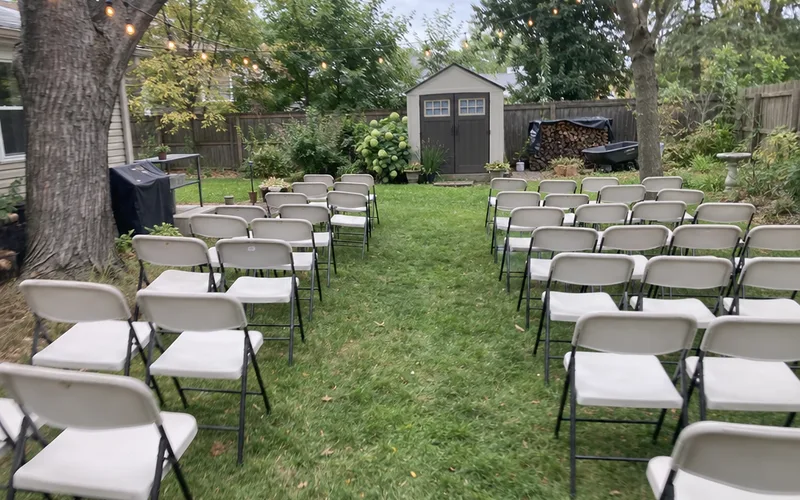
A backyard is the only venue on this list with no site fee at all, so it’s the place to start if you’re asking where you can have a wedding ceremony for free.
- Best for: couples with a big, flat yard in the family and a guest list under about 50. Skip it if the house has 1 bathroom and you’re inviting 100 people.
- Cost: Free for the site; you pay for rentals.
- Payoff: No venue rental fee, and no time limit on the party.
- Time: 1-3 months to plan rentals and setup.
- First step: Walk the yard with a tape measure and count how many chairs fit with space for an aisle.
So is a backyard wedding really cheaper?
Usually, yes, but only if you price everything a venue would have supplied.
Here’s the checklist to price before you commit:
- Chairs and tables for every guest
- Extra restrooms if the house can’t handle the crowd
- A tent or a rain plan for the ceremony
- String lights or lamps if the party runs past sunset
- Trash pickup and cleanup help the next morning
In other words, a free yard stays cheap only when your rental list stays short.
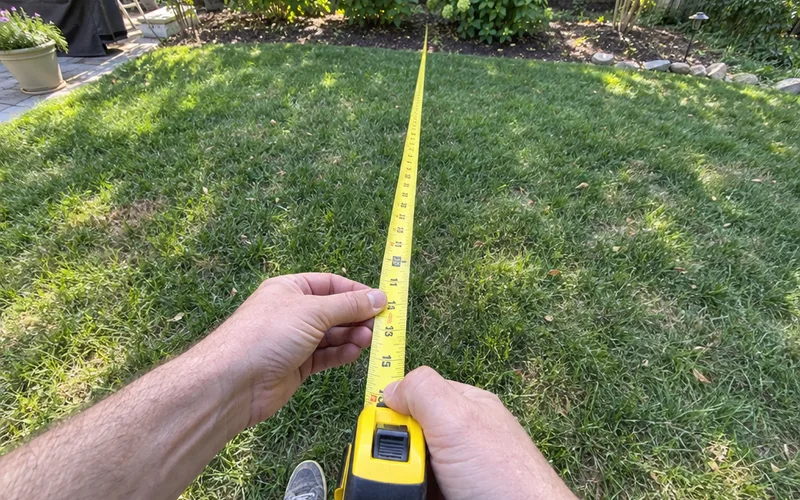
Once the yard passes the chair count, these backyard wedding ideas help you plan the setup on a tight budget.
2. Book a Courthouse or City Hall Ceremony
Get legally married in a short civil ceremony at your county courthouse or city hall.
A civil ceremony is a wedding performed by a government official, such as a judge or a clerk, instead of a religious leader.
- Best for: couples who want a small, quick, legal ceremony and maybe a party later. Skip it if you’ve promised Grandma a big church wedding.
- Cost: A clerk’s ceremony fee, set by your county or city, on top of the marriage license.
- Payoff: A legal wedding with no venue rental, decor or catering bill.
- Time: This week to 2-4 weeks, depending on the clerk’s calendar.
- First step: Call your county clerk’s office and ask, “Do you perform civil ceremonies, and what’s the fee?”
How much does it cost to get married at a courthouse?
The fee depends on your county or city, so the clerk’s office is the only place to get the real number for your date.
When you call, ask these 4 questions:
- Which days and times do you perform ceremonies?
- How many guests can come into the room?
- Do we need to bring our own witnesses?
- Can we take photos inside the building?
Dress it up a little if you like, since some city halls and courthouses have courtyards or grand staircases made for photos.
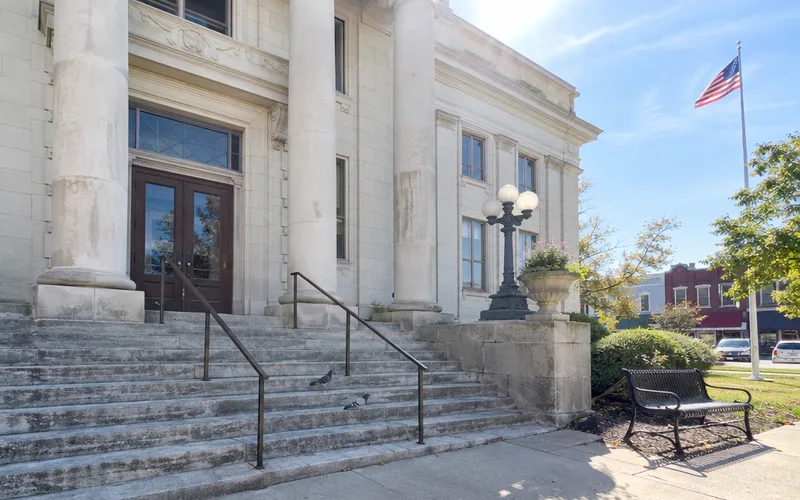
A bouquet, a friend taking photos on the courthouse steps and a reserved table at a favorite restaurant afterward can make a short ceremony feel like a full wedding day.
Many couples pair a courthouse ceremony with a casual dinner or a backyard party later. That split works well for second marriages and for couples who want the legal part done before a bigger celebration.
3. Reserve a Public Park Pavilion
Rent a covered pavilion in a city or county park and hold everything in one spot.
Pavilions are open-sided shelters with a roof, built for picnics and group events, and many come with built-in picnic tables.
- Best for: relaxed daytime weddings, picnic receptions and big families with kids. Skip it if you need total privacy or an indoor backup.
- Cost: A reservation or permit fee from the parks department.
- Payoff: A shaded, covered spot with seating and green space included in one booking.
- Time: 1-3 months, since popular pavilions book early for summer weekends.
- First step: Search your city’s parks and recreation website for “pavilion rental” and check the open dates.
Say you invite 60 guests to a Saturday lunch.
A pavilion gives you shade, tables and a lawn for games, and many parks add lakes or gardens for photos, so your main costs become food and a few rentals instead of a hall.
Here’s what to ask the parks office: “We’d like to hold a wedding ceremony and lunch at the pavilion. What permit do we need, and are amplified music and alcohol allowed?”
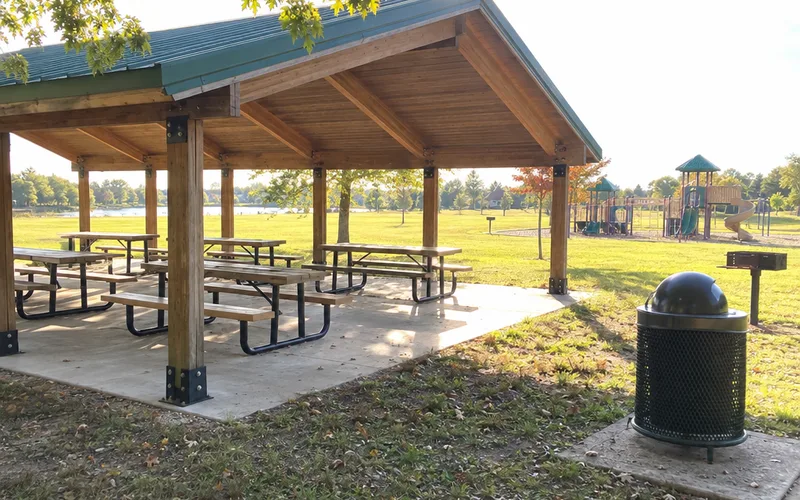
The rule on alcohol and amplified music is the question that changes your plan most, so ask it first.
Then visit the pavilion at the same hour on the same day of the week as your wedding.
You’ll see the sun angle, the nearest restrooms, how far guests walk from parking and how busy the playground next door gets.
4. Say Your Vows on a Public Beach
Stand on the sand with the water behind you and let the view do the decorating.
A public beach costs far less than a beachfront hotel or resort, and the backdrop is the whole show.
- Best for: small ceremonies of about 30 guests or fewer who don’t mind standing. Skip it if your guests include people who can’t walk on sand.
- Cost: A beach or special-event permit where your city or state requires one.
- Payoff: A waterfront ceremony with no rental fee for the view.
- Time: 2-4 weeks to get the permit.
- First step: Find out who manages the beach (city, county or state park) and call that office about ceremony permits.
The catch?
Wind, tides and crowds.
Plan a short ceremony, hand out a printed program with the time, and pick a weekday morning when the beach is quieter.
Wind steals voices fast, so stand with your backs to the water and have guests gather close instead of in long rows of chairs.
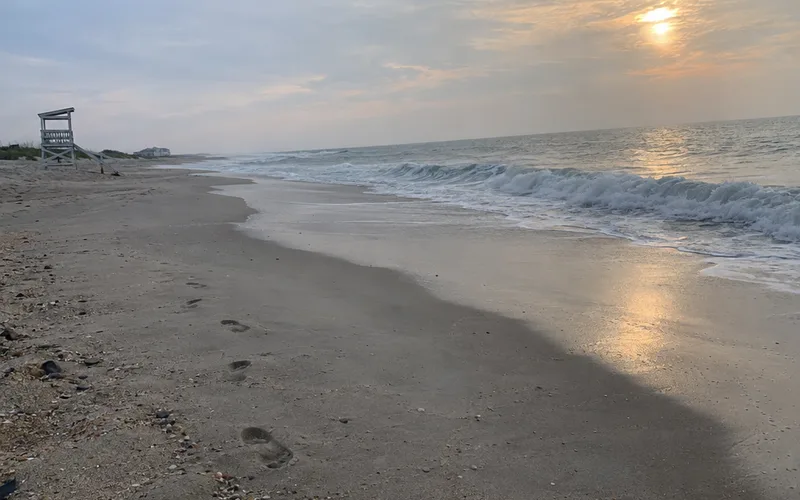
Check the tide chart for your date too, because the strip of sand you scouted at low tide can be underwater by the time the ceremony starts.
Then hold the reception somewhere close by, such as a park pavilion (#3) or a relative’s yard (#1).
5. Get Married in a State or National Park
Use a state park or a national park as your ceremony site, from a lake overlook to a mountain meadow.
These parks offer some of the best scenery in the U.S. for the price of a permit.
- Best for: outdoorsy couples and small groups who will hike or drive to a scenic spot. Skip it if you need a dance floor, a kitchen or a guaranteed private space.
- Cost: A special-use permit from the state parks agency or the National Park Service, plus park entry fees for guests.
- Payoff: A dramatic natural backdrop, such as lakes, cliffs or forest, with no venue to rent.
- Time: 1-3 months, so the permit office can approve your date and site.
- First step: Search “[park name] wedding permit” and read the park’s own permit page.
Here’s an example of how it can work:
A couple invites 20 people to a lakeside overlook in a state park for a 30-minute ceremony.
Afterward, everyone drives to a picnic shelter in the same park for sandwiches and cake.
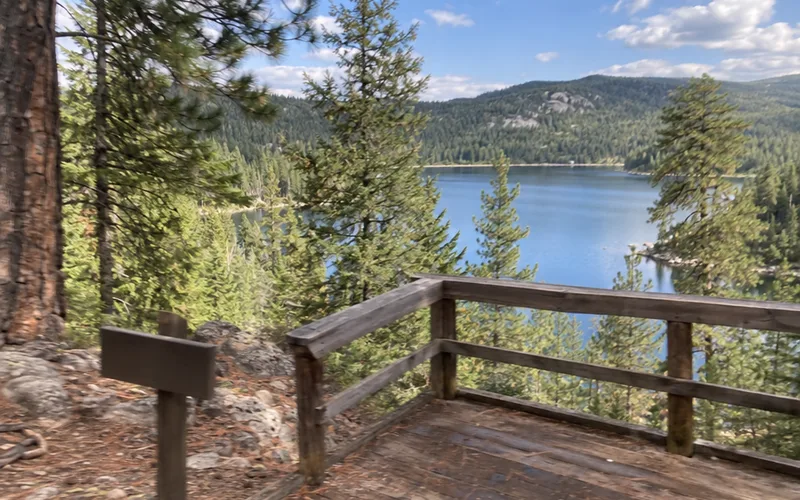
Every park sets its own rules on group size, chairs, music and alcohol. So read the permit conditions before you send a single invitation.
Popular parks also get crowded on summer weekends, and a permit rarely closes a scenic spot to other visitors.
So pick a weekday or a shoulder-season date if you want the overlook to yourselves.
6. Use the Church or Place of Worship You Attend
Hold the ceremony in your own church, synagogue, mosque, temple or chapel.
Members often pay less than outsiders, and many congregations have a fellowship hall next door for the reception.
- Best for: couples who belong to a congregation and want a religious ceremony. Skip it if you don’t attend anywhere regularly.
- Cost: A use fee or a donation, often lower for members.
- Payoff: A ceremony space and, often, a hall with tables and a kitchen, in one booking.
- Time: 1-3 months, because many congregations require meetings with the clergy first.
- First step: Call the church office and ask, “What’s the fee for members to use the sanctuary and the hall for a wedding?”
Ask about the hall in the same call.
A ceremony upstairs and a potluck or catered lunch downstairs keeps your guests in one building all day.
What if you don’t belong anywhere?
Some churches and chapels rent to non-members too, usually at a higher rate and with their own rules on music, decor and who may officiate.
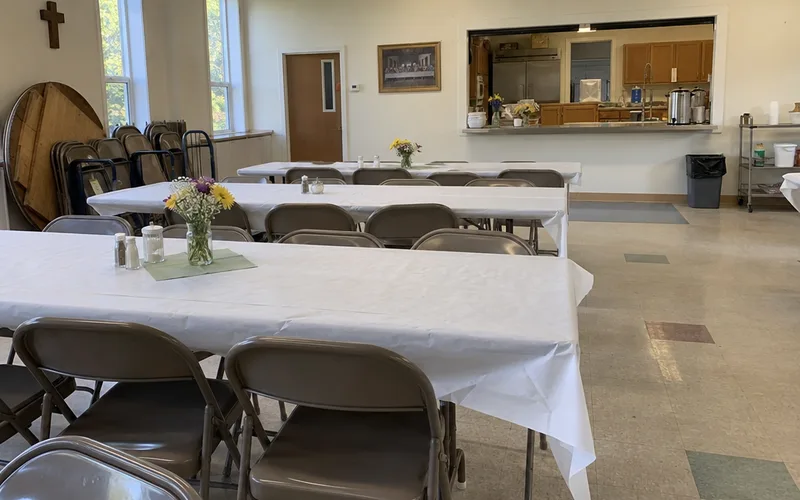
Ask for those rules in writing, since a venue that bans your playlist or your officiant can force a costly change late in the plan.
Key Takeaway: The cheapest church is the one that already knows your name.
7. Rent a Community Center, VFW or Lodge Hall
Book a hall run by your town, a veterans’ group or a fraternal lodge.
These halls are built for parties, so they usually come with the tables, chairs and kitchen a backyard lacks.
- Best for: receptions of 75 to 150 guests who want a dance floor on a budget. Skip it if you want a hall that looks elegant without any decorating.
- Cost: A flat hall rental, sometimes with a security deposit and a cleaning fee.
- Payoff: A big indoor room with seating and a kitchen in one flat fee.
- Time: 1-3 months.
- First step: Call your town’s recreation department and your local VFW post, and ask for the hall rental rate for a Saturday and a Sunday.
Plain walls are the trade-off.
String lights, fabric and a few big plants can turn a bare room into a party, and cheap wedding decorations go a long way in a hall with good bones.
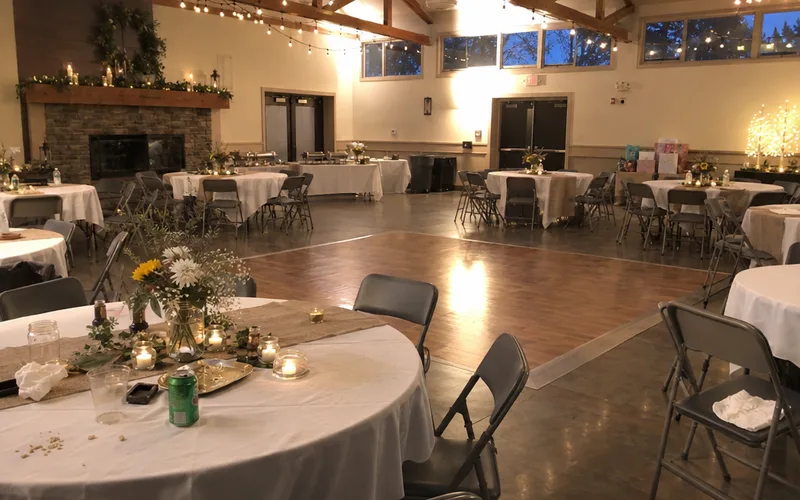
Before you sign, ask whether you can bring your own caterer and whether the hall has a bar license.
8. Try a Public Library, Museum or Botanical Garden
Book a library reading room, a small museum or a botanical garden, often for an evening after closing time.
These places are already full of books, art or flowers, which means you buy almost no decor.
- Best for: couples who want a unique wedding venue idea on a budget and a guest list under about 100. Skip it if you want a loud party until midnight.
- Cost: An event rental fee, often lower at a regional museum or a town library than at a big-city one.
- Payoff: A setting that comes decorated, from art on the walls to a greenhouse or conservatory full of plants.
- Time: 1-3 months.
- First step: Search your library’s or museum’s website for “private events” and email the events contact for a rate sheet.
Here’s what that can look like:
A small art museum hosts a 6:00 p.m. ceremony in its courtyard, then dinner in a gallery after the doors close to the public.
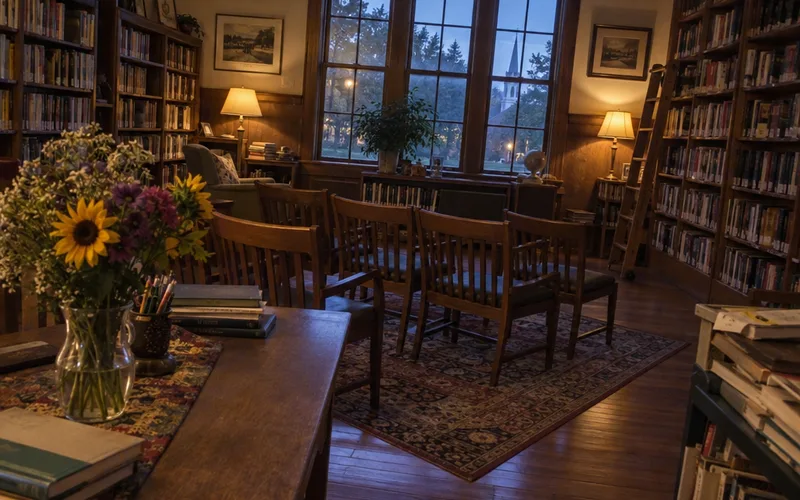
Guests walk past the exhibits with a drink in hand, and the only decor you bring is flowers for the tables.
Note: Cultural venues often have strict rules about candles, confetti, food near exhibits and approved caterers. Ask for the event policy before you fall in love with the space.
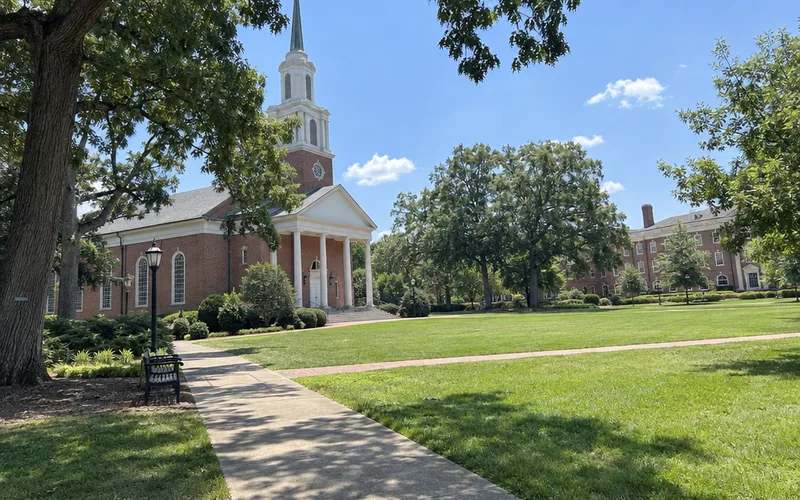
9. Book a College Campus Chapel or Quad
Use the chapel, lawn or event room at the college you or your partner attended.
Many colleges rent campus spaces for events, and some offer alumni rates.
- Best for: alumni with good memories of campus. Skip it if you’d need to marry during graduation weekend or move-in week.
- Cost: A campus event rental, sometimes discounted for alumni.
- Payoff: A historic chapel or a big green quad without a private-venue price tag.
- Time: 1-3 months, and longer for spring dates near graduation.
- First step: Email the alumni office and ask, “Which campus spaces can alumni rent for a wedding, and is there an alumni rate?”
Summer is often the easiest season to book, because fewer students and events compete for the space.
Ask about parking too.
A campus that’s packed on weekdays can have empty lots on a Saturday in July.
Then ask whether the college requires its own catering service.
Some campuses require their own caterer for events, so the menu price can matter more than the room fee.
10. Take Over a Restaurant Room or a Brewery
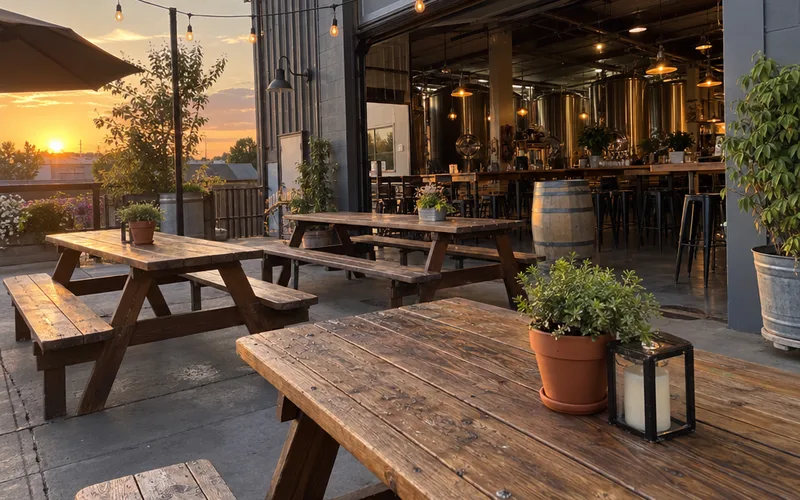
Hold the reception in a restaurant’s private room or a brewery’s event space or patio, and let the kitchen and bar handle the rest.
You skip the separate costs of a caterer, dishes, linens and furniture, because the restaurant already has all of them.
- Best for: dinner receptions for 20 to 250 guests who care most about good food. Skip it if you want to bring your own caterer or alcohol.
- Cost: A food-and-drink minimum or a room fee, set by the restaurant or brewery.
- Payoff: Up to 250 guests at one brewery venue in Michigan, with the bar and ceremony space on-site.
- Time: 2-4 weeks for a private room; 1-3 months for a full buyout.
- First step: Ask your favorite local restaurant, “Do you have a private room for a wedding dinner, and what’s the minimum spend?”
For example, Watermark Brewing’s solarium venue in Southwest Michigan lists room for up to 250 guests, a beer, wine and cocktail bar, and on-site ceremony space inside and outside.
That means a brewery can host the vows, the dinner and the drinks without a second location.
The catch is the minimum.
If the menu costs more per person than you planned, the minimum spend eats your budget fast. So ask for 2 or 3 menu options at different prices, and compare them with these cheap wedding reception food ideas before you sign.
11. Rent an Airbnb or Vacation Home That Allows Events
Book a big rental house, cabin or inn that allows small events, and let everyone stay where the party happens.
A vacation home works as the venue, the getting-ready space and the guest lodging at once.
- Best for: small weddings of about 20 to 40 people who want a weekend together. Skip it if the listing bans events or you’re inviting 120 people.
- Cost: The nightly rate, plus any event fee the host charges.
- Payoff: A venue and a place to sleep for the 2 of you and your closest people, in one booking.
- Time: 1-3 months.
- First step: On Airbnb, filter for homes that allow events, then message the host before you book.
Here’s what to send the host:
“We’d like to hold a small wedding for 30 guests on Saturday, from 3:00 to 9:00 p.m. Do you allow events of that size, and is there an event fee, a noise curfew or a cleaning charge?”
Never book a rental for a wedding without the host’s written permission for the event.
A host who finds an unapproved party can cancel the stay or keep your deposit, so that one message protects the whole day.
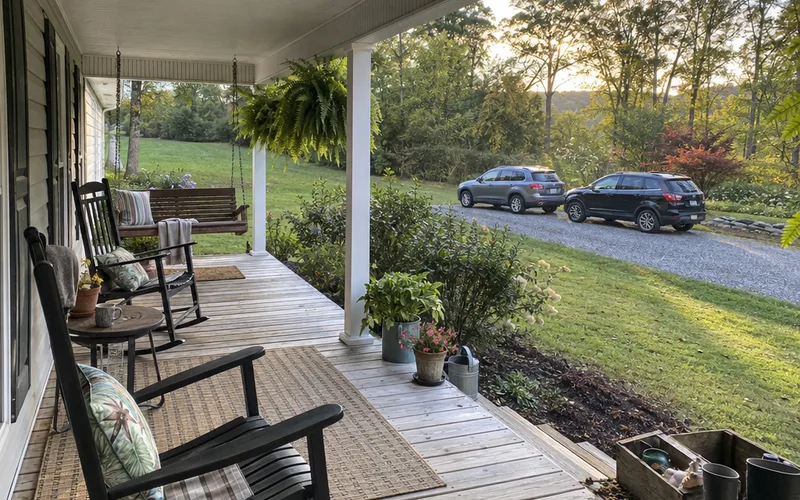
Look closely at the house rules for guest limits, parking spots and quiet hours.
A home that sleeps 10 may still allow 40 daytime guests, but only if the street has room for their cars and the party ends before the neighbors’ quiet hours begin.
12. Book an Industrial Loft or Flexible Event Space
Rent a warehouse loft, art gallery or industrial event space that hosts all kinds of parties, not just weddings.
Spaces that also host birthdays and conferences often price by the event, not by a “wedding package.”
- Best for: city couples who like brick, steel and big windows. Skip it if you want a garden or an outdoor ceremony.
- Cost: A space rental, often with fewer bundled wedding extras to pay for.
- Payoff: A blank, flexible room that suits a ceremony, a dinner and a dance floor.
- Time: 1-3 months.
- First step: Search “[your city] event space” or “industrial event venue” and ask each space for its rate on a Friday or Sunday.
The Eastern in Detroit’s Eastern Market is one example: it hosts weddings, birthdays and corporate events as an industrial, flexible private venue.
When a space serves many kinds of events, ask for its general event rate before you say the word “wedding.” Then compare it with the wedding package line by line.
A blank room needs a plan, though.
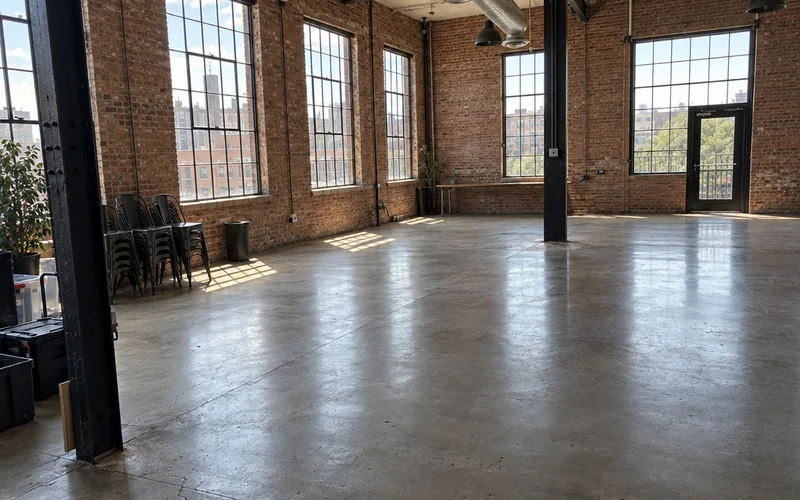
Bring a simple floor sketch to the walkthrough: where the ceremony chairs go, where dinner tables replace them, and where the dance floor and bar sit.
That one sheet tells you whether you need to rent anything, and it keeps a flexible space from turning into a pile of surprise rental bills.
13. Book a Barn or Classic Venue on a Sunday
Rent the traditional venue you love, but pick the day of the week it’s hardest to fill.
A Sunday or Friday date can take thousands off the exact same space.
- Best for: couples set on a classic barn or estate who can be flexible on the day. Skip it if most guests can’t travel on a Sunday.
- Cost: The venue’s full rental, at its lower off-peak rate.
- Payoff: $2,000 less on a Sunday than a Saturday at one Michigan barn.
- Time: 1-3 months, longer for popular venues.
- First step: Email 3 venues and ask for their Friday, Saturday and Sunday prices side by side.
Here’s the deal:
The Blue Dress Barn, a barn venue in Southwest Michigan, lists 2026 rental totals of $6,000 on a Friday, $7,000 on a Saturday and $5,000 on a Sunday on its own pricing page.
That’s $2,000 saved for moving the same party one day later. Not bad.
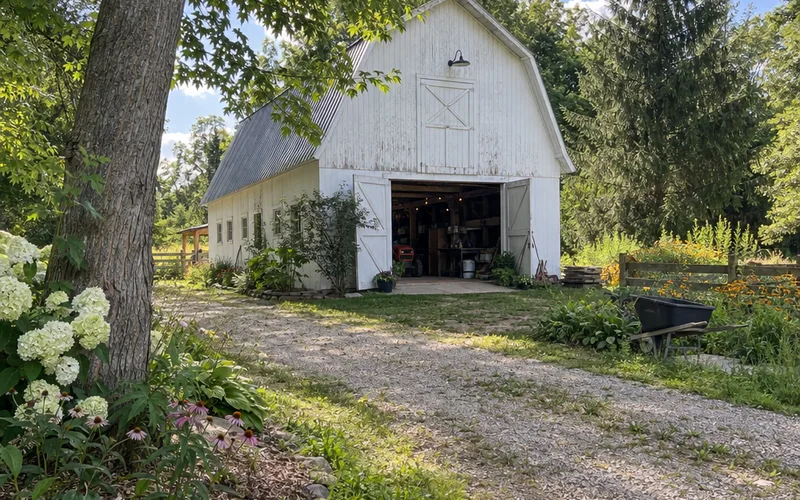
The same page asks for a non-refundable $1,800 retainer to hold a date, which counts toward the rental.
So read the cancellation terms before you pay it, because a retainer you can’t get back is the riskiest money in your venue budget.
How to Pay Less for Any Wedding Venue
The fastest way to pay less for any wedding venue is to change the date, keep everything at one location and read the venue’s rules on outside vendors before you sign.
These 5 moves work on almost every idea above.
1. Move the date off-peak.
Off-peak means a Friday or Sunday, a weekday or a less popular month.
Kendall Point, a wedding venue in Boerne, Texas, advertises $1,000 to $2,000 off select April 2027 dates on its own site.
2. Hold the ceremony and the reception at the same venue.
Can you hold the ceremony and reception at the same venue?
Yes, at most of the ideas on this list, including a backyard, a church with a hall, a brewery or a barn.
One location means one deposit, one setup and no shuttle between the two.
3. Ask what the fee includes.
A cheap fee that leaves you renting every chair can cost more than a higher fee with everything included.
4. Read the vendor and alcohol rules.
The Blue Dress Barn’s own pricing page says couples can hire their own caterer, florist, photographer, DJ or band, but must hire its listed bar service to pour any alcohol.
That’s a useful mix: you pick a cheaper caterer, but you budget for the required bartenders.
5. Ask for a better rate.
Here’s what to say: “We love the space, but our venue budget is firm. Do you have any open Friday or Sunday dates, or a lower rate for dates that haven’t booked?”
A venue with an empty date usually earns more by discounting it than by leaving it empty.
The Hidden Costs of a Free Wedding Venue
A free wedding venue still costs money, because you rent everything a paid venue would have included: seating, tables, restrooms, shade, lighting and cleanup.
That’s the trade-off behind ideas #1, #3, #4 and #5.
For comparison, the Blue Dress Barn’s 2026 venue fee covers a 12-hour rental, round tables and 250 walnut Chiavari chairs for up to 250 guests.
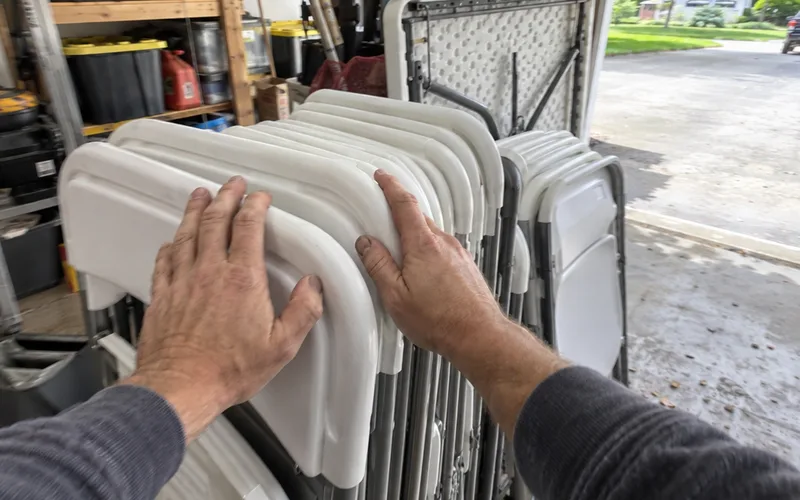
At a free site, every one of those items becomes your job.
Price this list before you call any venue “free”:
- Chairs and tables: one seat per guest, plus tables for food, gifts and the cake.
- Restrooms: a house bathroom or a park restroom may not handle a big crowd.
- Shade and rain cover: a tent or a covered backup spot for the ceremony.
- Power and lights: extension cords, string lights and a plan for after sunset.
- Cleanup: trash bags, recycling and someone who stays to the end.
Pro Tip: Ask 2 rental companies for a quote on the same list, then compare the total with what a community hall (#7) charges.
Sometimes the hall wins once rentals are counted, so do that math before you pick.
And for decor that suits a park or a yard, browse these outdoor wedding decoration ideas built for open-air sites.
Match the Venue to Your Guest Count
The right budget wedding venue depends first on your guest count, because a free site that can’t seat everyone stops being free the moment you rent around it.
So settle on a rough number before you fall for a place.
Here’s how the 13 ideas line up by size:
- Under 20 guests: a courthouse (#2), a beach (#4) or a state or national park (#5).
- 20 to 50 guests: a backyard (#1), an Airbnb (#11) or a library or small museum (#8).
- 50 to 150 guests: a park pavilion (#3), a church with a hall (#6), a community hall (#7) or a campus space (#9).
- 150 to 250 guests: a large hall (#7), a brewery or restaurant buyout (#10), an industrial space (#12) or a barn (#13).
What about 100 guests on a tight budget?
That’s the size where readers on Facebook wedding groups ask for an “under 2000 wedding venue for 100,” and it’s where halls and pavilions shine.
Both seat a crowd without a full venue package, and both often charge a flat rate instead of a per-guest price.
In other words, choose the venue for the guest list you have, not the one you hope to trim later.
Cutting guests after the invitations go out is an etiquette problem that no venue discount fixes.
Questions to Ask Before You Book Any Venue
The questions to ask before booking a cheap wedding venue are about the total cost and the rules, because those decide whether a low headline price stays low.
Ask every venue on your shortlist the same 8 questions:
- What exactly does the fee include: tables, chairs, linens, setup and cleanup?
- How many hours do we get, and does that include setup time?
- What’s the guest limit for a seated dinner?
- Can we bring our own caterer, and who can serve alcohol?
- Is there a noise curfew or a rule on amplified music?
- What’s the rain or backup plan for any outdoor part?
- Is the deposit refundable, and what happens if we move the date?
- Do you require event insurance or a security deposit?
Write the answers next to each venue’s price.
That way, a lower rental fee never hides a bigger bill for what you’ll rent, hire or replace.
How to Make a Cheap Venue Look Expensive
The easiest way to make a cheap wedding venue look expensive is to pick a space with good bones, then spend your decor money on lighting and one focal point instead of covering every surface.
Readers ask about this a lot, and the answer is less about money than about where you spend it.
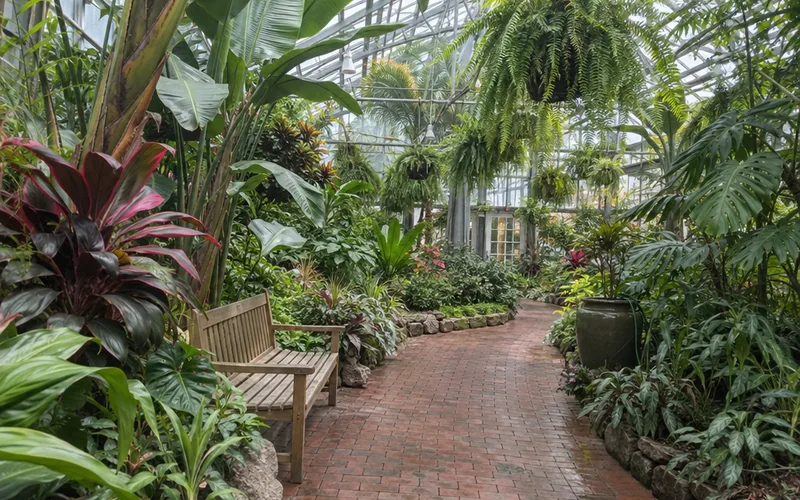
Here’s what does the most for the least:
- Warm lighting: string lights and candles hide plain walls and make any room feel like evening.
- One strong backdrop: dress the spot where you say your vows, since it appears in most photos.
- Matching linens: the same tablecloth color on every table looks planned, even on rented folding tables.
- Greenery over flowers: big branches and potted plants fill space for less than full arrangements.
Then let the setting carry the rest.
A garden, a courtyard, a library or a park with lakes already looks finished, which is exactly why those ideas rank high on a budget list.
How to Find Cheap Wedding Venues Near You
The quickest way to find cheap wedding venues near you is to call the public offices that run free and low-cost spaces, then check private venues’ own pricing pages for off-peak rates.
Wherever you live in the U.S., start with these 5 searches this week:
- Your city’s parks and recreation website, for pavilion and garden rentals.
- Your county clerk’s office, for civil ceremony days and fees.
- Your town’s community center and local VFW or lodge halls, for flat hall rates.
- Your college’s alumni office, for campus spaces.
- The “pricing” or “availability” page of 3 private venues, for Friday, Sunday and off-season rates.
Write every quote in one list with the same 4 details: the fee, what’s included, the guest limit and the rules on food and alcohol.
That way you compare real totals, not just the headline price.
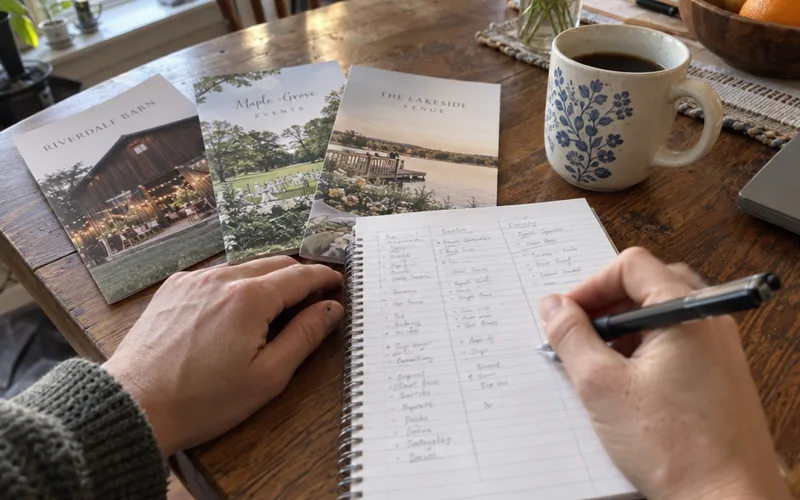
For one city’s example of how many free options can exist, see these free places to get married in Austin.
Venue Mistakes That Wipe Out the Savings
The venue mistakes that cost budget couples the most are booking before you know your guest count, skipping the permit or written approval, and forgetting the time you need to set up.
Each one turns a cheap venue into an expensive fix.
- Booking too small: a 40-person room for a 70-person list means a last-minute second venue or a painful round of uninviting.
- Relying on a verbal yes: a parks clerk or a relative who says “sure” isn’t a permit or a contract, so get it in writing.
- Forgetting setup time: if the room is yours from 4:00 p.m. and dinner starts at 5:00, you’ll pay for help to set up fast.
- Splitting the day across 2 places: a ceremony across town adds travel time, a second setup and sometimes a second fee.
- Ignoring the curfew: a hard 9:00 p.m. noise rule can cut the party short or bring a fine.
The fix for all 5 is the same: get the venue’s rules in writing before you pay anything.
Long Shots Worth Knowing About
Zoos, aquariums, hotel ballrooms, wineries and historic mansions can look like a bargain in photos, but these wedding venues rarely fit a tight budget unless you land an off-peak date.
- Zoo or aquarium: Best for animal lovers with a flexible budget. The deal-breaker is the full event rental plus approved caterers.
- Hotel ballroom: Best for guests who need to stay overnight anyway. The deal-breaker is the food-and-drink package that usually comes with the room.
- Winery or vineyard: Best for couples who want wine country views. The deal-breaker is peak-season pricing on weekends.
- Historic mansion or estate: Best for a formal look with no decor needed. The deal-breaker is a high rental fee and strict vendor lists.
If one of these is your dream, apply the off-peak and same-venue moves above before you rule it out.
Plan the Rest of the Day Around Your Venue
Your venue choice decides most of your other costs, so plan the rest of the day after you book it.
A park or yard pushes you toward a picnic-style meal, while a restaurant handles the food for you.
For food, decor and the rest of the plan, start at the budget weddings hub.
If you’re keeping the guest list short, these small wedding ideas pair well with a courthouse, a park or an Airbnb.
And if you’d rather make things yourself, look through these DIY wedding ideas and reception ideas on a budget next.
Picking a venue on purpose, instead of by default, is frugal living at its most practical.
Frequently Asked Questions
What is the cheapest type of wedding venue?
The cheapest type of wedding venue is a backyard that you or a relative already own, because there’s no site fee at all. A courthouse civil ceremony and a public park pavilion come next, since you pay only a clerk’s fee or a permit.
Ask a relative with a big yard before you price anything else.
Where is the cheapest and easiest place to get married?
The cheapest and easiest place to get married is usually your county courthouse or city hall, where a short civil ceremony takes little planning and costs only the clerk’s fee. Bring your marriage license, your ID and the witnesses your state requires.
Call the clerk’s office this week and ask which days they perform ceremonies.
What is a realistic wedding venue budget?
A realistic wedding venue budget is the price of a venue near you that fits your date and guest count, from nothing for a backyard to thousands for a rented barn. The Blue Dress Barn in Michigan, for example, lists 2026 totals from $5,000 on a Sunday to $7,000 on a Saturday.
Get written quotes from 3 venues before you set your number.
Is it cheaper to get married on a Friday or Sunday?
Yes, a Friday or Sunday wedding usually costs less than a Saturday at the same venue. The Blue Dress Barn’s own 2026 prices are $6,000 on a Friday and $5,000 on a Sunday, against $7,000 on a Saturday.
Ask every venue on your list for its Friday and Sunday rates in writing.
Can you bring your own caterer or alcohol to a wedding venue?
Some wedding venues let you bring your own caterer, but alcohol rules are often stricter. The Blue Dress Barn, for example, lets couples hire their own caterer, florist, photographer and DJ but requires its bar service to pour any alcohol.
Ask for the vendor and alcohol rules in writing before you pay a deposit.
Do you need a permit to get married in a public park?
Many public parks need a reservation or special-event permit for a wedding, especially when you want a pavilion, chairs or a set time slot. The rules come from whoever runs the park: the city, the county, the state or the National Park Service.
Call that office and ask what a wedding of your size needs.
Where can I have a wedding ceremony for free?
You can have a wedding ceremony for free in your own backyard or on a relative’s land, because there’s no site fee when you or your family own the space. Free public spots like some parks and beaches may still need a permit for a group.
Ask the owner or the parks office for written permission first.
How do you have a beautiful, inexpensive wedding?
You have a beautiful, inexpensive wedding by picking a venue that is already beautiful, such as a botanical garden, a lakeside park or a library, so you spend almost nothing on decor. Then keep the guest list small, because every extra guest needs a seat and a plate.
Pick the setting first and let it do the decorating.
Final Thoughts
The cheapest venue is the one with no site fee and few rentals, and for most couples that’s a backyard, a courthouse or a park.
Pick 2 ideas from the top of this list and make one phone call for each before Friday.