
5 of the 12 ideas below cost nothing at all.
The other 7 need one purchase each, and you decide how big it is.
That’s the point of low budget small house interior design: the free moves often fix a room before you buy anything.
Below are 12 ideas ordered by cost to start, each with who it suits, what it costs and a first step for today.
Here’s how to pick fast:
- Broke until payday? Ideas #1 to #3 need nothing but an afternoon.
- A dark house with low ceilings gets the most from #6 and #8.
- Renters who can’t paint or drill should go straight to #7, #8 and #9.
How This List Is Ordered
The 12 low budget small house interior design ideas in this list are ordered by cost to start: 5 free moves first, then ideas that need one small purchase, then paint and furniture.
When 2 ideas cost the same, the one more readers can do with what they own comes first.
Prices for paint, lamps and secondhand furniture change by store and town, so each Cost line says what you pay for instead of a dollar figure.
Work down the list in order before you browse more budget decorating projects, because the free moves often make a purchase unnecessary.
12 Low Budget Small House Interior Design Ideas
These 12 interior design ideas for small homes in low budget start with the free changes and end with the furniture worth paying for.
1. Clear the Walking Paths and Float the Sofa
Move furniture so you can walk through every room without turning sideways.
A small house feels cramped when furniture blocks the routes you use every day.
- Best for: every small house. Skip it if each piece already has only one possible spot.
- Cost: Free.
- Payoff: Wider-feeling rooms and a clear view across the floor.
- Time: Same day.
- First step: Walk from the front door to each room and note every spot you bump into something.
Here’s how to do it:
- Pull anything that juts into a path back against a wall or out of the room.
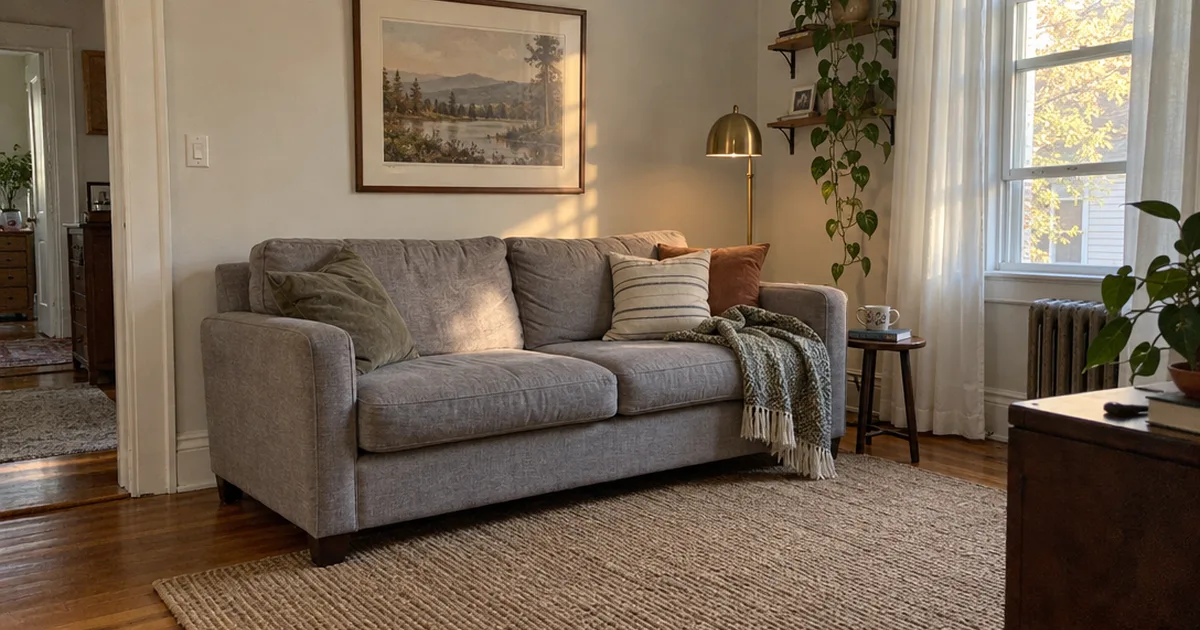
- Slide the sofa a little off the back wall if you have space, so the room reads in layers.
In other words, the floor you can see is the size the room feels.
2. Edit Down to Fewer, Better Pieces
Take out the furniture and decor you don’t use or love.
Every item you remove from a small room gives back space you can see.
- Best for: anyone whose surfaces are covered. Skip it if you’ve already pared down.
- Cost: Free, and selling what you remove can put money back in your pocket.
- Payoff: Clear counters, shelves and corners that make the house look calmer.
- Time: This week.
- First step: Clear every flat surface in one room, then put back only what you use each week.
Minimalism in a small house isn’t about owning almost nothing; it’s about a place for everything, out of sight.
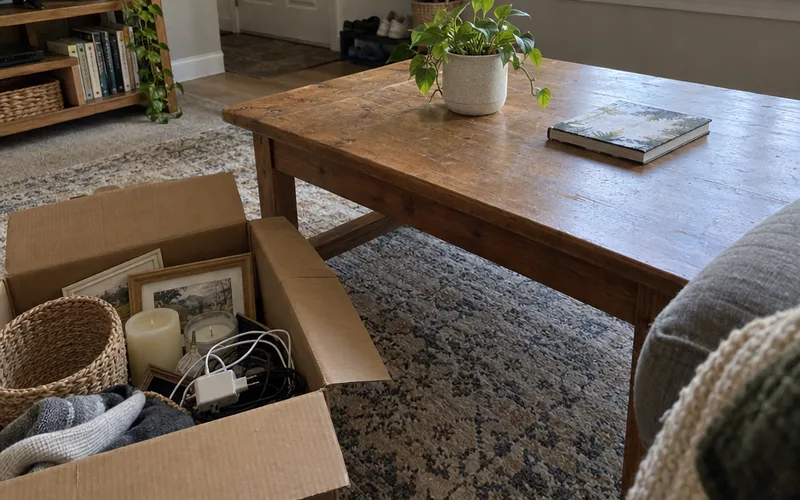
A room-by-room minimalist decluttering checklist keeps the job from eating a whole weekend.
Decide where each kept item lives before you call a room done, or the clutter just moves into a closet.
3. Shop Your Own House Before You Buy
Move lamps, rugs, art and baskets between rooms before you buy anything new.
The right lamp for your living room may be sitting in a bedroom you barely use by day.
- Best for: anyone about to buy decor. Skip it if every room is as bare as you want it.
- Cost: Free.
- Payoff: A refreshed room built from pieces you already paid for.
- Time: Same day.
- First step: Gather every lamp, rug and frame into one room, then place the best ones where you spend the most time.
Say a large rug sits in your guest room and a small one in the living room.
Swap them, and the living room looks finished while the guest room barely changes.
Still missing something? Check how to get free stuff before you shop, since neighbors sometimes give away lamps and shelves.
4. Measure and Preview Each Room First
Measure each room and plan where things go before you spend anything on furniture or decor.
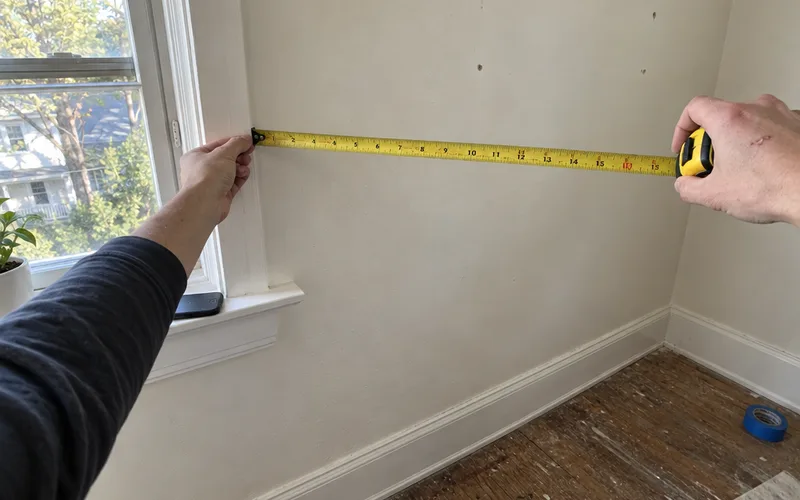
Most budget mistakes in a small house are buys that don’t fit, like a rug that’s too small.
- Best for: anyone planning a bigger buy. Skip it if you’re only swapping pillow covers.
- Cost: Free with a tape measure and painter’s tape; some AI decor tools charge.
- Payoff: Fewer returns and buys that fit the first time.
- Time: Same day.
- First step: Measure each wall, window and doorway, and save the numbers in one phone note.
Mark the footprint of a new piece on the floor with painter’s tape and live with it for a day.
For a picture instead, Ideal House’s product page says you upload a photo of your room and pick a style theme such as Cozy, Modern or Bohemian.
The same page says its AI only adds decorative elements like rugs, art and plants, without altering walls, floors or fixtures.
5. Bring In Plants From Clippings
Add green to each room with plants grown from cuttings or stems clipped from a yard.
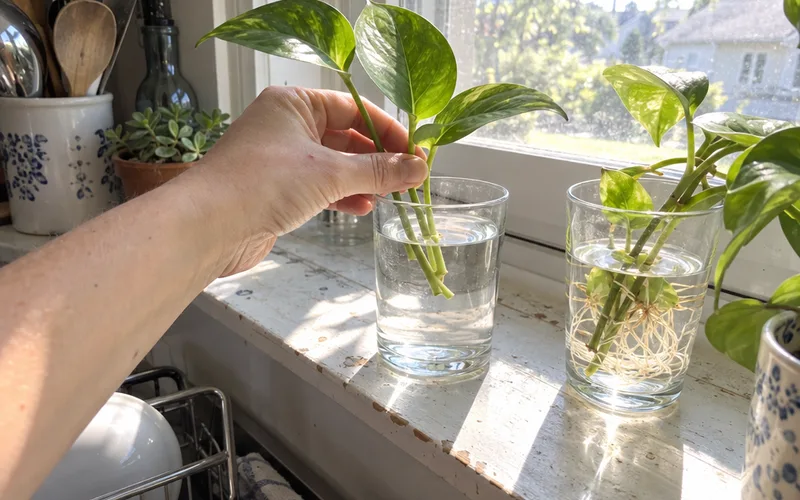
Plants on a sill, shelf or hook add color without taking floor space.
- Best for: anyone with a sunny window. Skip it if pets chew plants and you can’t check which are safe.
- Cost: Free if you root a friend’s cutting or clip branches from your yard.
- Payoff: Color and texture in every room without buying decor.
- Time: Same day for clipped stems; 2-4 weeks for cuttings to root.
- First step: Ask a friend or a local Buy Nothing group for a cutting from an easy houseplant.
Here’s what to post:
Hi neighbors, I’m decorating a small house on a tight budget. Does anyone have a pothos they could spare a cutting from? Happy to pick up this week.
Set the cutting in a glass of water on a sunny sill, and it’s decor while it roots.
6. Hang Curtains High and Wide
Mount curtain rods close to the ceiling and let the panels reach the floor.
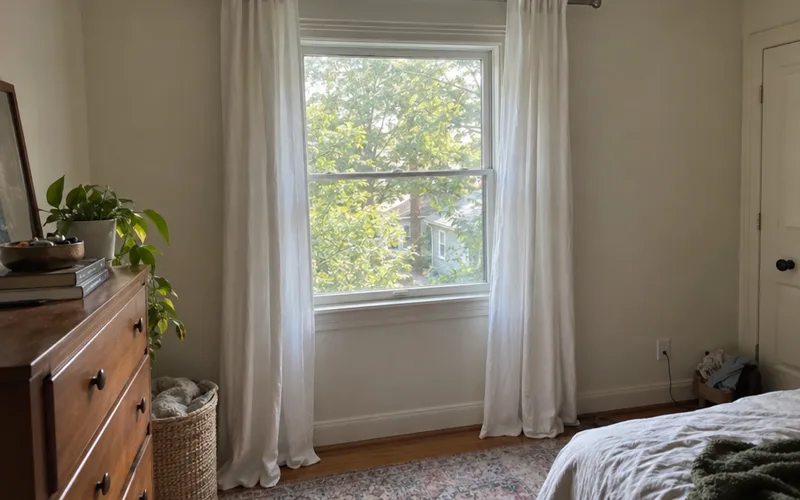
That makes walls look taller and windows look bigger, which matters most in a small house with standard ceilings.
- Best for: rooms with low ceilings or small windows. Skip it if your windows already reach the ceiling.
- Cost: A curtain rod, brackets and floor-length panels; reuse your panels if they’re long enough.
- Payoff: Taller-looking walls and more daylight when the curtains are open.
- Time: Same day.
- First step: Measure from the ceiling to the floor so you know what panel length to buy.
Run the rod past both sides of the window too, so open curtains cover wall instead of glass.
7. Lean One Big Mirror Where the Light Hits
Put one large mirror across from or next to a window.
A big mirror bounces daylight deeper into the room and makes a small space look deeper from the doorway.
- Best for: dark rooms and narrow hallways. Skip it if the only spot faces a cluttered corner.
- Cost: One mirror, and a secondhand one works as well as new.
- Payoff: More light and a room that looks deeper.
- Time: This week.
- First step: Search Facebook Marketplace for “floor mirror” or “leaner mirror.”
A leaning mirror needs no drilling, and the best places to thrift are worth checking before you pay full price.
The catch?
A tall leaning mirror can tip, so strap it to the wall if kids or pets live in the house.
8. Add Plug-In Lamps and Sconces
Put a floor lamp or plug-in wall sconce in every dark corner instead of relying on one ceiling light.
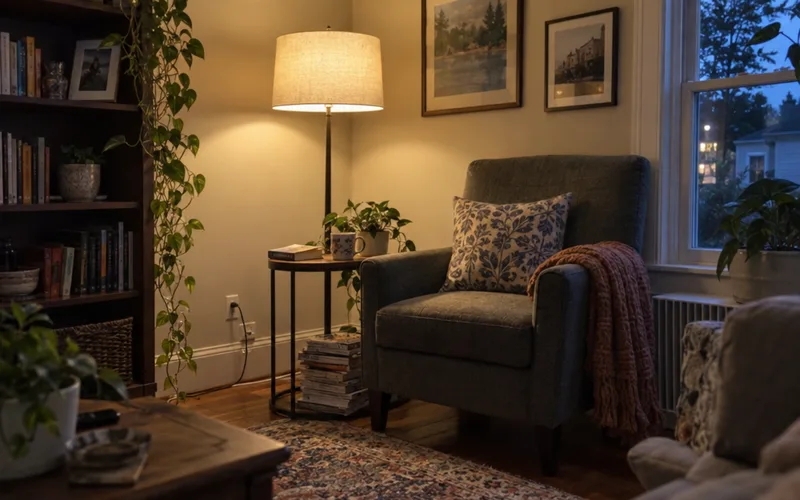
One overhead fixture throws flat light, while lamps at different heights make a small room feel larger and warmer.
- Best for: any room with one ceiling light. Skip it if the room already has 3 light sources.
- Cost: A floor lamp or a plug-in sconce, plus warm-white LED bulbs.
- Payoff: Brighter corners and a cozier room at night.
- Time: Same day.
- First step: Count the light sources in your darkest room, then add one where you sit.
Aim for 3 kinds of light in each room:
- 1 overhead light
- 1 lamp where you read, cook or work
- 1 soft light, like a wall sconce beside art
9. Swap Pillow Covers and Size Up the Rug
Change only the pillow covers and throws, then put your rug money into one rug that’s big enough.
Textiles change a room’s color fast, and everything comes with you when you move.
- Best for: renters and anyone tired of their colors. Skip it if your rug already sits under the sofa’s front legs.
- Cost: New pillow covers, a throw, and one larger rug if yours floats mid-floor.
- Payoff: A new color scheme and a room that looks pulled together.
- Time: This week.
- First step: Measure your seating area so the rug can slide under at least the front legs of the sofa and chairs.
Pick 2 neutral colors and 1 accent color, and stick to them for covers, throws and the rug.
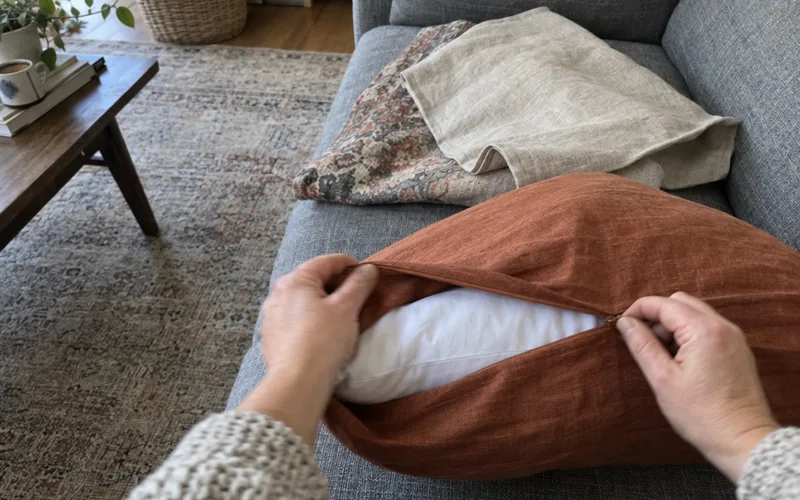
A plain rug in the right size beats a fancy small one, because a small rug makes the floor look choppy.
10. Paint Light, Match the Trim, Add One Accent Wall
Paint the walls a light, warm color, paint the trim to match and save bold color for one wall.
Matching the trim removes the lines that make walls look shorter.
- Best for: homeowners and renters with written permission. Skip it if your lease says no paint.
- Cost: Paint, a roller, a brush and painter’s tape for each room.
- Payoff: Brighter rooms that look bigger and one clear focal point.
- Time: This week, one room per weekend.
- First step: Paint patches of 3 light samples on the wall you see most.
An accent wall is one wall painted or papered differently from the rest, usually behind the bed, sofa or TV.
Renting? Here’s what to send your landlord:
Hi, I’d like to paint the living room a light neutral color. I can repaint it to the original color when I move out if you’d like. Is that OK?
For more focal wall ideas, see these cheap living room wall ideas.
11. Upcycle a Secondhand Piece
Buy a solid secondhand dresser, table or shelf and refinish it instead of buying new flat-pack furniture.
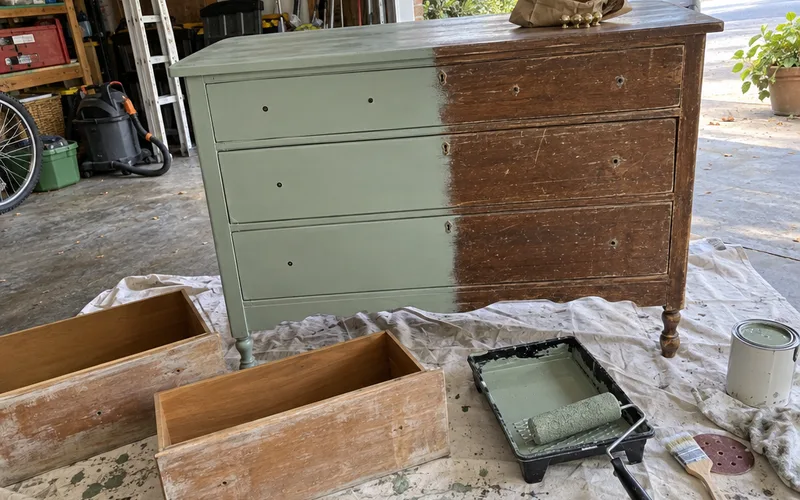
Upcycling old furniture means turning something unwanted into something better, and new paint and knobs can make a thrift find look custom.
- Best for: anyone with a free weekend and a place to work. Skip it if you need furniture this week.
- Cost: A secondhand piece, sandpaper, primer, paint and new hardware.
- Payoff: A sturdy piece that fits your house and color scheme.
- Time: 2-4 weeks, counting the search and drying time.
- First step: Search your local marketplace for “solid wood dresser” and filter by distance.
Before you pay, check 3 things:
- Drawers slide without sticking.
- Joints don’t wobble.
- It fits through your doorway.
12. Buy Furniture That Does Two Jobs
When you do buy furniture, choose pieces that store things or turn into something else.
Multifunctional furniture is any piece built to do more than one job, and it saves floor space you can’t get back any other way.
- Best for: small houses short on closets or a guest room. Skip it if your pieces already work.
- Cost: The most of any idea here: a storage piece, sofa bed or folding table, new or secondhand.
- Payoff: Hidden storage and rooms that switch jobs, like an office that becomes a guest room.
- Time: 1-3 months, since the right piece is worth waiting for.
- First step: List the 2 things you most need space for, such as guests or shoes, and shop only for those.
Good picks for small houses:
- A storage ottoman that works as a seat and coffee table
- A bed with drawers underneath
- A drop-leaf or folding dining table
- Wall shelves that use height instead of floor space
Measure the room and every doorway before you buy, because a piece that doesn’t fit isn’t a deal.
Where to Spend First in a Small House
The best order for spending money on a small house is layout, then lighting, then textiles, then paint, then furniture, because each step can make the next one unnecessary.
Spend on what your eye lands on first: the wall facing the door, the space above the sofa and the wall behind the bed.
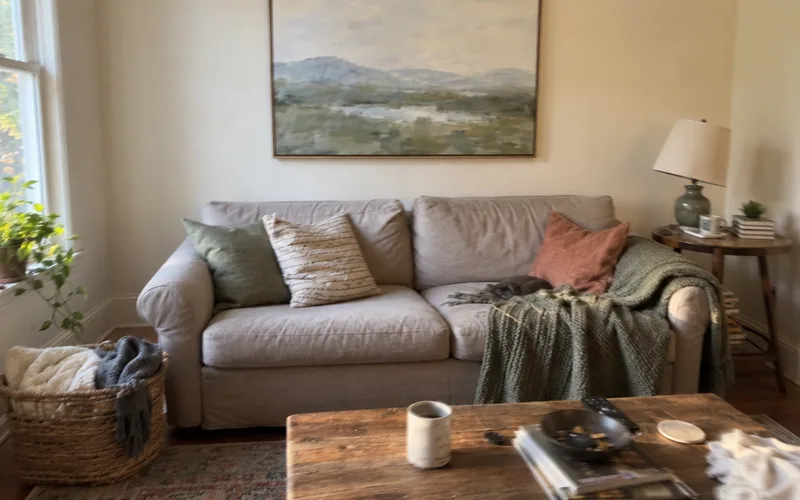
One large piece there beats many small items, so go cheap on side tables and baskets.
Small House Interior Design Ideas Room by Room
Low budget small house interior design works best room by room, starting with the living room, where you spend the most waking hours, then the bedrooms, kitchen and bath.
Living Room
Float the sofa, add a lamp beside it and size up the rug before you buy anything else.
For more, see these budget ideas for a small living room.
Bedrooms in a 1 or 2 Bedroom House
In a 1 bedroom house, the bedroom often doubles as an office, so a bed with drawers and shelves above the desk do the most work.
In a 2 bedroom house, a daybed or sofa bed lets the second room work as an office and a guest room, and there are more cheap bedroom decorating ideas when you’re ready.
Kitchen and Bathroom
Clear the counters, then decant soap and dry goods into matching containers so your eye stops jumping from label to label.
In the bathroom, a bigger mirror and matching towels change the room for little money.
Long Shots Worth Knowing About
Built-in cabinets, Murphy beds and new flooring are popular small house ideas that cost too much for a low budget, but they suit owners who plan to stay for years:
- Built-in cabinets: great storage for owners, but they need a carpenter.
- A Murphy bed: a bed that folds into the wall frees a room, but needs secure mounting.
- New flooring: one floor color through the house looks bigger, but it’s a renovation.
Mistakes That Make a Small House Look Cramped
The mistakes that make a small house look cramped are too many small items, furniture in walkways, a rug that’s too small and one ceiling light doing all the work.
Watch for these too:
- Buying a matching furniture set that’s too big for the room
- Covering every wall, so the eye has nowhere to rest
- Choosing skirted furniture that hides the floor
Renters can find more damage-free fixes for apartments, and becoming a minimalist keeps the clutter from coming back.
Frequently Asked Questions
How do you make room in a small house on a low budget?
You make room in a small house on a low budget by removing what you don’t use, storing things up the walls and choosing furniture with storage inside. Start with one closet or one corner, not the whole house.
What is minimalist interior design?
Minimalist interior design is a style built on fewer, simpler pieces, plain surfaces and storage that hides everyday clutter. It suits a small house because every item you remove gives back floor or wall space.
How can I make a small house look expensive on a budget?
You make a small house look expensive on a budget by buying fewer, larger pieces and hanging things higher. One big piece of art, full-length curtains near the ceiling and warm lamps look more finished than many small items.
How do I decorate a small rented house without damaging the walls?
You decorate a small rented house without damaging the walls by choosing things that lean, plug in or stand alone: a floor mirror, plug-in lamps, tension rods, rugs and freestanding shelves. Ask your landlord in writing before you paint.
Final Thoughts
Most of what makes a small house look better costs nothing: layout, less stuff and light.
This week, clear one walking path and pull your sofa off the wall, then decide whether the room needs anything at all.