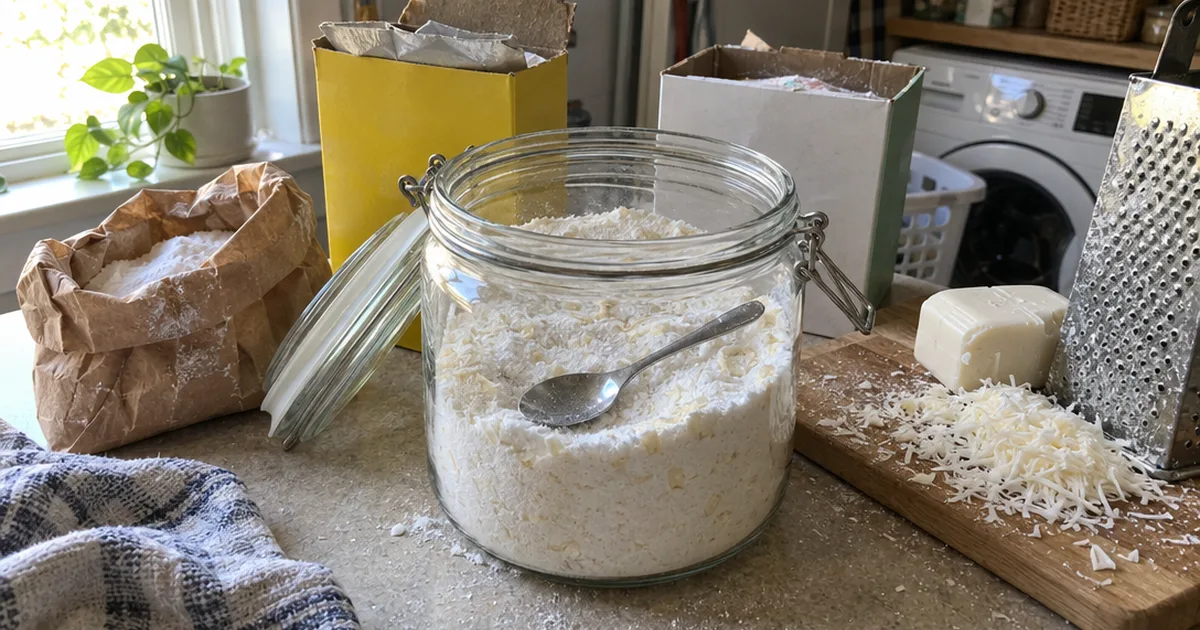

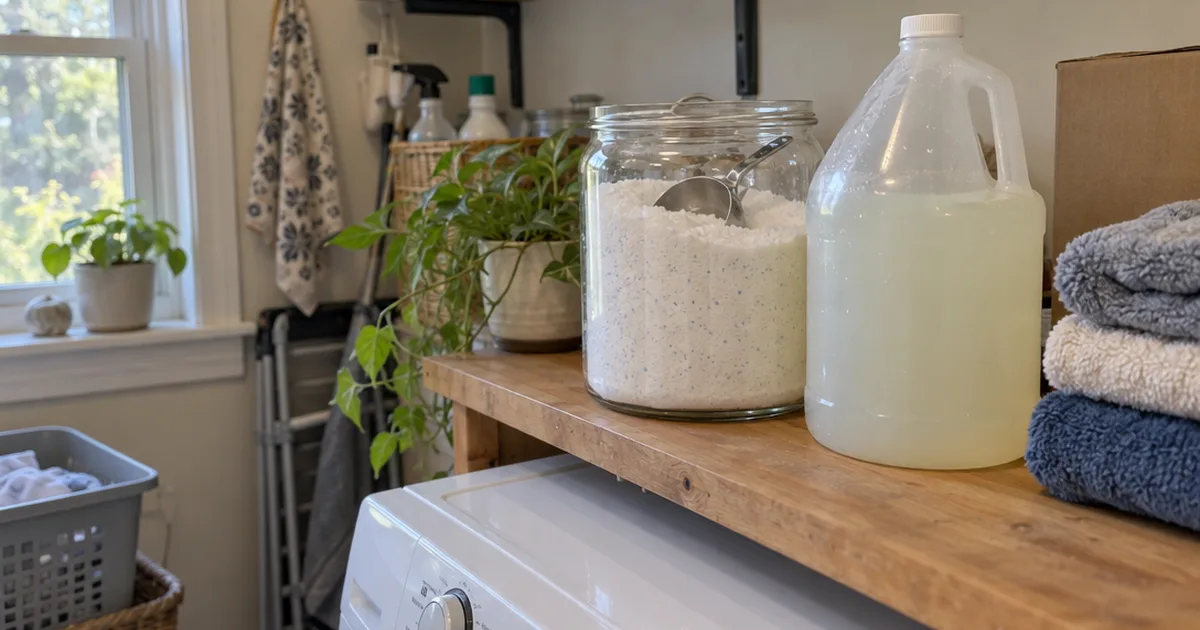
Two cups of powder hold 32 tablespoons, enough for up to 32 loads.
And that’s before the grated bar of soap adds its own bulk to the batch.
Homemade laundry detergent really is that simple: 3 ingredients from the laundry aisle and one short session at the counter.
Here are the 7 steps, with the swaps for liquid, HE washers and hard water built in.
- Best for: households with a standard or HE washer and mostly everyday dirt. Skip it if you have very hard water or a pile of greasy work clothes every week.
- Cost: 1 bar of soap plus 1 cup each of washing soda and borax, from boxes you can reuse for later batches.
- Payoff: 16 to 32 loads from the 2 cups of washing soda and borax alone at 1 to 2 tablespoons a load, before the soap adds more.
- Time: Same day.
- First step: Check your grocery store’s laundry aisle for Arm & Hammer Super Washing Soda and a box of borax.
How to Make Homemade Laundry Detergent Step by Step
Making DIY laundry detergent takes 7 steps: choose powder or liquid, buy the 3 base ingredients, grate the soap, mix it with the powders, dissolve it if you want liquid, store it and dose it. The powder version is done the same day.
Step 1: Pick Powder or Liquid
Powder is the quicker choice, because you grate, stir and you’re finished.
Liquid uses the same ingredients plus hot water and a bucket, and it has to sit overnight to set into a gel.
So pick the dry mix if you want the least work. Pick liquid if you wash almost everything in cold water, since the soap in a liquid is already dissolved.
Step 2: Buy the 3 Base Ingredients
Washing soda is sodium carbonate, and the box you’ll usually find is Arm & Hammer Super Washing Soda.
A box of borax sits on the same shelf, most often from 20 Mule Team.
For the bar, Fels-Naptha laundry soap and Ivory are the classic picks, and castile soap works too if you’d rather use a plain bar without added fragrances.
Step 3: Grate the Bar Soap Fine
Grate the whole bar on the small holes of a box grater, or pulse it in a food processor until it looks like coarse sand.
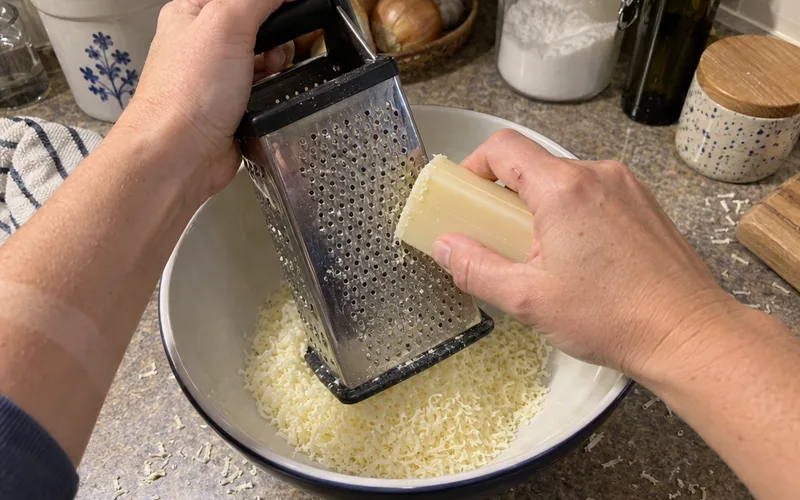
Fine shreds matter. Big flakes dissolve slowly in a cool wash and can leave white bits on dark clothing.
Keep that grater for laundry from now on, so soap never ends up in your cooking.
Step 4: Mix the Powders With the Soap
Stir the grated soap into the washing soda and borax with a spoon until the flakes are spread evenly through the mixture. Speed Queen’s base recipe uses 1 bar of soap, such as Ivory or Fels-Naptha, with 1 cup of washing soda and 1 cup of borax.
A big bowl and a dry measuring cup keep the mess down, and a lid on the container lets you shake instead of stir. The full powder recipe walks through blending the soap extra fine if your washer runs cool.
Step 5: Turn It Into Liquid (Optional)
For a liquid, cover the grated soap with boiling water in a saucepan and stir it over low heat until no flakes are left.
Pour that into a large bucket that’s half full of hot tap water, stir in the washing soda and borax, then top it up with cool water and stir again.
Cover the bucket and leave it overnight, and it sets into a soft gel you shake or stir before each use. The exact water amounts are in this liquid laundry detergent recipe, because they change how thick the gel gets.
Step 6: Store It Sealed and Labeled
Spoon the mix into an airtight jar or lidded tub, and keep it away from the warm, damp air near the dryer.
That matters because humidity makes the powder clump into a brick.
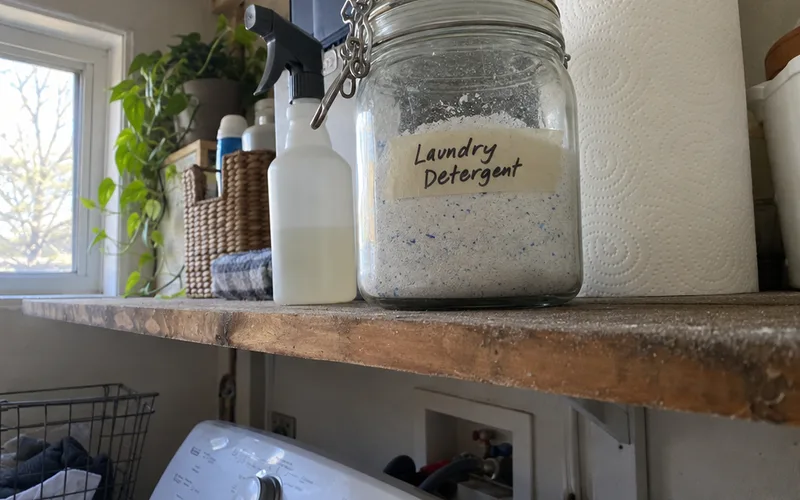
Label the container in big letters and store it up high. A jar of white powder looks a lot like sugar or flour to a small child.
A liquid batch goes into a jug with a tight lid instead. Shake it before every pour, because the ingredients settle and can form harmless crystals at the bottom.
Step 7: Dose It and Run a 2-Week Test
Use 1 to 2 tablespoons per load, which is the dose Speed Queen gives for this recipe, and start at 1 tablespoon in an HE washer.
Then test it fairly. Wash the same kind of load, like a set of towels, with nothing but your mix for 2 weeks.
Check 3 things:
- Towels feel soft, not stiff or crunchy.
- Clothes come out free of odors straight from the washer.
- Whites look white, not gray.
If any of those slip, use less detergent first. Too much soap causes more trouble than too little.
What You Need to Make Homemade Laundry Detergent
A homemade detergent batch needs just 1 bar of soap, 1 cup of washing soda and 1 cup of borax, plus a grater, a bowl and an airtight jar. Speed Queen, the washer maker, notes that with a few exceptions most recipes use those same three ingredients.
Each one has a job. Washing soda does the heavy cleaning, borax boosts it, and the soap lifts dirt off the fabric.
All 3 are easy to find. Look on the laundry aisle’s top and bottom shelves at a grocery store or a big-box store like Walmart, or order them from Amazon.
The one mix-up to avoid is washing soda versus baking soda.
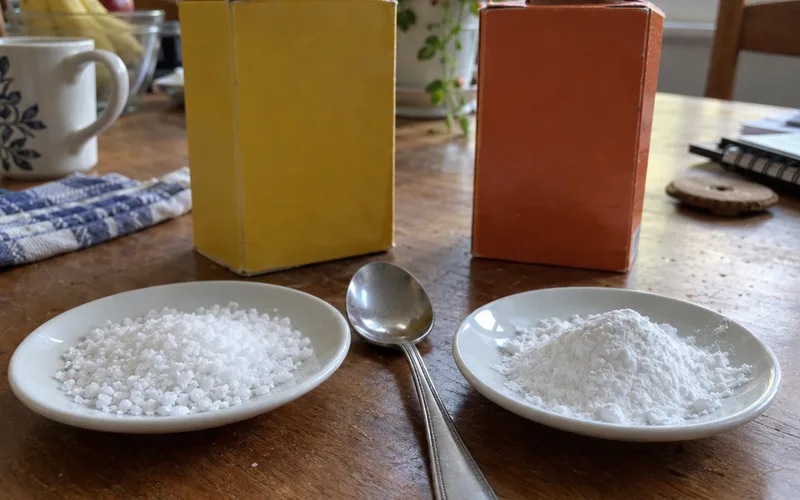
Baking soda is sodium bicarbonate, the milder box from the baking aisle, while washing soda is the stronger laundry version. The recipe needs washing soda, and baking soda is only an add-in.
If you want the fewest moving parts, the 3-ingredient version sticks to exactly those 3 things.
Does Homemade Laundry Detergent Actually Work?
Homemade laundry detergent works well on everyday dirt, sweat and light stains, but it’s really a soap rather than a true detergent, so it struggles with grease, set-in stains and hard water.
Why does that matter?
Store detergents use synthetic surfactants, chemicals that keep rinsing clean even in mineral-heavy water. Soap reacts with the calcium and magnesium in hard water and can leave a dull film on fabric over time.
That film is the main reason you’ll see people call homemade laundry soap bad. Stiff towels and gray whites are the usual signs.
The upside is what it leaves out. Speed Queen says homemade detergent can easily be made free of petroleum, phosphates, phthalates, and artificial perfumes and dyes, which suits people with sensitive skin.
It also has no enzymes. None of the 3 base ingredients is one, so protein stains like grass, blood and egg need a pretreatment first, such as a homemade stain remover or a store enzyme spray.
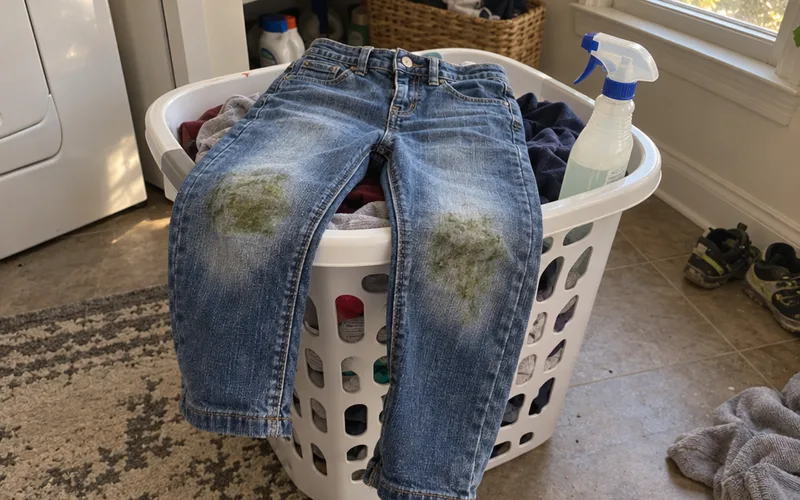
So if most of your laundry is everyday wear and your water isn’t very hard, homemade detergent is worth a 2-week test. If it’s greasy work clothes, keep a store detergent for those loads.
When Store Detergent Is the Better Buy
Store detergent is the better buy when your loads are heavy on grease, food stains or mud, because those need the enzymes and surfactants a bar-soap mix doesn’t have.
That covers a mechanic’s or cook’s work clothes, sports uniforms and anything with oil on it.
It also wins if your water leaves white crust on the faucets. Soap film builds up fastest in hard water, and you’d spend the savings on rewashing.
A split works well for a lot of households. Use the homemade mix for towels, sheets, duvet covers and everyday clothing, and keep store detergent plus an oxygen booster like OxiClean for the tough loads.
Is Homemade Laundry Detergent Safe for HE Washers?
Homemade laundry soap is usually fine in an HE washer when you keep the dose small, because the soap and washing soda make few suds and HE machines need low-sudsing detergent.
HE washers use much less water than older top loaders. So the same scoop that works in an old machine can leave residue in a new one.
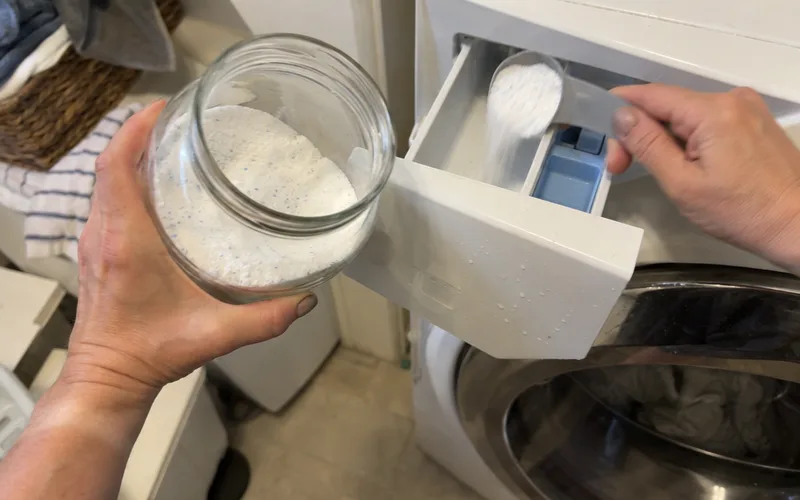
Start at 1 tablespoon per load and only move up if clothes come out dull.
Check your washing machine’s manual before you switch, too. It names the detergent type the maker wants, and some manuals ask for HE-labeled detergent only.
Then watch for two warning signs: suds piling up in the door window, or a musty smell around the door seal, where mold and bacteria feed on leftover soap. Either one means it’s time to cut the dose.
Is It Really Cheaper to Make Your Own Laundry Detergent?
Making your own laundry detergent usually costs less per load, but the honest way to know is to price one batch from your own receipts against the cost per load of the jug you buy now.
Run the numbers in 5 minutes:
- Add up the batch: the price of the bar, plus the share of each box you used for 1 cup.
- Count the loads: 2 cups of washing soda and borax is 32 tablespoons, so 16 loads at 2 tablespoons or 32 at 1.
- Divide the batch cost by the loads.
- For your store detergent, divide the price by the number of loads printed on the label.
Here’s an example with made-up prices. Say the bar costs $1.50 and your cup each of washing soda and borax works out to $0.75, so the batch costs $3.00.
At 2 tablespoons a load, that’s about $0.19 a load. At 1 tablespoon, it’s about $0.09.
Now hold that up against your store detergent’s own number. If the gap is small, the time you spend grating may not be worth it for you.
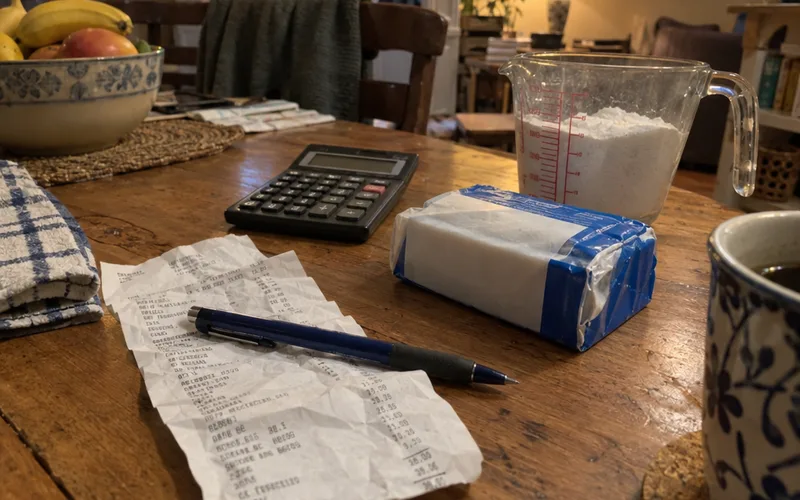
The boxes change the math too. You only use 1 cup from each box per batch, so the first batch carries the full box price while later batches cost little more than a new bar of soap.
So price it twice: once as a single batch, and once spread across every batch the boxes will make.
In other words, let your receipts decide, not a blog’s claim.
Powder or Liquid: Which Homemade Detergent to Make
Homemade powder detergent suits most people because it takes one short session and stores dry, while liquid suits cold-water washers who don’t mind an overnight bucket.
The 3 common versions stack up like this:
- Powder: grate, stir and store. It’s the least work and the easiest to dose by the tablespoon.
- Grated-soap liquid: melt, dilute and let it gel overnight. It’s best for cold washes, but a batch is mostly water and takes up a lot of space.
- Dish-soap liquid: mixes washing soda and borax with liquid dish soap and water. It skips grating, but you’ll pour more per load.
If you’re not sure, make powder first. You can always melt the next bar into a liquid once you know you like the results.
How to Make Your Homemade Detergent Smell Good
Essential oils are the simplest way to scent homemade laundry detergent, and Speed Queen suggests 10 to 15 drops of essential oils such as lemon, lime, lavender, sweet orange or chamomile.
The same list adds 1 cup of baking soda and 1 cup of oxygen booster for extra cleaning power.
Add the oil after the powders and soap are mixed, stir again and seal the jar. A sealed jar keeps the scent from fading into the laundry room air.
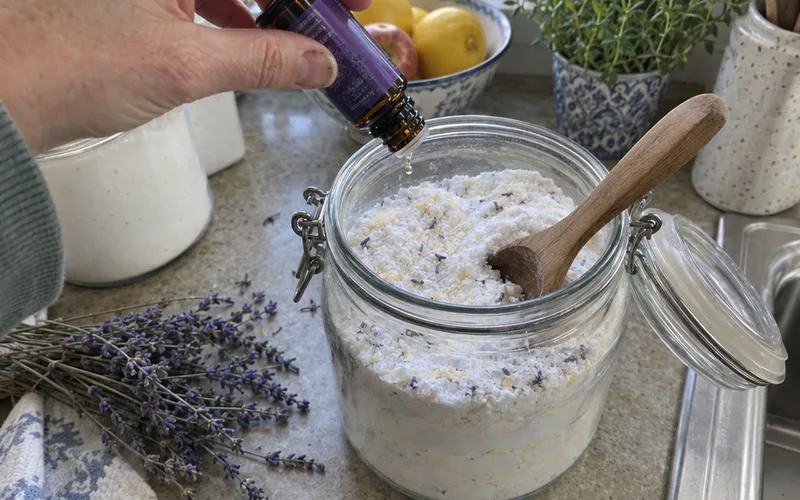
Want a stronger scent? Try one oil at a time until you know which one you like.
Once you have a favorite, the best smelling homemade detergent blends show how to layer it with a second oil, such as bergamot, a citrus or tea tree oil.
Homemade Detergent Without Borax and Other Swaps
Homemade detergent can be made without borax, because washing soda and bar soap do most of the cleaning, and a no-borax 3-ingredient recipe shows the swap and its amounts.
That swap helps if you’d rather keep borax out of the house, or your store doesn’t carry it.
A plain-ingredient natural laundry detergent is the next step if you want to skip scented bars too.
And the big-batch Amish laundry soap is the same bar-soap idea scaled up for a large family’s wash.
Common Mistakes That Leave Residue on Clothes
Homemade laundry soap leaves residue when the soap meets hard water minerals, when the flakes are too coarse to dissolve, or when you simply use too much.
These are the mistakes behind most residue complaints:
- Using baking soda instead of washing soda. The mix won’t clean nearly as well.
- Leaving the flakes coarse. Big shreds don’t dissolve in a cold wash.
- Doubling the dose. More soap means more film, not cleaner clothes.
- Skipping a vinegar rinse in hard water. A splash in the rinse helps clear soap film, and the right ratio for clothes tells you how much to add.
- Adding fabric softener on top. It’s one more layer to build up on towels.
Fix them in that order. Most stiff-towel problems go away once the dose drops and the rinse gets a splash of vinegar.
How to Tell If Your Water Is Hard
Hard water shows up as white, chalky crust on faucets and shower heads, and as soap that barely lathers in your hands.
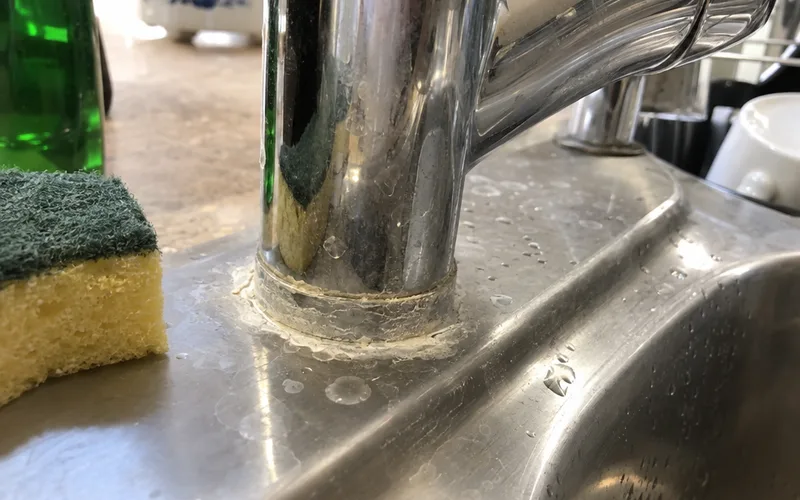
You’ll also see it in the wash: towels that turn stiff after a few weeks and whites that slowly go gray, even at the right dose.
If you notice two or more of those signs, plan on a vinegar rinse from the first load. And if a lower dose plus that rinse doesn’t fix it, your water is telling you to use store detergent for most loads or look at a water softener.
More Homemade Cleaners to Mix Next
The same cheap staples behind your laundry mix, like baking soda, vinegar, dish soap and hydrogen peroxide, also make cleaners for the rest of the house.
Pick your next recipe by room:
- Counters and everyday messes: a homemade all-purpose cleaner, one made without vinegar, and the classic white vinegar and baking soda pairing.
- Germs: the best homemade disinfectant spray, plus versions with rubbing alcohol, hydrogen peroxide or diluted bleach, and a spray for fabric.
- Bathroom: a homemade bathroom cleaning solution, a peroxide bathroom cleaner and a homemade shower cleaner.
- Floors and glass: the right mix for floors, a wood floor cleaner without vinegar, a window cleaning solution and a streak-free mirror cleaner.
- Beyond cleaning: a simple DIY shampoo made from bathroom basics.
Mixing your own cleaners is one of the easier habits in frugal living, because each recipe reuses the same few boxes.
Frequently Asked Questions
Can you mix baking soda and laundry detergent?
Yes, you can mix baking soda into a homemade detergent batch, and Speed Queen lists 1 cup of baking soda as an optional add-in to its base recipe. Stir it in with the washing soda and borax, then keep your dose at 1 to 2 tablespoons per load.
What ingredient should you avoid in laundry soap?
The ingredients people most often want out of laundry soap are petroleum, phosphates, phthalates and artificial perfumes and dyes, and Speed Queen says a homemade batch can easily skip all of them. In your own mix, the one swap to avoid is baking soda in place of washing soda, since the recipe needs the stronger washing soda.
What is the best smelling homemade laundry detergent?
The best smelling homemade detergent is the base recipe scented with 10 to 15 drops of an essential oil such as lemon, lavender or sweet orange. Add the drops after mixing, stir again and keep the jar sealed between loads.
Can you add enzymes to homemade laundry detergent?
A homemade detergent mix has no enzymes, because washing soda, borax and bar soap aren’t enzymes. For protein stains like grass, blood or egg, treat the spot with a store-bought enzyme stain remover before the wash, then use your homemade mix as usual.
Does homemade laundry soap work in cold water?
Homemade laundry soap works in cold water if the soap can dissolve, so grate the bar extra fine or use a liquid version. With powder, you can also stir your dose into a cup of hot water and pour that in before the clothes.
How long does a batch of homemade detergent last?
A batch of homemade detergent made with 1 cup each of washing soda and borax gives 16 to 32 loads from the powders alone, at 1 to 2 tablespoons per load. The grated bar of soap adds more volume, so a real batch stretches a little further.
Final Thoughts
DIY laundry detergent is 3 ingredients, a grater and a jar, and it handles everyday laundry well.
This week, mix one dry batch, wash only towels with it for 2 weeks and judge it by how they feel.