

Food is one of the few big costs you can change this week, which makes it a smart place to start when money feels tight. The hard part is knowing what number to aim for when you’re shopping and cooking just for yourself.
Most grocery figures you see online describe whole households, so they tell you very little about a monthly food budget for 1. Below, you’ll find a realistic monthly range for one adult, what it works out to per week and per day, and how to adjust it for your own life.
What Is a Good Monthly Food Budget for 1 Person?
A good starting point is the USDA moderate-cost food plan, which prices a healthy diet cooked at home. According to MoneyLion’s summary of the 2026 plans, a single adult should aim for about $328 to $388 per month, depending on age and gender.
That range isn’t a rule you have to hit. Think of it as a benchmark, a fair way to check whether your own spending is in a normal zone.
If your grocery bill sits inside that range, you’re spending about what the plan expects. If it sits well above, you’re not doing anything wrong, but there’s probably some room to trim, and we’ll come back to that.
How the USDA Food Plans Work
The U.S. Department of Agriculture prices out what a healthy diet costs at several spending levels. MoneyLion explains that the plans come in four tiers: thrifty, low-cost, moderate-cost and liberal.

Thrifty is the leanest plan and liberal is the most generous. Each one assumes you buy groceries and cook, so restaurant meals, takeout and coffee runs sit outside these numbers.
The plans also change by age and gender, so two single adults on the same tier can have different targets. The right tier for you depends on your appetite, your health needs and how much time you have to cook.
Average Cost of Food per Week and per Day for 1 Person
Monthly numbers are handy for a budget, but most of us shop weekly and eat daily. Here’s what a few monthly food budgets for one person work out to, by our math, using 52 weeks and 365 days a year:
| Monthly budget | Per week | Per day |
|---|---|---|
| $200 | $46 | $6.58 |
| $328 | $76 | $10.78 |
| $388 | $90 | $12.76 |
| $460 | $106 | $15.12 |
The middle two rows are the low and high ends of the USDA moderate range. So the average cost of food per week for 1 person on that plan is roughly $76 to $90, and the average cost of food per day for 1 person is about $11 to $13.
The other two rows come up later: $460 is one estimate for California, and $200 shows what a very lean month looks like. If you shop weekly, divide your monthly number by 4.33 rather than 4, or you’ll come up short in five-week months.
Why Household Averages Don’t Fit One Person
You’ll often see one big number for what Americans spend on food. MoneyLion reports that, according to Bureau of Labor Statistics consumer spending data, the average household spends about $504 per month on groceries.
The Bureau of Labor Statistics figure blends single people, couples and large families into one average. For a consumer who lives alone, it works better as a ceiling than a target.
Living alone has its own costs, though. Family-size packs and big bags of salad can spoil before one person finishes them, which turns part of your grocery bill into waste.
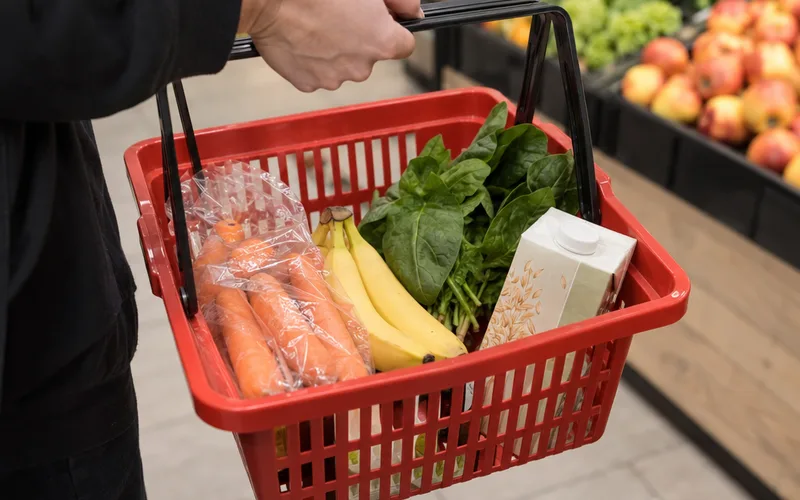
So your cost per person can run higher than it would in a bigger household, even when your total bill is smaller. If you share a kitchen with a partner, the food budget for two is a separate calculation worth running.
What Changes Your Monthly Food Budget for 1
The USDA range is a starting line, not your final number. Three things move it most for a single person: where you live, how you eat and how often you eat out.
Where You Live
Food prices vary a lot from state to state, and even between nearby cities. Salary.com’s cost-of-living listing for California estimates food at $460 a month for one person, which it says is 15% above the national average.
If you live somewhere expensive, start near the top of the USDA range or a little above it. If your area costs less than average, the lower end may be plenty.
Your Age, Appetite and Diet
Because the plans differ by age and gender, your starting point won’t match a friend’s even on the same tier. Your activity level and portion sizes matter just as much.
If you’re very active or eat larger portions, plan for the upper end. If you follow a special diet for health reasons, price your regular items for a few weeks before you settle on a number.
How Often You Eat Out
Here’s the part many people miss. The USDA figures cover groceries only, so a lunch out, a delivery order or a daily coffee comes on top.
If those add up to $100 a month, your real monthly food budget for 1 is your grocery number plus that $100. Give each its own line, groceries in one and eating out in the other, so a few restaurant meals don’t quietly eat into next week’s grocery money.
Food Prices Are Still Climbing
A budget that worked a few years ago may feel tight now, because grocery prices have kept climbing with inflation. MoneyLion reports that grocery prices have risen 29% since February 2020, and the USDA projects another 2.3% rise in 2026.

On a $350 budget, a 2.3% rise adds about $8 a month, by our math. That’s small, but it’s a good reason to review your number once or twice a year instead of setting it and forgetting it.
Some prices climb faster than others. MoneyLion points to eggs, beef and non-alcoholic beverages as recent big jumps, so budget a little extra if those are your staples.
How to Set Your Own Monthly Food Budget for 1
You don’t need a special app to find your number. A month of real spending and a few simple adjustments will get you there:
- Track a normal month. Save receipts, check your bank app or keep a simple spreadsheet of every grocery trip, restaurant meal and delivery order. Don’t change your habits yet, because you want an honest baseline.
- Pick your USDA starting point. Use $328 to $388 as the moderate range, then lean higher or lower based on your age, appetite and cooking time.
- Adjust for where you live. Move up if you live in a high-cost state or city, and down if your area is cheaper.
- Add an eating-out line. Decide what you actually want to spend on restaurants and takeout, and keep it separate.
- Set a weekly limit. Divide your monthly grocery number by 4.33 to get the amount you can spend each week.
Then compare your tracked month to the target. MoneyLion suggests that if you’re spending 20% to 30% more than that benchmark, there’s probably room to cut back.
For a single adult, 20% above $388 is about $466 a month, by our math. If you’re near or past that, start with the habits in the next section before you try to cut deeper.
Food also has to fit beside rent, savings and debt. A simple split like the 70/20/10 rule shows where your grocery number sits in the bigger picture.
Cooking for One Without Wasting Money
Wasted food is the hidden leak in most solo budgets. When you shop for one, the goal is to use up everything you bring home.
A short plan helps more than anything else. Planning three or four dinners a week, with leftovers for lunch, keeps you from buying ingredients you never use, and planning meals on a budget makes that habit easier to keep.
Build your grocery list for one around those meals so impulse buys stay out of your cart. If you’d rather follow a ready-made week, a cheap weekly meal plan does the planning for you.
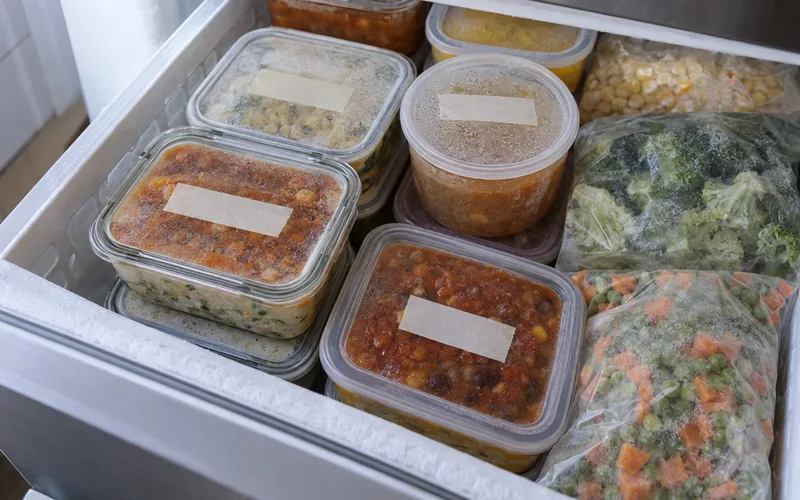
Your freezer is the other big tool. Cook a full recipe, eat one portion and freeze the rest, so a family-size pack becomes several single-serving freezer meals instead of trash.
Where you shop matters too. MoneyLion notes that store brands and weekly sales can save money, and a discount grocery store can lower the bill further.
Small habits like these add up quickly. Once they feel routine, there are plenty more ways to save on groceries you can layer on.
Eating Well on a Tight Food Budget
Sometimes the goal isn’t a comfortable budget but simply getting through the month. A $200 month leaves about $6.58 a day, by our math, which is well under the USDA range.
That can work if you lean on low-cost staples like rice, beans, oats for breakfast, eggs and frozen vegetables and cook almost every meal yourself. What it can’t absorb is much eating out or food that goes bad before you use it.
A cheap monthly grocery list can help you stock those basics in one trip. Cooking from your pantry for a week, sometimes called a pantry challenge, can stretch a lean month further.
If money runs out before payday, a plan for eating until your next paycheck can bridge the gap. And if your income is low, you may qualify for SNAP food benefits, the federal food assistance program, which can ease pressure on a one-person food budget.
The Bottom Line on a Monthly Food Budget for 1
For most single adults, $328 to $388 a month for groceries is a sensible target, with eating out budgeted on its own line. Track one honest month, adjust for where you live and how you eat, then review your number once or twice a year as food prices change.
Frequently Asked Questions
What is a good food budget for one person per month?
For most single adults, about $328 to $388 a month for groceries is a reasonable target, based on MoneyLion’s summary of the USDA’s 2026 moderate-cost plan. Eating out comes on top, so give it its own line.
How much should one person spend on groceries per week?
On the USDA moderate range, that works out to roughly $76 to $90 a week, by our math. Divide your own monthly target by 4.33 to get your weekly limit.
Can you live on $200 a month for food?
It’s possible if you cook nearly every meal and rely on low-cost staples, but it’s well below the USDA moderate range. At about $6.58 a day, there’s little room for eating out, waste or pricey proteins.
How much do you spend on food a month for one person?
It varies widely, which is why tracking your own spending for a month matters. The BLS household average of about $504, as reported by MoneyLion, covers households of every size, so a single person will often land below it.
Does a monthly food budget include eating out?
The USDA food plans only cover groceries for meals cooked at home. If you eat out, add a separate line for restaurants and takeout so you can see your full food cost.