

An $80,000-a-year early retirement takes about $2 million invested.
That’s the 25x rule from Charles Schwab’s June 2026 FIRE guide, and it’s only one finish line.
The types of FIRE retirement exist because you can lower that target three ways: spend less, keep some paid work or let early savings compound for longer.
Below are 6 types, ranked from the smallest nest egg you need before you can ease off to the largest. Each one comes with worked math, who it suits, what goes wrong and a first step for this week.
Here’s a quick way to find your spot:
- Already have a decent balance invested in your 30s and a job you can live with? Read #1, Coast FIRE.
- If a calm part-time job sounds better than a career, #2, Barista FIRE, lowers the number a full exit needs.
- Low spender who’s happy living simply for good: #3, Lean FIRE, fits you.
- High earners who won’t give up travel and dining out belong at #6, Fat FIRE.
The 6 Types of FIRE Retirement at a Glance
The six types of FIRE retirement are Coast, Barista, Lean, Slow FI, Traditional and Fat FIRE, and each one trades off how much you save, how much you spend later and how much you keep working. All of them grow out of the FIRE movement, short for Financial Independence, Retire Early.
If you’re brand new to the idea, start with how the FIRE movement works in general, then come back here to pick a version. This page assumes you know the basic goal: build investments big enough that a paycheck becomes optional.

Here’s how the six compare for one hypothetical saver, a 35-year-old who spends $50,000 a year:
- Coast FIRE: about $387,585 invested by age 41, then full-time pay covers the bills while the balance grows on its own.
- Barista FIRE: $750,000 invested, with a part-time job paying the other $20,000 a year.
- Lean FIRE: $875,000 invested, after cutting yearly spending to $35,000.
- Slow FI: $1,250,000 in the end, reached more slowly while you take time off along the way.
- Traditional FIRE: $1,250,000 invested to cover the full $50,000 budget with no job at all.
- Fat FIRE: $3,000,000 invested to cover a $120,000-a-year lifestyle.
The order follows one measure: how much money you need invested before you can ease off full-time work or hard saving. Slow FI and Traditional FIRE tie on the final number, so Slow FI goes first because more people can start it without a big lifestyle cut.
Key Takeaway: Every type uses the same math. What changes is the spending you plug in and how much of it a job or time covers.
How Every Type of FIRE Is Measured
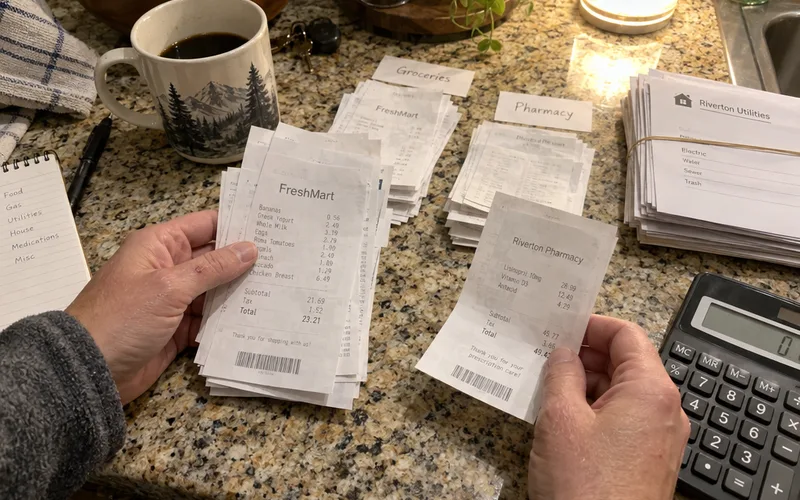
Every type of FIRE is measured by a FIRE number: the amount you need invested to cover your yearly spending, usually set at 25 times that spending so a 4% first-year withdrawal pays the bills. A $50,000 budget gives a FIRE number of $1,250,000.
That 25x figure is the rule of 25, and it’s the mirror image of the 4% rule. Divide 1 by 25 and you get 0.04, or 4%.
So if you know what you spend, you know your target.
That’s why tracking spending matters more than guessing a salary. Two people earning $80,000 can have FIRE numbers that differ by hundreds of thousands of dollars, purely because one spends $35,000 and the other spends $60,000.
The types change the number in three ways:
- Lower the spending: Lean FIRE plugs in a smaller budget, so 25x gives a smaller target.
- Cover part of the spending with work: Barista FIRE only needs the portfolio to cover what part-time pay doesn’t.
- Let time do the work: Coast FIRE only needs enough today for compounding to reach the full number by a normal retirement age.
Fat FIRE goes the other way. It plugs in a bigger budget, so the target grows.
The Example Used for Every Type
The example in this guide is a hypothetical saver: 35 years old, $80,000 a year in take-home pay, $50,000 a year in spending and $150,000 already invested. That leaves $30,000 a year to invest, a 37.5% savings rate.
To keep the math simple, every projection assumes investments grow 5% a year after inflation, with new money added at the end of each year. That’s an assumption for illustration, not a forecast.
Real returns swing up and down, sometimes hard.
Your own numbers will differ. Swap in your spending, your balance and what you can save, and the same steps give you your own targets.
Here’s what that saver reaches with no changes at all:
- Traditional FIRE at $1,250,000 arrives after 19 years, at age 54.
- Coast FIRE arrives after 6 years, at age 41.
Same person, same paycheck. The finish line you choose moves the date by 13 years.
How Long Each Type Takes in the Example
Each type of FIRE puts the same saver at a different finish date, and the gap between them is bigger than most people expect. Here’s when the example saver reaches each one, starting at 35 with $150,000 invested:
- Coast FIRE: 6 years, at age 41.
- Lean FIRE: 11 years, at age 46, after cutting spending to $35,000.
- Barista FIRE: 13 years, at age 48, with $20,000 a year of part-time pay.
- Traditional FIRE: 19 years, at age 54.
- Slow FI: 23 years, at age 58, while saving $20,000 a year instead of $30,000.
- Fat FIRE: 33 years, at age 68, on this income; a higher earner gets there far sooner.
The spread runs from 6 years to 33 years for one person on one paycheck.

That’s why picking a type is the biggest decision in any FIRE plan, bigger than which funds you buy. A few percentage points of investment return matter, but choosing Lean over Traditional moves the date by 8 years.
Is the 4% Rule Safe for Early Retirement?
The 4% rule is less safe for early retirement than for a standard one, because your money has to last longer. Charles Schwab’s FIRE guide says you could need to save even more than 25 times your spending to offset a longer time horizon.
Here’s what a cushion looks like on the $50,000 budget:
- 25x ($1,250,000): a 4% first-year withdrawal.
- 30x ($1,500,000): about a 3.3% withdrawal.
- 33x ($1,650,000): about a 3% withdrawal.
At the example’s savings pace, moving from 25x to 30x adds about 3 years of work, from age 54 to 57. That’s the real price of extra safety, and it’s worth weighing before you pick a type.
The main danger is a bad market early in retirement. If stocks fall in your first few years while you’re selling shares to live, you sell more shares at low prices, and the portfolio has less left to recover.
Here’s a hypothetical case. Two retirees each start with $1,000,000 and withdraw $40,000 a year, and both get the same ten yearly returns, averaging about 4.1% after inflation.
One gets the two bad years (-15% and -10%) first; the other gets them last. After 10 years, the first has about $832,128 and the second about $1,033,179.
Same returns, same withdrawals, a $201,051 gap. The only difference is the order.
That’s called sequence of returns risk, and it matters most in the first decade of withdrawals.

Flexibility is the usual fix.
People who can cut spending or pick up some income in a down year can often live with a 4% plan, while people with no wiggle room should aim higher. That single question, how much room you have to adjust, goes a long way toward picking your type.
How to Calculate Your FIRE Number for Each Type
You calculate your FIRE number for each type by changing one input in the same formula: yearly spending times 25, minus what work covers, divided by growth for Coast FIRE. Here are the formulas side by side:
- Traditional FIRE: your current yearly spending x 25.
- Lean FIRE: your reduced yearly spending x 25.
- Fat FIRE: your higher target spending x 25.
- Barista FIRE: (yearly spending - yearly part-time pay) x 25.
- Coast FIRE: your Traditional number / (1 + yearly return) raised to the years until retirement.
- Slow FI: the same as Traditional FIRE; only the pace of saving changes.
To use a safer cushion, swap 25 for 30 or 33 in any of them.
Run Your Own Numbers in 10 Minutes
Here’s how to fill in those formulas for yourself, using numbers you can find tonight:
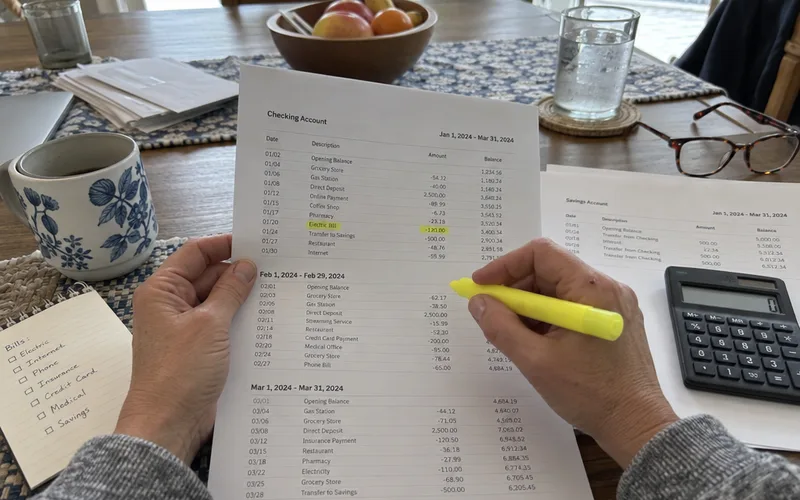
- Find your yearly spending. Add up 3 months of bank and card statements and multiply the monthly average by 12.
- Pick a Lean figure. Decide what you could live on long term, not just for a month, and write that down too.
- Estimate part-time pay. Pick a job you’d actually take and a realistic number of hours.
- Count your years. Subtract your age from the age you’d fully retire, such as 65.
- Plug in a cautious return. Use 5% after inflation as a middle case and 3% as a careful one.
Say you spend $42,000 a year, could live on $32,000 and could earn $15,000 part-time. Your Traditional number is $1,050,000, your Lean number is $800,000 and your Barista number is $675,000.
Write all of them down, because seeing them side by side is what makes the choice obvious. Most people find one target that feels both reachable and livable.
1. Coast FIRE
Coast FIRE means saving enough early that your investments can grow into your full FIRE number by a normal retirement age without more contributions. Schwab’s FIRE guide describes it as saving enough early that investments may continue growing toward a future goal with limited added savings.
You don’t quit at Coast FIRE. You stop needing to save for retirement, so your paycheck only has to cover today’s bills.
- Best for: people in their 20s or 30s with a solid start who want freedom to switch careers, cut hours or stop saving hard. Skip it if you want to stop working entirely in your 40s.
- Cost: about $387,585 invested by age 41 in this guide’s example, aimed at $1,250,000 by age 65.
- Payoff: every dollar of take-home pay above $50,000 becomes yours to spend, or about $30,000 a year in the example (hypothetical).
- Time: A year or more; the example saver gets there in 6 years.
- First step: look up your total retirement balance today and write down your age next to it.
How to Calculate Your Coast FIRE Number
Your Coast FIRE number is your full FIRE number divided by how much your money will grow between now and retirement. With a 5% yearly return after inflation, money doubles roughly every 14 to 15 years.
Here’s the math for the example:
- Full FIRE number: $50,000 x 25 = $1,250,000.
- Years until 65: 65 - 35 = 30 years.
- Growth factor: 1.05 multiplied by itself 30 times, which is about 4.32.
- Coast number at 35: $1,250,000 / 4.32 = about $289,222.
The saver has $150,000, so they’re not there yet.
But the target shrinks as they age, because fewer growth years remain. At 41 the Coast number is $387,585, and by then the saver’s balance has grown to about $405,072.
That’s the crossing point.
So the example saver hits Coast FIRE 6 years in. After that, they could save nothing more for retirement and, at a steady 5%, still reach $1,250,000 at 65.

A FIRE calculator does this in seconds, but running it by hand once shows you which inputs matter. The return you assume is the big one.
At 7%, the same Coast number would be far smaller, and at 3% it would be far bigger.
Run all three before you trust any single result.
Coast FIRE Numbers at Different Ages
Your Coast FIRE number is smaller the younger you are, because younger money has more years to grow. Here’s the Coast number for the same $1,250,000 goal at 65, assuming 5% a year after inflation:
- Age 25: $177,557.
- Age 30: $226,613.
- Age 35: $289,222.
- Age 40: $369,128.
- Age 45: $471,112.
- Age 50: $601,271.
The number more than triples between 25 and 50.
So if you’re in your 20s, every dollar you invest now does far more work than a dollar added at 45. That’s the whole engine behind Coast FIRE.
It also shows when Coast FIRE stops being useful. By 50, you’d need about half your full target already invested, and at that point you’re close to the full number anyway.
How Much the Return Assumption Changes It
The return you assume can change your Coast FIRE number by hundreds of thousands of dollars. Here’s the age-35 Coast number for the $1,250,000 goal at three different yearly returns after inflation:
- 3% a year: $514,983.
- 5% a year: $289,222.
- 7% a year: $164,209.
The 7% figure is less than a third of the 3% figure.
That’s why I’d plan on the middle or lower number and treat anything better as a bonus. If you coast on a 7% assumption and the market gives you 5%, you’ll arrive at 65 well short of $1,250,000.
Pro Tip: Recheck your Coast number every year with your real balance. If you’re behind, a few years of extra saving catches you up while there’s still time for it to grow.
What to Do After You Hit Coast FIRE
After you hit Coast FIRE, you have three choices: keep saving to retire sooner, keep your job but stop retirement saving, or move to work that only covers your bills. Each one is a different life, not just a different number.

Here’s how they play out for the example saver at 41:
- Keep saving $30,000 a year: they still reach Traditional FIRE at 54, because Coast was just a milestone on the way.
- Stop retirement saving: they spend the extra $30,000 a year and reach $1,250,000 at 65 if returns hold at 5%.
- Switch to lower-paid work: any job paying $50,000 after tax covers the bills, so they can trade salary for a job they like.
The middle choice is the classic Coast FIRE life. The last one is where Coast FIRE starts to look like Barista FIRE, just with a full-time schedule.
Whichever you pick, keep checking the balance against the target every year. Coast FIRE only holds if the money keeps growing untouched.
Where Coast FIRE Goes Wrong
The most common mistake is coasting on an optimistic return. If you plan on 7% and get 4% for a decade, you won’t reach the full number by 65, and you’ve lost years of contributions you can’t easily make up.
The fix is simple: keep a margin. Keep putting in a small amount, such as enough to get an employer match, so you’re ahead of the line instead of sitting on it.
Coast FIRE also doesn’t pay for a job loss. You still need an emergency fund and enough income to cover your bills, because the whole point is never touching the invested pile.
In other words, Coast FIRE buys you freedom in your career, not freedom from it.
2. Barista FIRE
Barista FIRE means leaving your main career early while a part-time job pays part of your bills, so your investments only cover the rest. Schwab’s FIRE guide defines it as an approach that combines partial retirement with part-time work, consulting or a side hustle, with that income helping cover expenses, provide benefits or reduce withdrawals.

The name comes from the idea of working a low-stress job, like pulling espresso shots, mainly for the paycheck and the health coverage.
- Best for: people who’d enjoy some work if it were calm, flexible and theirs to choose. Skip it if you want zero obligations or have health needs a part-time job can’t cover.
- Cost: $750,000 invested in the example, because part-time pay covers $20,000 of the $50,000 budget.
- Payoff: a 4% withdrawal from $750,000 pays $30,000 a year, which plus $20,000 in wages covers the full $50,000 (hypothetical).
- Time: A year or more; the example saver gets there in 13 years, at 48.
- First step: write down the yearly amount a part-time job could realistically pay you, then subtract it from your yearly spending.
The Barista FIRE Math
The trick is that every dollar of part-time pay removes $25 from your target.
That’s because the portfolio only covers the gap. Here’s how the numbers move for the example saver:
- $10,000 a year of part-time pay: target drops to $1,000,000.
- $20,000 a year: target drops to $750,000.
- $30,000 a year: target drops to $500,000.
At $20,000 a year, the saver reaches $750,000 at 48, about 6 years before Traditional FIRE.
Not bad.
The part-time job is doing the heavy lifting here, so it has to be dependable.
If that $20,000 disappears, the portfolio would need to cover $50,000 a year, a 6.7% withdrawal from $750,000. That’s far above the 4% starting point the math assumes.
Barista FIRE in a Down Market
Barista FIRE handles a bad market better than most types, because you can work more hours instead of selling investments at low prices. That flexibility is one of its biggest strengths.
Say stocks drop and the example saver wants to cut their portfolio withdrawal from $30,000 to $20,000 for a year or two.
To keep the $50,000 budget, their part-time income would need to rise from $20,000 to $30,000. That might mean adding a day a week or picking up seasonal work.
Once the market recovers, they drop back to their normal hours. The portfolio never had to sell much at the bottom.
Compare that with Traditional FIRE, where the only choices in a crash are to sell shares or cut spending. A part-time job you can scale up is a built-in safety valve.
Good Fits for a Barista FIRE Job
The best Barista FIRE jobs are steady, low-stress and, ideally, come with benefits. Pay matters less than reliability, because the portfolio math assumes that income keeps arriving.
Common choices include:
- Fewer hours in your current field: consulting or contract work using skills you already have.
- Jobs with part-time benefits: some retailers, coffee chains and grocery stores offer health coverage to part-time staff.
- Seasonal work: tax season, holiday retail or summer tourism, which leaves long stretches free.
- Teaching or tutoring: flexible hours built around school calendars.
- A small business or side hustle: freelance writing, bookkeeping or repair work you set your own hours for.
Before you count on a job’s benefits, confirm the hours needed to qualify. Benefit rules vary by employer, and some change them from year to year.
What to Say When You Ask for Part-Time Work
One route to a Barista job is your current employer: cutting your hours instead of leaving.
Here’s what to say:
“I’d like to talk about moving to a part-time schedule next year. I’d stay on my core projects at 3 days a week. Is that something we can make work, and what would happen to my benefits?”
That last question matters most, so get the answer in writing before you plan around it.
If you’re weighing this path seriously, the full breakdown of how Barista FIRE works covers the job types and benefit rules in more depth.
Key Takeaway: Barista FIRE turns a part-time paycheck into a smaller target. Lock in the job before you leave the career.
3. Lean FIRE
Lean FIRE means retiring early on a deliberately small budget, which shrinks your FIRE number and lets you get there sooner. In the example, cutting spending from $50,000 to $35,000 lowers the target from $1,250,000 to $875,000.

The cut works twice. You need less money, and you save more every year while you get there.
- Best for: people who already live cheaply, enjoy a simple life and want out of full-time work as early as possible. Skip it if you have kids, health issues or a high-cost city you can’t leave.
- Cost: $875,000 invested in the example, or 25 times a $35,000 budget.
- Payoff: $35,000 a year of spending covered with no job at all (hypothetical example).
- Time: A year or more; the example saver gets there in 11 years, at 46.
- First step: total last month’s spending, then list the 3 biggest costs you could cut by 30% or more.
Is There a Spending Limit for Lean FIRE?
There’s no official spending limit for Lean FIRE. Forum posts, blogs and social posts give different cutoffs, and no agency or standards body defines one.
So instead of chasing a label, compare your budget with your own life. If your target budget is well below what you spend now and leaves little room for extras, you’re in Lean FIRE territory.
Here’s why the cut is so powerful for the example saver.
At $50,000 of spending, they invest $30,000 a year and need $1,250,000. At $35,000, they invest $45,000 a year and need only $875,000.
That shift alone pulls retirement from age 54 to age 46. That’s huge: 8 years of freedom from a $15,000 yearly cut.
Where Lean FIRE Budgets Usually Cut
The biggest Lean FIRE savings usually come from the same few categories:
- Housing: a smaller place, a roommate or a cheaper town.
- Transportation: one paid-off car, or none.
- Food: cooking at home and buying staples in bulk.
- Travel: slower, cheaper trips instead of big vacations.
- Subscriptions and insurance: shopped every year instead of renewed on autopilot.
If you want ideas that go deeper, extreme frugal living covers the habits people use to keep costs very low for years. Some Lean FIRE planners also look at small towns to retire on a budget, since housing is usually the biggest line.
The catch?
A lean budget leaves little room for surprises. A new roof, a medical bill or a few years of high inflation hit harder when there’s nothing left to trim.
That’s a good reason for a Lean FIRE plan to aim above 25x. At 30x, the example’s target becomes $1,050,000, which still arrives at age 48.
A Sample $35,000 Lean FIRE Budget
A $35,000 Lean FIRE budget works out to about $2,917 a month, and it only holds up when housing and transportation stay small. Here’s one hypothetical way a single person might split it:
- Housing: $1,100 a month, including utilities.
- Food: $450 a month.
- Health insurance and care: $500 a month.
- Transportation: $250 a month for an older paid-off car.
- Phone and internet: $100 a month.
- Everything else: $517 a month for clothing, gifts, hobbies and travel.
These numbers are made up to show the shape of a budget, not what things cost where you live. Your rent or health premium could be double these, or half.
Notice that health care is one of the biggest lines. Lean budgets that leave it out look great on paper and break the first year after you quit.
To test your own Lean budget, live on it for 6 months while you’re still working. If it feels fine, you’ve proven the number; if it feels miserable, you’ve found out cheaply.
Lean FIRE vs Barista FIRE: What’s the Difference?
Lean FIRE and Barista FIRE both shrink the nest egg, but Lean FIRE does it by spending less forever, while Barista FIRE does it by keeping some paid work. One asks you to live smaller; the other asks you to keep a job.
In the example, the two land close together: $875,000 at 46 for Lean, $750,000 at 48 for Barista.

So the choice is really about your life, not the math:
- Choose Lean FIRE if you’d rather never work again and don’t mind a simple budget.
- Choose Barista FIRE if you’d keep the $50,000 lifestyle and don’t mind 20 or so hours of easy work.
- Combine them if you want both a smaller budget and a cushion of part-time pay.
You can also combine them. A $35,000 budget with $10,000 of part-time pay needs only $625,000.
4. Slow FI
Slow FI means working toward full financial independence at a gentler pace and using your growing savings to buy freedom along the way, such as a shorter week or a sabbatical. Your final target stays the same as Traditional FIRE, $1,250,000 in the example, but you reach it later and enjoy more of the trip.
Slow FI isn’t a separate formula. It’s a different way to spend the years before your number.
- Best for: people who like parts of their work, have family plans or don’t want to cut spending hard. Skip it if your job is truly unbearable and you need a fast exit.
- Cost: $1,250,000 invested eventually in the example, the same as Traditional FIRE.
- Payoff: about $10,000 a year that would have gone to savings goes to time or experiences instead (hypothetical).
- Time: A year or more; saving $20,000 a year, the example saver reaches the full number in 23 years, at 58.
- First step: pick one freedom you’d buy this year, such as a 4-day week, and price it in lost pay.
What Slow FI Looks Like in Practice
Say the saver drops from $30,000 a year of saving to $20,000 and uses the $10,000 difference to work 4 days a week or take a long summer break.
Their full FIRE date moves from age 54 to 58. In exchange, they get 23 years of a lighter schedule instead of 19 years of grinding.
That’s the Slow FI trade: 4 more years at the end for a better 20-plus years before it.
Slow FI works well because your savings start protecting you long before you hit your number:
- With 6 months of spending saved, you can survive a layoff without panic.
- With a year or two saved, you can take a lower-paid job you like more.
- At Coast FIRE, you can stop saving for retirement altogether.
Each milestone buys a little freedom. You don’t have to wait for the last one to feel the difference.
Here’s what those milestones are worth for the example saver spending $50,000 a year:
- 6 months of spending: $25,000 in cash, enough to ride out a layoff.
- 2 years of spending: $100,000, enough to take a pay cut for a better job.
- Coast FIRE: about $387,585 at 41, enough to stop retirement saving.
- Half the FIRE number: $625,000, enough to cover half the budget if you went part-time.
The saver already has $150,000, so they’ve passed the first two. That’s freedom they can use today, without waiting for the final number.
The risk is drifting. Without a target date, “slow” can turn into “stopped”, so set a yearly savings amount and review it every January.
Slow FI vs Coast FIRE
Slow FI and Coast FIRE both ease the pressure before full retirement, but Coast FIRE stops retirement saving once a balance is reached, while Slow FI keeps saving at a gentler pace the whole way. Coast is a line you cross; Slow FI is a speed you choose.
In the example, Coast FIRE arrives at 41 and then needs no more saving to reach $1,250,000 at 65. Slow FI keeps putting in $20,000 a year and reaches the same $1,250,000 at 58.
So Coast FIRE suits people happy to work full-time into their 60s with no saving pressure. Slow FI suits people who want full independence in their 50s and are willing to keep saving, just not at full speed.
5. Traditional FIRE
Traditional FIRE means building a portfolio big enough to cover your current lifestyle forever, then leaving work completely. For the example saver, that’s $1,250,000 to cover $50,000 a year, reached in 19 years at age 54.
It’s the standard version, sometimes just called FIRE, and the other types are measured against it.
- Best for: people with a solid income who want full retirement without changing how they live. Skip it if you earn close to what you spend, since the high savings rate won’t fit.
- Cost: $1,250,000 invested in the example, or 25 times $50,000.
- Payoff: a 4% first-year withdrawal of $50,000, adjusted for inflation after that (hypothetical example).
- Time: A year or more; 19 years for the example saver at a 37.5% savings rate.
- First step: calculate your savings rate: yearly savings divided by take-home pay.
Why Your Savings Rate Matters Most
Your savings rate decides how fast you reach Traditional FIRE, because it raises what you invest and lowers what you need at the same time.
Here’s how it plays out for the example saver, starting from $150,000:
- Save $30,000 of $80,000 (37.5%): spend $50,000, need $1,250,000, reach it in 19 years.
- Save $45,000 (56%): spend $35,000, need $875,000, reach it in 11 years.
- Save $50,000 (62.5%): spend $30,000, need $750,000, reach it in 9 years.
Notice that items 2 and 3 are really Lean FIRE. Push Traditional FIRE’s savings rate high enough and it turns into a leaner plan.
So if Traditional FIRE looks too far away, you have two levers. Raise income and invest the raise, or trim spending and accept a smaller target.
How Taxes Change Your Traditional FIRE Number
Taxes can raise your Traditional FIRE number, because the 25x rule assumes your whole withdrawal is spending money. If some of it goes to tax, you need to withdraw more to net the same budget.
Here’s the math for the example’s $50,000 budget, using made-up overall tax rates on withdrawals:
- No tax: withdraw $50,000, target $1,250,000.
- 10% tax: withdraw about $55,556, target about $1,388,889.
- 15% tax: withdraw about $58,824, target about $1,470,588.
That’s a gap of up to $220,588 from one assumption.

How much tax you’ll really pay depends on which accounts you draw from, your state and current tax law. Qualified Roth IRA and Roth 401(k) withdrawals and long-term gains in a taxable account are often taxed lightly or not at all, while traditional 401(k) and IRA withdrawals count as income.
So if your savings sit mostly in pretax accounts, plan for the higher number. If they’re spread across account types, a tax professional can help you estimate a lower one.
Your First Year of Traditional FIRE
The first year of Traditional FIRE is mostly about setting up your income so the 4% plan runs on autopilot. For the example saver, that means drawing $50,000 from $1,250,000 in a way that avoids selling in a slump.
Here’s a simple first-year checklist:
- Fill a cash buffer: move 1 to 2 years of spending, $50,000 to $100,000 in the example, into savings before your last paycheck.
- Set a monthly transfer: pay yourself about $4,167 a month from that buffer, like a salary.
- Line up health coverage: have a plan in place the day employer coverage ends.
- Pick your withdrawal order: decide which accounts to sell from first, with tax help if needed.
Then refill the buffer from your investments in good market years. That rhythm is what keeps a 4% plan from turning into forced selling.
Where Traditional FIRE Goes Wrong
The common mistake is planning on today’s budget and forgetting what changes after you leave work.
Health insurance, which an employer may have paid for, becomes your bill. Taxes on withdrawals can also take a bite, so a $50,000 budget may need a slightly bigger withdrawal to net $50,000.
Price those costs before you set your number, not after you quit.
Key Takeaway: Traditional FIRE is the baseline. Every other type is a way to lower its number or soften its trade-offs.
6. Fat FIRE
Fat FIRE means retiring early while keeping a high-spending lifestyle, so it needs the biggest portfolio of any type. In the example, a $120,000 yearly budget needs $3,000,000 at 25x, or $3,600,000 at a safer 30x.

The math is the same as every other type. The spending number is just much bigger.
- Best for: high earners who want early retirement without giving up travel, dining out or a larger home. Skip it if your income is close to average, since the gap would take decades to close.
- Cost: $3,000,000 invested in the example, or 25 times $120,000.
- Payoff: $120,000 a year of spending covered, more than double the Traditional budget (hypothetical example).
- Time: A year or more; at $60,000 a year of saving from $150,000, about 24 years.
- First step: list the spending you’d refuse to give up in retirement and total its yearly cost.
The Fat FIRE Math
Fat FIRE mostly runs on income, not frugality.
Run the numbers on the example saver first.
If they tried Fat FIRE on their $80,000 pay, saving $30,000 a year, it would take 33 years to reach $3,000,000. That’s age 68, later than most normal retirements.
Now picture a higher-earning household that can invest $60,000 a year from the same $150,000 start. They’d reach $3,000,000 in about 24 years.
So Fat FIRE is realistic mainly for people who earn well above what they spend, even while spending a lot.
Fat FIRE vs Lean FIRE
Fat FIRE and Lean FIRE use the same formula at two very different budgets, so the gap between their targets is exactly the gap between their spending. In the example, $35,000 of Lean spending needs $875,000, while $120,000 of Fat spending needs $3,000,000, about 3.4 times as much.
That difference changes who each type is for. Lean FIRE is reachable on an ordinary income with a high savings rate; Fat FIRE usually needs a high income for many years.
It also changes what can go wrong. Lean FIRE’s risk is a budget with no slack, while Fat FIRE’s risk is a lifestyle that keeps getting more expensive.

The catch?
Big budgets are often built on costs that keep rising, like a large home, private school or frequent flights. If those costs climb faster than inflation, a 4% withdrawal stops covering them.
That’s why it helps to split a Fat FIRE budget into must-haves and nice-to-haves. The must-haves should fit inside a 3% or 4% withdrawal; the extras can shrink in a bad market year.
Here’s how that split looks on the example’s $120,000 budget, using hypothetical numbers.
Say $80,000 a year is must-haves and $40,000 is extras. A $3,000,000 portfolio covers the must-haves with a withdrawal of about 2.7%, well under the 4% starting point.
In a good year, the full $120,000 comes out. In a bad year, the extras shrink and the portfolio takes a much smaller hit.
In other words, plan the luxury, but make it the part you can cut.
Other FIRE Labels You’ll See
Other FIRE labels, such as Chubby, Semi, Geo, Nomad and Flamingo FIRE, describe variations or blends of the six main types. None changes the core math: spending times 25, minus whatever work or time covers.
Here are the ones that come up most:
- Chubby FIRE: a middle ground between Traditional and Fat FIRE, with a budget above average but below luxury. Best for people who want comfort without the full Fat FIRE target.
- Semi-FIRE: another name for leaving full-time work but keeping meaningful part-time or freelance income. It overlaps heavily with Barista FIRE.
- Geo FIRE: retiring early by moving somewhere cheaper, so the same portfolio covers more. Ranking the cheapest places to retire abroad is a good first step.
- Nomad FIRE: living on the move, often slow travel, to keep costs low. It suits people with no home base to maintain.
- Flamingo FIRE: saving about half your FIRE number, then switching to part-time work while it grows. It blends Coast and Barista FIRE.
Geo FIRE deserves a closer look, because it can turn a Lean budget into a comfortable one. A move that cuts housing costs in half can do more than years of extra saving.

But it has a real trade-off. You’ll need to plan for visas, health care and distance from family before you count on it.
Here’s the math with hypothetical numbers. If the example saver kept their lifestyle but moved somewhere that cut yearly costs from $50,000 to $35,000, their target would drop from $1,250,000 to $875,000, the same as Lean FIRE without the lean lifestyle.
Chubby FIRE runs the other way. A comfortable $80,000 budget needs about $2,000,000 at 25x, the same rough figure Schwab’s guide gives for $80,000 of yearly spending.
That puts Chubby FIRE between Traditional’s $1,250,000 and Fat FIRE’s $3,000,000 in the example. It suits households that want more room than a Traditional budget allows but don’t need luxury.
So treat these labels as variations, not new rules. Once you understand the six main types, each of these is easy to place.
What to Invest In for Any Type of FIRE
Every type of FIRE depends on investments that grow steadily at low cost, which is why broad, low-fee index funds suit every type. An index fund holds every company in a market index, such as the whole U.S. stock market, instead of trying to pick winners.
Low cost matters more in FIRE than in almost any other plan. Your money has to work for 40 or 50 years, so small fees compound into big losses.
Here’s the math. A 1% yearly fee on a $1,000,000 portfolio costs $10,000 a year, while a 0.05% fee costs $500.
That $9,500 difference is real spending money. At 25x, covering an extra $9,500 a year would take $237,500 more in your FIRE number.
That’s the price of one fee choice.
How the Mix Can Differ by Type
The mix of stocks and bonds you hold can differ by FIRE type, because each type faces different risks and timelines:
- Coast FIRE: money sits untouched for decades, so it usually leans heavily on stocks for growth.
- Barista FIRE: part-time pay softens bad years, which lets some people hold more stocks than a full retiree.
- Lean FIRE: a bad early market hurts most when there’s nothing to cut, so a cash buffer or some bonds can help.
- Traditional and Fat FIRE: a long retirement needs growth, but the first years need protection from a crash.
There’s no single right mix. The right mix is one you’ll hold through a 30% drop without selling.
If you’re not sure what that is, a target-date index fund sets a mix for you and shifts it over time. It’s a simple starting point for any type.
Which FIRE Types Work on an Average Income
On an average income, the FIRE types that work best are the ones that combine levers, such as Lean FIRE with some part-time pay, because a small savings gap makes Traditional FIRE take decades. The math makes this clear with a second hypothetical household.
Say you’re 35, take home $55,000 a year, spend $45,000 and have $40,000 invested. That leaves $10,000 a year to save, an 18% savings rate.
Here’s how long each path takes at 5% a year after inflation:
- Traditional FIRE ($1,125,000): 36 years, at age 71. That’s later than a normal retirement.
- Coast FIRE: never reached before 65 at this savings pace.
- Barista FIRE with $20,000 of part-time pay ($625,000): 26 years, at age 61.
- Lean FIRE at $35,000 ($875,000): 22 years, at age 57, since cutting $10,000 doubles savings to $20,000.
- Lean plus Barista ($35,000 budget, $15,000 part-time, $500,000): 15 years, at age 50.
The combination wins by 7 years over the next-best path.
On a modest income, no single type gets you out early, but stacking a leaner budget with part-time work can. On a modest income, the combination is the plan, not a backup.
Why the Savings Gap Matters More Than the Salary
The savings gap, what you earn minus what you spend, decides which FIRE types are open to you. A high salary with high spending can leave a smaller gap than a modest salary with low spending.
That’s why the first household reaches Traditional FIRE at 54 and the second can’t reach it before 71. The first saves $30,000 a year; the second saves $10,000.
If your gap is small, you have three moves:
- Cut spending: each dollar cut both raises savings and lowers the target.
- Raise income: invest every raise instead of spending it.
- Change the finish line: pick a type, like Barista or Slow FI, that needs less from the portfolio.
Most people on an average income use all three. Even a small raise invested every year adds up when the money has 15 or 20 years to grow.
How to Choose the Right Type of FIRE
The right type of FIRE depends on three things: how much you earn compared with what you spend, whether you’d enjoy some paid work and how much flexibility you have to cut costs later. Answer those, and one or two types usually stand out.
Here’s how to read your answers:
- Big gap between income and spending: Traditional or Fat FIRE are open to you.
- Small gap, but a good balance already invested: Coast FIRE gives you freedom soonest.
- Small gap, simple tastes: Lean FIRE turns low spending into an early exit.
- You’d happily keep a calm job: Barista FIRE shrinks the target the most for the effort.
- You like your work or have young kids: Slow FI keeps life good on the way.
Most people don’t stay in one lane. The types work as stages more than permanent identities.

For example, one path runs from Coast FIRE in your 30s to Barista FIRE in your 40s and Traditional FIRE later, as the portfolio keeps growing. Reading other people’s early retirement journeys shows how plans shift as their lives change.
Questions to Ask Yourself Before You Pick
Before you commit, answer these honestly:
- What would I do on a Tuesday if I didn’t have to work?
- Would I miss my work, my coworkers or the structure?
- Could my household live on 30% less, and for how long?
- Does my partner want the same thing?
- How would I pay for health care before I’m eligible for Medicare?
Don’t skip the last two. A plan your partner doesn’t share rarely survives, and health care becomes your bill the day you leave an employer plan.
How to Switch From One Type to Another
You can switch FIRE types at any time, because they all use the same math; switching just means changing your spending number or how much work covers. The most common switch is from Coast FIRE to Barista FIRE.
Take the first saver.
They hit Coast FIRE at 41 with about $405,072. If they keep saving $30,000 a year, they reach $750,000 at 48 and could switch to Barista FIRE with $20,000 of part-time pay.
From there, the portfolio keeps growing as long as withdrawals stay at or under 4%. If they later want full retirement, they can work part-time a few more years until it reaches the Traditional FIRE number.
The reverse switch happens too. Someone aiming for Fat FIRE may decide at 50 that a Traditional budget is enough and retire years sooner.
If you’re torn between the two middle-ground options, a side-by-side look at Barista and Coast FIRE can settle it.
In other words, pick the type that fits the life you want, then let the math tell you when.
How to Withdraw Money in Each Type of FIRE
The way you withdraw money should match your FIRE type: a fixed 4% plan suits people with spending room to cut, while tighter types need flexible withdrawals or extra income to fall back on. There are three common methods.

Here’s how each works:
- Fixed withdrawal: take 4% of your starting balance in year one, then raise that dollar amount with inflation each year. On $1,000,000, that’s $40,000, then $41,200 if prices rise 3%.
- Flexible withdrawal: take less after a bad market year and more after a good one, within limits you set ahead of time.
- Cash buffer: keep 1 to 2 years of spending in cash and draw from it when stocks are down, refilling it when they recover.
Inflation is why the fixed method raises the dollar amount every year. At 3% a year, a $50,000 budget grows to about $67,196 in 10 years and about $90,306 in 20 years.
That’s also why this guide’s projections use returns after inflation. The 5% assumption already accounts for prices rising, so the $1,250,000 target stays in today’s dollars.
Each method fits some types better than others.
Matching the Method to Your Type
Traditional and Fat FIRE suit a fixed or flexible withdrawal, because these budgets usually have extras that can be trimmed in a bad year. Fat FIRE especially should treat its nice-to-haves as the first thing to cut.
Lean FIRE leans on a cash buffer, since a lean budget has little room to trim. Taking less from the portfolio in a crash isn’t an option when the budget is already bare.
Barista FIRE has the most built-in flexibility, because extra hours can replace a smaller withdrawal. Coast FIRE and Slow FI don’t withdraw much at all until later, so the method matters less in the early years.
Pick your withdrawal method when you pick your type, not the year you retire. It changes how big a cash buffer to build and how far above 25x to aim.
How Early Retirees Reach Their Money Before 59½
Early retirees reach their money before age 59½ by holding some of their savings outside retirement accounts, because most retirement accounts limit withdrawals before that age. Schwab’s guide says early retirees may need a mix of tax-advantaged and taxable accounts to balance tax benefits with access to savings before 59½.

A taxable brokerage account has no age rule. You can sell investments and use the money at any age, paying tax on any gains.
That’s why the type you pick changes how you should save:
- Coast FIRE: needs little or no bridge, because you keep working until a normal retirement age.
- Barista FIRE: needs a smaller bridge, since part-time pay covers part of the bills.
- Slow FI: depends on your timeline; reaching your number in your late 50s means a short bridge.
- Lean, Traditional and Fat FIRE: need the biggest bridge if you retire in your 40s, because you might live on savings for 10 to 15 years before 59½.
So if you plan to retire before your mid-50s, you’ll need a real share of your savings in accounts you can reach early.
Here’s how that looks for the example saver retiring at 46 on Lean FIRE. To bridge to 59½ at $35,000 a year, they’d need roughly 13 years of spending reachable outside retirement accounts.
That doesn’t mean skipping your 401(k) or IRA. Tax breaks and any employer match still make them worth using, especially for the years after 59½.
It means splitting your savings on purpose. One simple version: fill retirement accounts up to the employer match, then send extra savings to a taxable account.
Note: Withdrawal rules have exceptions and details that depend on your account and plan. Check with your plan administrator or a tax professional before you rely on any early-access method.
How to Pay for Health Insurance Before Medicare
Early retirees pay for health insurance before Medicare through a spouse’s plan, a part-time job with benefits, or a plan bought on the Affordable Care Act marketplace at HealthCare.gov. Which one fits depends largely on your FIRE type.
Medicare is the federal health insurance program for older Americans, so the gap you have to cover runs from your last day of employer coverage until you qualify for it.
Barista FIRE is the only type built around employer coverage, since part-time work can come with benefits. Coast FIRE and Slow FI usually keep a full-time employer plan until you’re older.

Lean, Traditional and Fat FIRE usually need a marketplace plan. Marketplace prices and subsidies depend on your income, so the way you withdraw money in retirement can change what you pay.
A health savings account can help with all of this. It’s a tax-advantaged account for medical costs, available only with a high-deductible health plan.
Schwab’s guide notes that HSA contributions may be tax-deductible, investments can grow tax-free and withdrawals for qualified medical expenses are tax-free. That makes an HSA a strong place to build a health care fund while you’re still working.
For Lean, Traditional and Fat FIRE, put a real health insurance line in your budget before you calculate your number. Leaving it out can understate your FIRE number by tens of thousands of dollars, because every $1,000 of yearly cost adds $25,000 to the target.
If location is flexible, comparing affordable places with good healthcare can lower both your housing and medical costs.
In other words, health care is part of your spending number, so price it before you pick a target.
Where Social Security Fits Into Your FIRE Type
Social Security usually isn’t part of a FIRE number, because the 25x rule assumes your portfolio pays for everything, so any benefit you get later makes the plan safer. How much it helps depends on your type and how many years you work.
Benefits are based on your earnings history. Retiring in your 40s means fewer working years on your record, which can mean a smaller check than if you’d worked until your 60s.
That affects each type differently:
- Coast FIRE and Slow FI: you keep earning for longer, so your work record keeps building.
- Barista FIRE: part-time pay still counts toward your record, just at a lower level.
- Lean, Traditional and Fat FIRE in your 40s: your record stops growing early, so plan for a smaller benefit.
You can check your own record and estimates by creating a free account on the Social Security Administration’s website, ssa.gov. Its estimates show how your benefit changes with the age you stop working.

Treat Social Security as a cushion in a FIRE plan, not part of your FIRE number. If it arrives as expected, it lets you spend more later or worry less in a bad market.
The Biggest Risk in Each Type of FIRE
Each type of FIRE has its own biggest risk, from returns that fall short in Coast FIRE to lifestyle costs that outgrow the portfolio in Fat FIRE. Knowing yours tells you where to build a cushion:
- Coast FIRE: returns come in lower than you assumed, so the balance doesn’t reach the full number by 65.
- Barista FIRE: the part-time job or its benefits disappear, and the portfolio has to cover more than planned.
- Lean FIRE: a big surprise expense hits a budget with nothing left to cut.
- Slow FI: saving slows so much that the finish line keeps moving away.
- Traditional FIRE: a market drop early in retirement while you’re withdrawing.
- Fat FIRE: big lifestyle costs rise faster than the portfolio can support.
You can’t remove these risks, but you can shrink them.
The simplest shield is cash. Holding one to two years of spending in savings lets you avoid selling investments in a crash.
How much to hold depends on your situation, and planning your emergency fund in retirement is a good place to set that number. Other shields include aiming for 30x instead of 25x, keeping a skill you could earn from and cutting spending in bad years.
Pick the one or two shields that match your type’s weak spot, and build them in from the start.
FIRE Types for Couples and Families
Couples and families can mix FIRE types, such as one partner reaching Barista FIRE while the other keeps a full-time job with health coverage. Two incomes give more ways to lower the household target than one.
Here’s a hypothetical case. Say a couple spends $70,000 a year, so their Traditional number is $1,750,000.

If one partner keeps a job paying $35,000 after tax, the portfolio only needs to cover $35,000. That’s a Barista-style target of $875,000, half the full number.
The other partner gets to step away years earlier, and the working partner often keeps the family’s health insurance.
Planning FIRE With Kids
Kids change every FIRE type, because they raise spending for about 18 years and then lower it. A budget built while kids are home can overstate what you’ll need later.
So split your spending into two numbers: costs that end when kids leave, like childcare and activities, and costs that stay.
Your long-term FIRE number should use the costs that stay. The kid years can be covered by work, a part-time job or a separate savings bucket.
That split often makes Barista or Slow FI the natural fit for parents. You ease off gradually while family costs are high, then reach full independence once they fall.
The bigger risk for families is uneven buy-in. If partners disagree on the type, settle that first, because it decides the number you’re both saving toward.
Common Mistakes When Choosing a FIRE Type
The biggest mistake you can make when choosing a FIRE type is picking the one with the smallest number instead of the one that fits your life. A target you can reach but can’t live with is not a plan.
Here are the mistakes that cause the most trouble:
- Choosing Lean FIRE for the speed, not the lifestyle. If you dislike the budget now, you’ll like it less at 50 with 40 more years to go.
- Copying someone else’s number. A figure from a forum or a calculator’s default settings isn’t your spending; only your own statements are.
- Letting spending creep up. Each raise you spend instead of invest quietly raises your FIRE number too.
- Forgetting big one-off costs. Cars, roofs and appliances wear out, so set aside a yearly amount for them inside your spending number.
Each of these is easy to fix early and hard to fix late.

The simplest guard is to write down why you want FIRE in one sentence. If the type you picked doesn’t serve that reason, pick another.
How to Pick Your Type and Start This Week
You can pick your type of FIRE and start this week by running your numbers for two or three types, test-driving the one you like best and automating the savings it needs. The whole process takes a few evenings.
Here are the steps in order:
- Run your numbers. Work out your Traditional, Lean, Barista and Coast targets from 3 months of real spending.
- Test-drive your type. Live on your Lean budget for a few months, ask your employer about part-time hours or check your balance against your Coast number.
- Open the right accounts. Use your workplace plan up to the match, add a taxable brokerage account if you plan to stop before 59½ and an HSA if you’re eligible.
- Automate the savings. Set a transfer for payday so the money is invested before you can spend it.
- Put a review on the calendar. Pick one date a year to update your spending, balance and type.
If tracking spending is new to you, the guides on building a working budget walk through it step by step. And the broader ideas on ways to save money can help you widen the gap between what you earn and what you spend.
Your spending, balance and plans will change over the years, and your type can change with them.
Your Next Step
Every type of FIRE runs on one number: what you spend each year.
Pull your last 3 months of statements this weekend and total them.
Then multiply by 25, and you’ll see which finish line is closest.
Frequently Asked Questions
What are the four types of FIRE retirement?
The four types of FIRE retirement most guides name are Lean FIRE, Fat FIRE, Barista FIRE and Coast FIRE. Lean and Fat set a low or high spending budget, while Barista adds part-time pay and Coast lets early savings grow on their own.
What does FIRE mean in retirement?
FIRE stands for Financial Independence, Retire Early, and in retirement it means your investments can cover your living costs so a job becomes optional. Some people who reach it keep working, just on their own terms.
What does the 4% rule for retirement income mean?
The 4% rule means you withdraw 4% of your portfolio in your first year of retirement, then raise that dollar amount with inflation each year. On $1,000,000, that’s $40,000 in year one, or $41,200 the next year if prices rise 3%.
Is retiring at 60 considered FIRE?
Retiring at 60 counts as FIRE if your investments, not a paycheck, cover your spending before the usual retirement age. It’s a later finish line than most FIRE plans aim for, so it’s closer to Slow FI or Coast FIRE than to Lean FIRE in your 40s.
Why should you retire at 59½?
Age 59½ matters because it’s when money in most tax-advantaged retirement accounts becomes easier to reach without early-withdrawal penalties. Charles Schwab notes that early access can trigger taxes or penalties depending on the account, which is why FIRE plans also use taxable brokerage accounts.
Which type of FIRE is the easiest to reach?
Coast FIRE is usually the easiest type of FIRE to reach, because you only need enough invested for compounding to finish the job by a normal retirement age. In this article’s example, that’s about $387,585 at age 41, compared with $1,250,000 for Traditional FIRE.
How much do you need for Lean FIRE?
Lean FIRE needs about 25 times your lean yearly budget, so a $35,000 budget needs about $875,000 invested. There’s no official spending cutoff, so the right number is whatever budget you could happily live on for decades.
How much do you need for Coast FIRE at 30?
Coast FIRE at 30 needs about $226,613 invested to reach $1,250,000 by 65, assuming 5% yearly growth after inflation and no new savings. Your own number scales with your spending, so divide your full FIRE number by about 5.5 for the same 35-year stretch.
What is the difference between FIRE and regular retirement?
FIRE differs from regular retirement in timing and source of income: FIRE aims to make work optional years or decades early, funded mainly by your own investments. Regular retirement usually starts in your 60s and leans more on Social Security and workplace plans.
How can I retire early?
You can retire early by spending less than you earn, investing the gap in low-cost funds and building toward a FIRE number of about 25 times your yearly spending. Track three months of spending first, because that number drives every FIRE target.