
Saving for a house gets a lot easier once the goal has a real number on it. “Save as much as you can” tends to stall, while “$1,250 a month for three years” gives every paycheck a job.
Below, you’ll work out how much to save for a house, see how your loan type changes it and turn it into a monthly amount. We’ll also cover what first-time homebuyers need, how much house an income supports and whether to clear debt before you buy.
How Much Should You Save for a House?
Save enough for three things: the down payment, closing costs and a cash cushion. Most homebuyers plan only for the first, and skipping the others is how buyers end up stretched thin in a new home.
The Three Parts of Your Savings Target
Here’s the full formula:
- Down payment: the share of the price you pay upfront, usually 3% to 20%.
- Closing costs: lender and title fees, commonly around 3% of the price and sometimes up to 6%.
- Cash cushion: money left in the bank after closing for moving, repairs and surprises.
Add the three together and you have your savings target. The down payment is the part you can move the most, so it deserves the most thought.
A Worked Example on a $300,000 Home
Let’s run the math on a $300,000 home with 10% down. The down payment is $30,000, and closing costs at 3% add another $9,000.
Now say your new monthly mortgage bill will be about $2,000, and you want three months of it left over. That’s a $6,000 cushion, which brings the total to $45,000.

Swap in 20% down and the same home needs $75,000. Drop to 3.5% down on an FHA loan and it falls to about $25,500, which shows how much the loan type shapes your goal.
How Much Down Payment Do You Actually Need?
You need less than many people assume. A down payment of 20% is a common goal, but it isn’t a rule, and several loan programs accept far less.
What you give up with a smaller down payment is mostly a bigger monthly bill. You borrow more, pay more interest over time and usually pay for mortgage insurance on top of the mortgage itself.
Minimum Down Payments by Loan Type
Here’s how the usual minimums compare for a primary home, along with what each one means in dollars on a $300,000 home:
| Loan type | Typical minimum | On $300,000 |
|---|---|---|
| Conventional | 3% to 5% | $9,000 to $15,000 |
| FHA | 3.5% | $10,500 |
| VA | 0% | $0 |
| USDA | 0% | $0 |
| Jumbo | 20% | $60,000 |
Conventional loans reach 3% through HomeReady and Home Possible, programs backed by Fannie Mae and Freddie Mac for first-time and moderate-income buyers. Other conventional borrowers typically need 5%, and your lender, credit score and location can push that higher.
Why 20% Down Still Gets So Much Attention
The magic of 20% comes from mortgage insurance. On a conventional loan, less than 20% down usually means paying for a policy that protects the lender, not you, if the loan goes unpaid.
That insurance shows up as an extra monthly charge. It usually lasts until your loan-to-value ratio drops to 80%, meaning you owe no more than 80% of what the home was worth when you bought it.
A bigger down payment also shrinks the loan itself. So you pay less interest over the years and get a smaller monthly bill, which can make approval easier.
Is Waiting for 20% Worth It?
Not always. Going from 10% to 20% down on a $300,000 home means saving another $30,000, which takes 40 months at $750 a month.
During that time you’re still paying rent, and both home prices and interest rates can move against you.
So weigh a few years of mortgage insurance against the cost and risk of waiting. Then pick the option that gets you into a home you can still afford.
Closing Costs and Other Cash You Need at Closing
Closing costs are the fees to finalize the purchase and the loan. They cover things like appraisals, title and tax services, recording fees, inspections and your lender’s origination fee.
Unlike your down payment, these costs build no equity, so they’re easy to underestimate. On a $300,000 home, 3% is $9,000, and the high end of 6% is $18,000.
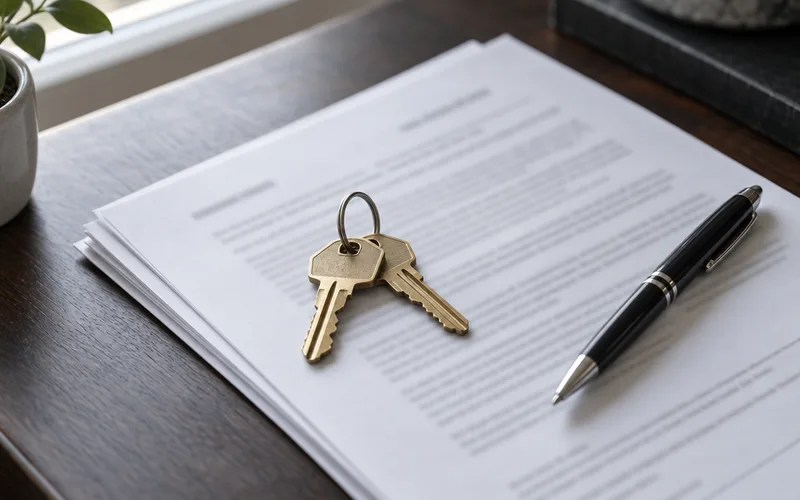
Your lender’s Loan Estimate lists the expected fees in detail once you apply. Until then, budget at least 3% and treat anything left over as a head start on your cushion.
Earnest Money and Gift Money
Earnest money is a deposit you make with your offer to show you’re serious, often 1% to 3% of your offer. It’s held until closing and usually applied toward your down payment, so it isn’t an extra cost, but you need the cash early.
Family help can count too. Lenders generally accept gift money toward a down payment if the giver signs a gift letter saying it’s a gift, not a loan.
Each loan type has its own gift rules, so ask your lender what paperwork it needs before the money moves.
How Much Cash to Keep After You Close
Plan to keep several months of your new housing payment in savings after closing. This is the bucket people skip, and it’s the one that protects you in your first year.
Drain every account to get the keys, and you’re left with a new mortgage, a moving bill and nothing for repairs. Set aside separate money for the move, utility deposits and basic furniture, since those bills arrive in the same few weeks.

Ongoing upkeep is the long-term reason for that cushion. Keeping a small monthly fund for repairs, and learning cheaper ways to handle repairs, stops one broken appliance from landing on a credit card.
If you’re building an emergency fund from scratch, the Dave Ramsey emergency fund steps are one simple way to size it. Just keep the emergency fund and the house fund in separate places so you never raid one for the other.
How Much Should I Save for a House Each Month?
Divide your total target by the number of months until you want to buy. Using the $45,000 example from earlier, here’s how the timeline changes the monthly amount:
- 1 year: $3,750 a month
- 2 years: $1,875 a month
- 3 years: $1,250 a month
- 5 years: $750 a month
If the monthly figure looks impossible, you have three levers. You can stretch the timeline, aim for a cheaper home or pick a loan with a smaller down payment.
To make the number feel real, set an automatic transfer on payday into a dedicated account. Saving a smaller amount each paycheck through a bi-weekly savings plan often feels easier than one big monthly transfer.
Saving for a Down Payment While Renting
Most buyers save while paying rent, which is why the monthly figure can feel heavy. A useful test is to set aside the gap between your rent and your expected mortgage payment each month.
If your rent is $1,400 and your future mortgage bill is about $2,000, save at least $600 a month toward the house. That trains your budget for the higher bill and builds the fund at the same time.
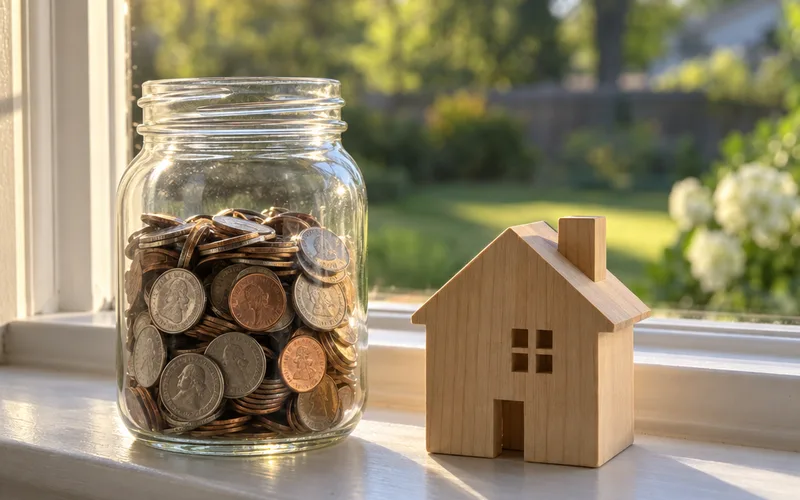
Need the money to come from somewhere? A budget split such as the 70/20/10 rule gives you a starting share for savings.
From there, a plan for saving $10k in a year breaks a big goal into weekly steps.
How Much to Save for a House as a First-Time Buyer
First-time homebuyers often need less upfront than they expect. With a low-down-payment loan, your savings target can drop into the mid-twenties on a $300,000 home instead of reaching $75,000.
The trade-off is a larger loan and mortgage insurance that often lasts longer. So plan your target around the loan you’re likely to get, not the 20% ideal.
Low-Down-Payment Loans and Assistance
The Federal Housing Administration insures FHA loans that allow 3.5% down with a credit score of 580 or higher. FHA loans are popular with first-time buyers, but their required mortgage insurance can cost more over the life of the loan.
Eligible veterans and service members can use VA loans with no down payment. USDA loans offer the same in qualifying rural areas, so for those buyers, the savings target is mostly closing costs and a cushion.
Down payment assistance programs can shrink the target further. Many state and local housing agencies offer grants, forgivable loans or deferred loans to first-time buyers.
Eligibility usually depends on your income, location and the home you buy. So check your state’s housing finance agency before you set your number, and confirm the program works with your loan.
If money is tight, a cheaper home and an assistance program matter more than speed. Small, steady cuts still add up, and there are realistic ways of saving on a low income while you rent.
How Much House Can You Afford on Your Income?
Your savings target only works if the monthly bill fits too. A common rule of thumb keeps your total housing payment at or below about 28% of your gross monthly income.
On $75,000 a year, your gross monthly income is $6,250. At 28%, that’s about $1,750 a month for your whole housing payment.
That amount covers more than the loan itself, because property taxes, homeowners insurance, mortgage insurance and any HOA fees land in the same monthly bill. So a cheaper house in a high-tax area can cost as much as a pricier one elsewhere.
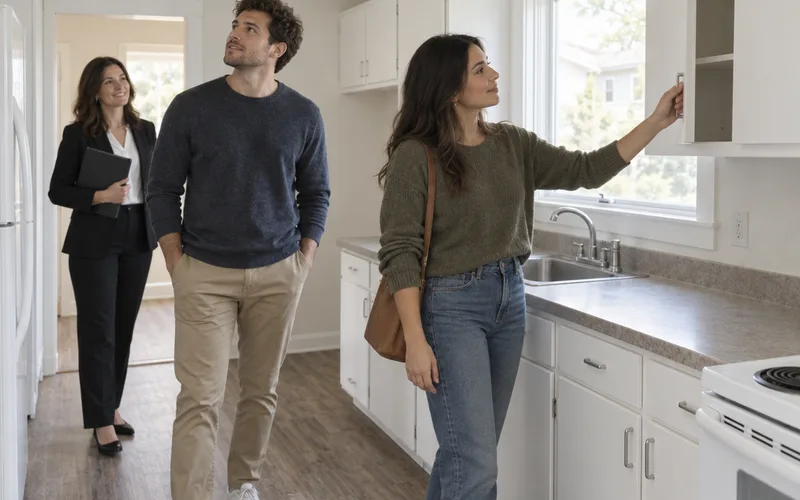
Lenders also look at your debt-to-income ratio, which compares all your monthly debt payments with your income. Limits vary by lender and loan type, but they rarely go above 50%, and car loans or student loans count against that limit.
Once you know a comfortable monthly amount, a mortgage calculator turns it into a price range. That range then sets your down payment, closing costs and, in the end, your savings target.
Should You Save or Pay Off Debt First?
For most people, high-interest debt comes first. Paying it down lowers your debt-to-income ratio, can improve your credit score and may earn you a better interest rate.
A better rate can save far more over the life of a mortgage than a few extra months of saving. If you carry card balances, a plan for getting debt-free in six months can clear the way.
If you’re thinking of combining those balances, learn how debt consolidation affects buying a home before you apply. Your credit score matters here too, since a conventional loan typically needs a score of at least 620.
You don’t have to stop saving entirely while you pay debt down. Even a small automatic transfer keeps the habit alive, so the house fund is ready to grow once the balances are gone.
Where to Keep the Money While You Save
Your house fund needs to be safe and easy to reach. A high-yield savings account at an FDIC-insured bank earns interest without putting the money at risk.
If your buying date is fixed, a CD that matures around that time can lock in a rate. Skip the stock market for money you’ll need within a few years, because one bad year could undo months of progress.
Some savers like to treat the fund as a set of labeled buckets. A simple system of sinking funds lets you track the down payment, closing costs and cushion separately so you always know which part is done.
Your Next Step
Write down your own target today. Pick a realistic home budget and the loan you’re likely to use, then add the down payment, about 3% for closing costs and a cushion.
Divide that by your months to purchase, and you have a monthly figure to automate.
From there, practical ways to save for a house can help you hit it faster. Broader money-saving habits keep the rest of your budget on track.
Frequently Asked Questions
Is it better to save or pay off debt first?
Pay off high-interest debt first in most cases, because it shrinks your debt-to-income ratio and can lift your credit score. Keep saving a small amount at the same time so the house fund already exists when the debt is gone.
Is 20k saved at 25 good?
It’s a strong start, but judge it against your own target rather than your age. On a $300,000 home, $20,000 covers a 3.5% FHA down payment with about $9,500 left toward closing costs.
How much can I afford to buy a house if I make $75,000 a year?
Using the common 28% rule of thumb, $75,000 a year supports a total housing payment of about $1,750 a month. The price that payment buys depends on your interest rate, property tax, insurance and other debts.
Is it better to buy or rent a house?
Buying tends to make sense when you plan to stay put for years and can cover the full savings target without emptying your accounts. Renting is often the better call while you rebuild credit, pay down debt or expect to move soon.
How much money do you need to buy a house for the first time?
Plan for the down payment your loan requires, closing costs and a cushion. With an FHA loan on a $300,000 home, that can start around $25,500, while 20% down pushes it closer to $75,000.