

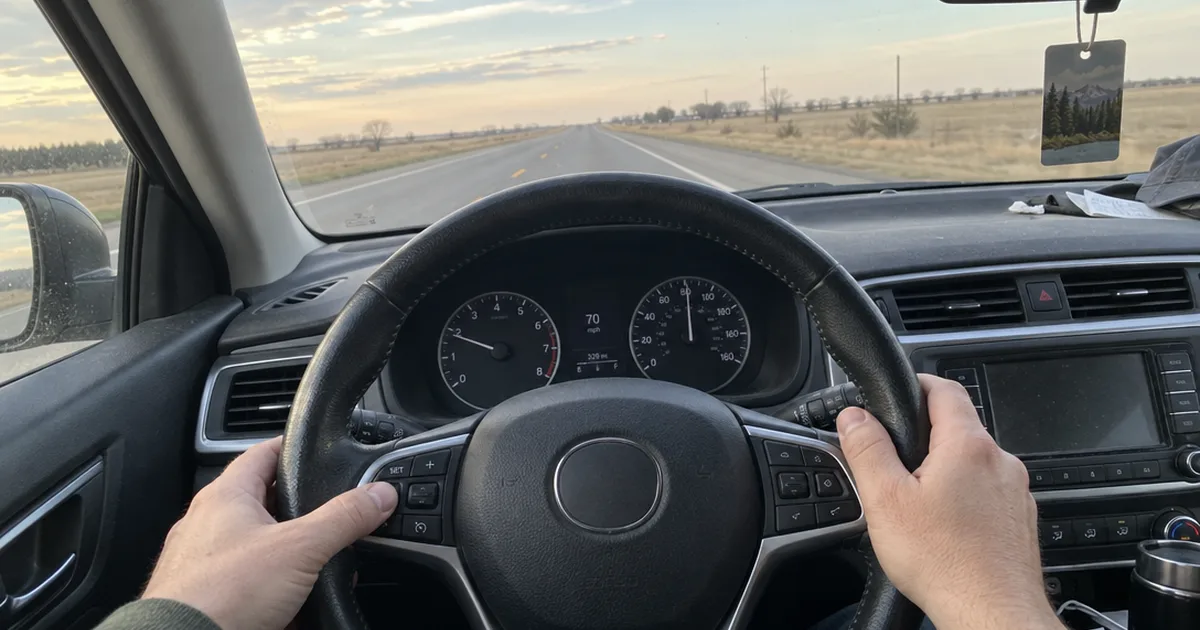
Holding a steady 50 mph used 20% less fuel than letting your speed drift.
That result comes from a Natural Resources Canada test reported by MotorTrend in 2020, where the drifting car swung between about 47 and 53 mph every 18 seconds.
Most drivers don’t wobble that much, so does cruise control save gas on an everyday trip? Usually a little, and only on the right kind of terrain.
Here’s what that saving is worth, where your foot beats the button, and the habit that saves more than both.
How Much Gas Does Cruise Control Save?
Cruise control usually saves a few percent of your highway fuel, since studies by CNN/Money and others report savings in single-digit percentages, as MotorTrend notes.
The 20% Canadian result is a best case, measured against a driver who sped up and slowed down every 18 seconds.
Why does a steady speed help? Every speed-up makes the engine burn extra fuel to push the vehicle forward again, and the system skips the tiny drifts a tired ankle makes.
Say a long highway drive costs you $100 in fuel, a made-up number for easy math. A 5% saving keeps $5 in your pocket, and even the 20% best case is $20.
Not huge. But it’s free, and it repeats on every highway mile.
Think of cruise control as a small, free discount on highway driving, not a big money saver.
Highways vs. Hills: Where Cruise Control Pays Off
Cruise control saves the most gas on flat highways and long, steady grades, but MotorTrend advises that on rolling hills you’re better off letting your car slow 5 to 10 mph on climbs and regain it on the way down.
On Flat Highways and Long Trips
Flat interstate with light traffic is where the button is most fuel-efficient, because your speed would barely change anyway.
That makes long trips the best case for fuel efficiency. If you’re planning a road trip on a budget, set the cruise once you reach open freeway and leave it there.
On Rolling Hills
Rolling hills are where cruise control wastes fuel.
The system has one job: hold the number. So on every climb it opens the throttle wider, and the vehicle’s engine may downshift to keep up.
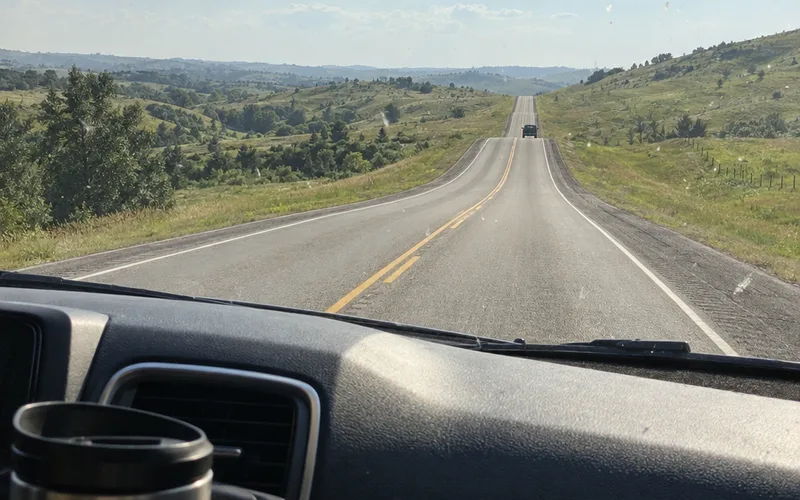
If the highway keeps rising and falling, switch the cruise off, ease off on the way up and let gravity bring your speed back on the way down.
When to Turn Cruise Control Off
Cruise control should be off in stop-and-go traffic, on winding roads and in bad weather, and MotorTrend warns against using it in heavy rain, snow or when ice could form, because accelerating on a slick surface can trigger a skid.
In traffic congestion, the system can’t hold a steady speed. You end up tapping the brakes and resetting it, which cancels the saving.
The weather rule is about safety, not fuel. When the pavement is wet, icy or crowded, keep your own foot on the gas pedal.
Does Adaptive Cruise Control Save Gas?
Adaptive cruise control saves gas the same way regular cruise does on an open road, since it holds your set speed until slower traffic appears ahead.
J.D. Power explains that the system uses forward-mounted sensors to keep a safe gap and slow down with traffic.
In moving traffic, that driver-assistance technology makes your vehicle copy the car ahead, so if that driver brakes and speeds up a lot, so do you.
None of the sources behind this guide put a reliable number on adaptive cruise savings, so treat claims of a big boost with caution.
Pro Tip: Pick the longest following distance your system offers, so the car can coast instead of braking.
Cruise Control in Electric Cars and Hybrids
Electric cars can keep cruise control on in the hills, because MotorTrend says much of the climbing energy is recovered by regeneration on the way back down.
Regenerative braking turns slowing down back into battery charge, so the hill penalty that hurts a regular vehicle shrinks in an EV.
That advice covers fully electric cars. If you drive a hybrid, test it yourself: reset the trip fuel economy readout on your dashboard, drive a hilly stretch with cruise on, then repeat with it off.
What Saves More Gas Than Cruise Control
Smooth, calm driving saves more gas than cruise control, because the federal fuel economy website puts the mileage loss from aggressive driving at 15% to 30% at highway speeds.
J.D. Power cited that federal figure in its 2022 cruise control guide.
Aggressive driving means speeding, hard starts and hard braking, and cruise control only fixes the mild version: the slow drift up and down.
The speed you set matters too. Fuel economy drops as you drive faster, so setting the cruise at the speed limit instead of 10 over is one of the simplest ways to stretch a tank.
Smooth driving cuts how much fuel you burn, while cash back apps and other money-saving apps can trim what you pay at the pump.
Fuel is also just one line in your car budget, next to insurance and yearly maintenance costs. If filling up feels expensive, look at your total car expenses and trim the biggest line first.
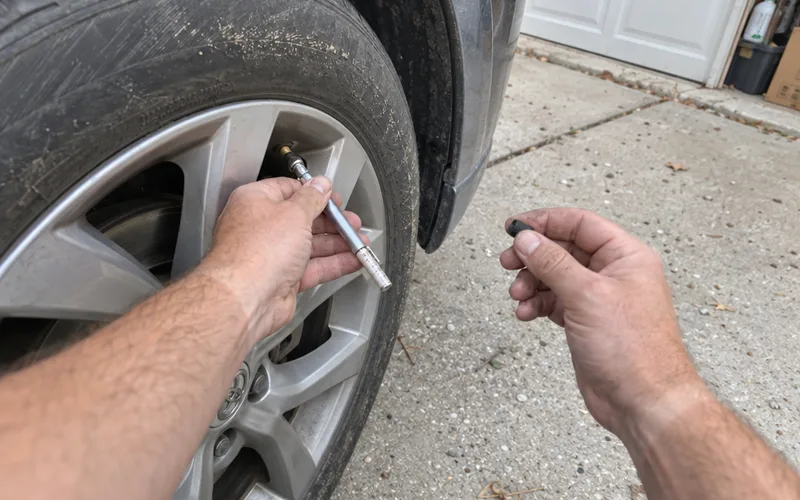
Keeping up with basic car maintenance, like checking tire pressure, helps your car hold the mileage good driving earns.
How to Use Cruise Control to Save Gas
Cruise control saves the most gas when you set it on a flat, open highway at or below the speed limit, then switch it off for hills, heavy traffic and bad weather.
Here’s the routine:
- Set your speed once you’re on open highway with light traffic.
- Choose the posted limit or a little under it.
- Switch it off on rolling hills and in stop-and-go traffic.
- Turn it off in rain, snow or ice.
- With adaptive cruise, choose the longest following gap.
Then check the result with your car’s trip MPG readout, or log the spending in a free travel budget app on your next road trip.
It’s the same idea behind smart everyday shopping: stop paying for waste you never notice.
On your next highway drive, set the cruise at the posted limit and check your trip MPG when you arrive.
Frequently Asked Questions
Does cruise control actually save gas or is that a myth?
Cruise control really does save gas on flat highways, so it isn’t a myth. Studies cited by MotorTrend usually find single-digit savings, well below the 20% from Natural Resources Canada’s best-case test.
What are the disadvantages of cruise control?
The main disadvantages of cruise control are wasted gas on rolling hills, little use in stop-and-go traffic and real risk on slick roads. Switch it off in heavy rain, snow or when ice could form.
Is it safe to use cruise control on hills?
Cruise control works on long, steady grades in dry weather, but on rolling or winding hills you’re better off controlling the speed yourself. That saves gas and keeps you in charge as the road changes.